
The Advantages of Drop Hammer Attachments for Efficient Concrete Demolition in 2026
Content Menu
● What Is a Drop Hammer Attachment?
● How a Drop Hammer Attachment Works
● Core Advantages of Drop Hammer Attachments for Demolition
>> High Productivity on Slab Demolition
>> Lower Maintenance and Simple Ownership
>> Reduced Shock Load to the Carrier
>> Cleaner Breakage and Easier Cleanup
● Drop Hammer vs Hydraulic Breaker: When Each Tool Wins
>> Operational and Ownership Considerations
● Summary Table: Drop Hammer vs Hydraulic Breaker
● Matching a Drop Hammer to Your Carrier
● Best Practices for Safe and Efficient Drop Hammer Operation
>> Safety and Jobsite Considerations
● Typical Applications for Drop Hammer Attachments
● Maintenance Guidelines to Maximize Service Life
● When a Drop Hammer Attachment Is the Right Choice
● Upgrade Your Demolition Productivity with Certeg
● FAQs About Drop Hammer Attachments
>> 1: What thickness of concrete can a drop hammer handle?
>> 2: Can I use a drop hammer on asphalt?
>> 3: How noisy is a drop hammer compared to a hydraulic breaker?
>> 4: Do drop hammers damage my skid steer or excavator?
>> 5: How do I choose between a drop hammer and a hydraulic breaker for my fleet?
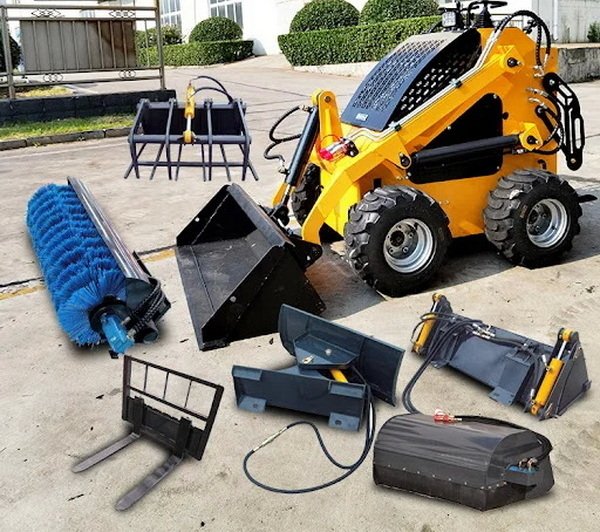
Drop hammer attachments have become a go-to solution for contractors who need fast, cost-effective concrete slab demolition with simple operation and low maintenance. When properly matched to a skid steer, compact track loader, or excavator, a drop hammer can dramatically increase productivity on parking lots, driveways, and industrial pads while reducing equipment wear and labor costs.
What Is a Drop Hammer Attachment?
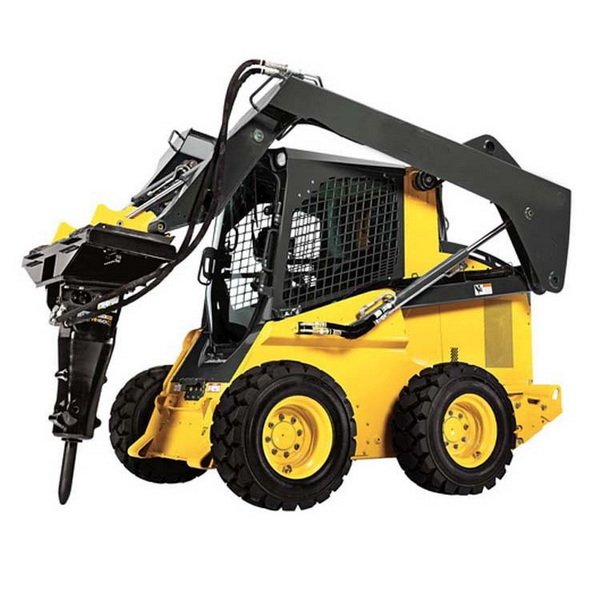
A drop hammer attachment is a gravity-powered concrete breaker that uses a heavy weight lifted hydraulically and then released to free-fall onto the concrete surface. Instead of many small blows like a hydraulic breaker, it delivers a single powerful impact per cycle that fractures the slab through its thickness.
Key characteristics include:
– One large impact per cycle, focused on cracking slabs rather than chipping.
– Best performance on horizontal concrete surfaces such as pads, roads, and floors.
– Simple construction with fewer moving parts than hydraulic breakers.
This free-fall principle is what makes drop hammers highly productive for large-area slab demolition and concrete recycling applications.
How a Drop Hammer Attachment Works
Drop hammers combine basic hydraulics with gravity to deliver repeatable high-energy blows.
Typical operating sequence:
1. Lift phase – Dual hydraulic motors and chain drives raise the hammer mass to the top of its stroke.
2. Release phase – A catch mechanism releases the weight, allowing it to free-fall under gravity.
3. Impact phase – The hammer strikes a blunt tool that transfers energy through the slab, producing cracks that propagate across the concrete.
4. Repositioning – The operator moves the carrier slightly and repeats the cycle to extend cracking across the pad.
A common skid steer drop hammer uses about a 38 in stroke and a hammer mass around 1,165 lb, delivering over 3,600 ft-lb of impact energy per blow. Cycle times can reach roughly 20 blows per minute, with a few seconds between cycles for repositioning.
Core Advantages of Drop Hammer Attachments for Demolition
High Productivity on Slab Demolition
Drop hammers fracture concrete below the surface, not just chip the top, which allows large sections to break up quickly. Because cracks radiate through the slab, operators can remove material in bigger pieces, reducing time spent chasing individual chunks.
Key productivity benefits:
– Fast breaking on parking lots, drives, and floor slabs within typical thickness ranges.
– Fewer passes needed compared with a small chisel-style breaker on broad surfaces.
– Easy cleanup because fractured pieces are less jagged and stack better in the bucket.
Lower Maintenance and Simple Ownership
A major advantage of drop hammers is their mechanical simplicity. They do not require nitrogen accumulators or complex internal hydraulics like many hydraulic breakers, which reduces maintenance demands and downtime.
Typical ownership benefits:
– Minimal daily attention beyond greasing and visual inspections.
– Fewer seals, hoses, and wear parts than a conventional hydraulic breaker.
– Able to sit for extended periods and wake up ready for work when needed.
For contractors who use a breaker only part of the year, this low-maintenance profile can significantly cut operating costs and service complexity.
Reduced Shock Load to the Carrier
Because energy is directed largely into the concrete and not back into the carrier, drop hammers transmit less shock load to the host machine than many hydraulic breakers. When operated with the loader boom in float and the frame firmly on the ground, the remaining vibration transmitted to lift arms and chassis is minimal.
Benefits for the carrier:
– Less stress on pins, bushings, and loader arms during repetitive impact work.
– Lower risk of long-term structural fatigue compared with high-frequency hammering.
– Better operator comfort thanks to reduced vibration.
Cleaner Breakage and Easier Cleanup
Drop hammers tend to crack slabs through their depth with fewer jagged, irregular surface chips than chisel-type hydraulic breakers. This performance characteristic makes it easier for buckets or grapples to get under edges and move large chunks.
Practical advantages include:
– Cleaner break lines and fewer sharp fragments.
– Faster removal and loading into trucks or recycling crushers.
– Better separation of concrete from reinforcing bar in many slab applications.
For demolition and recycling projects where material handling efficiency directly impacts profit, these cleanup benefits can be significant.
Cost-Effectiveness and ROI
Drop hammers combine relatively low purchase cost, minimal maintenance, and high productivity on slab work, which translates to strong return on investment for the right applications.
Cost-related benefits:
– Lower acquisition price than many large hydraulic breakers of similar breaking capability.
– Reduced labor time due to faster slab breakup and easier cleanup.
– Lower lifetime service costs thanks to simple design and fewer high-wear internal parts.
For contractors who frequently demolish flat concrete pads, a drop hammer can deliver a lower cost per cubic yard or per square meter than alternative methods.
Drop Hammer vs Hydraulic Breaker: When Each Tool Wins
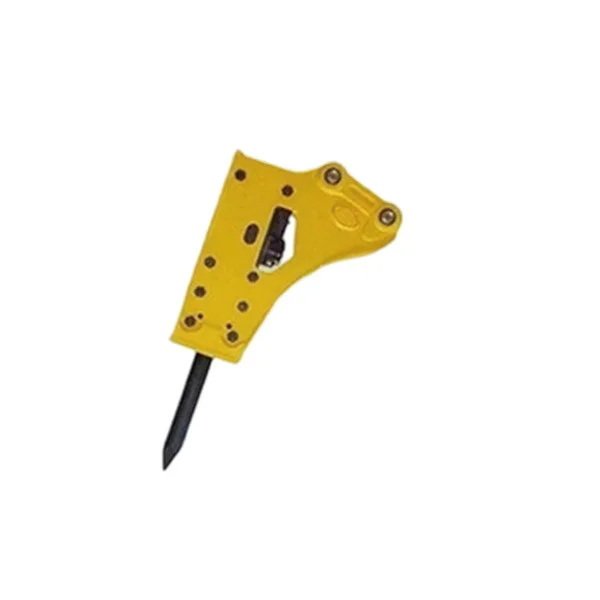
Hydraulic breakers and drop hammers are complementary tools, not direct substitutes in every situation.
Performance Differences
1. Impact style
– Drop hammer: One powerful, concentrated blow per cycle, ideal for cracking slabs.
– Hydraulic breaker: Many rapid blows per minute, suited to controlled chiseling and rock work.
2. Best applications
– Drop hammer: Large, flat horizontal slabs such as parking lots, floors, and roads.
– Hydraulic breaker: Precise vertical work, boulders, foundations, and deeply reinforced or irregular structures.
3. Versatility
– Drop hammer: Primarily horizontal; not ideal for overhead or vertical faces.
– Hydraulic breaker: Multiple orientations, often used in tunneling, quarrying, and underwater jobs.
Operational and Ownership Considerations
1. Maintenance and complexity
– Drop hammer: Simple, fewer moving parts, lower routine maintenance.
– Hydraulic breaker: Higher maintenance, more wear parts, gas-charged systems to manage.
2. Noise and vibration
– Drop hammer: Typically higher impact noise and noticeable vibration at each blow.
– Hydraulic breaker: More controlled noise and vibration, sometimes preferred on tightly regulated sites.
3. Speed and precision
– Drop hammer: Extremely effective for heavy slab demolition but less precise for fine control.
– Hydraulic breaker: Faster on localized, controlled work and better for shaping rock or concrete.
Summary Table: Drop Hammer vs Hydraulic Breaker
| Aspect | Drop Hammer Attachment | Hydraulic Breaker Attachment |
|---|---|---|
| Impact style | Single heavy blow per cycle | High-frequency blows (often up to around 1,200 bpm) |
| Best applications | Horizontal slabs, pads, floors, pavements | Rock, vertical walls, tight or reinforced areas |
| Versatility | Mainly horizontal | Multi-orientation, tunneling, quarries |
| Maintenance level | Low, simple mechanics | Higher, more seals and gas systems |
| Carrier shock load | Lower when used correctly | Higher, more reactive forces |
| Noise and vibration | Higher single-blow noise | More controlled, continuous noise |
| Cleanup efficiency | Large fractured pieces, easy cleanup | Smaller, more jagged debris |
| Typical ROI on flat pads | Very strong for slab-only jobs | Strong on mixed or rock-heavy jobs |
Matching a Drop Hammer to Your Carrier
Although drop hammers are straightforward to own, correct carrier matching is essential for safe and productive operation.
Key matching factors:
– Carrier type – Skid steer, compact track loader, wheel loader, or excavator.
– Mounting system – For example, a universal quick-attach or proprietary coupler.
– Hydraulic requirements – Standard-flow hydraulics are typically sufficient in the common performance ranges.
– Rated operating capacity – Because the attachment mounts close to the coupler and has no reach, most mid-size carriers with adequate lift capacity can handle it safely.
For brands like Certeg that produce skid steers, excavators, and other carriers, pairing the correct drop hammer attachment ensures maximum stability and productivity on demolition jobs.
Best Practices for Safe and Efficient Drop Hammer Operation
Even with simple attachments, disciplined operating practices are vital to protect both people and equipment.
Pre-Operation Checks
Before starting:
– Inspect hoses, fittings, and chains for leaks or damage.
– Verify grease points are serviced according to the manufacturer’s schedule.
– Confirm that all guards and shields are in place and secure.
– Check that the transport lock is disengaged before use.
Operating Techniques
To get the most from a drop hammer:
– Keep the frame flat on the concrete surface before each drop to avoid blank firing.
– Use loader boom float so there is no upward or downward pressure from the carrier on impact.
– Maintain a steady cycle rhythm, allowing brief pauses for repositioning between blows.
– Monitor overhead clearance since the hammer emerges from the frame at the top of the stroke.
Safety and Jobsite Considerations
– Establish a clear exclusion zone around the machine to protect ground personnel from flying debris.
– Use appropriate PPE: hard hats, eye and hearing protection, and reinforced boots.
– Stay aware of buried utilities and subgrade structures before beginning breaking operations.
– Follow local regulations on noise and vibration, especially in urban environments.
Typical Applications for Drop Hammer Attachments
Drop hammers are most valuable where large, flat concrete areas must be removed quickly and efficiently.
Common applications include:
– Parking lots and drive lanes – Rapid breaking of aged or damaged pavements.
– Warehouse and factory floors – Removing interior slabs prior to reconfiguration.
– Sidewalks and curbs – Efficient demolition of walkways and apron areas.
– Agricultural pads and feedlots – Breaking out deteriorated concrete in barns or yards.
In many of these situations, contractors use a drop hammer for bulk breakup, then rely on buckets, grapples, and crushers to remove and process the concrete.
Maintenance Guidelines to Maximize Service Life
Consistent maintenance keeps drop hammers reliable and protects the carrier’s hydraulic system.
Recommended maintenance practices:
– Daily or every use – Inspect chain drives, pins, and bushings, and grease all lubrication points.
– Weekly – Check hydraulic hoses and couplers for wear, verify fastener torque, and inspect the tool point for damage.
– Periodic – Change hydraulic oil and filters on the carrier as recommended by the machine manufacturer.
– Storage – Engage the transport lock, lower the hammer to its storage position, and keep it upright on a firm surface.
Because these attachments are not heavily dependent on complex internal hydraulics, maintenance intervals are often longer and repairs less costly than for traditional breakers.
When a Drop Hammer Attachment Is the Right Choice
Choose a drop hammer when:
– Your primary work involves horizontal concrete slabs such as streets, lots, and floors.
– You need a low-maintenance attachment that can sit idle between projects without complex recommissioning.
– You want to minimize carrier shock load and extend the life of pins, bushings, and loader arms.
– Job economics are sensitive to labor time and cleanup efficiency.
For fleets that already rely on hydraulic breakers for rock and vertical work, a drop hammer is an ideal high-production slab specialist that complements existing attachments.
Upgrade Your Demolition Productivity with Certeg
If your team regularly demolishes concrete slabs, now is the time to add a dedicated drop hammer attachment to your fleet and pair it with reliable carriers from Certeg. Work with Certeg’s global sales and engineering team to select the right drop hammer for your excavators, skid steer loaders, and other construction machines, so every demolition project runs faster and more profitably. Contact Certeg today to discuss carrier compatibility, hydraulic requirements, and tailored pricing, and start turning tough concrete demolition jobs into predictable, high-margin work.
Contact us to get more information!

FAQs About Drop Hammer Attachments
1: What thickness of concrete can a drop hammer handle?
Most drop hammer breakers are designed for slab demolition up to common pavement and floor thicknesses used in parking lots, driveways, and industrial pads. For unusually thick or heavily reinforced concrete, pairing a drop hammer with other demolition methods or a larger breaker may be necessary.
2: Can I use a drop hammer on asphalt?
Yes, drop hammers can break asphalt surfaces, but they are particularly efficient when a concrete or rigid base is present underneath. Operators should adjust technique to avoid excessive pulverization when the goal is rapid removal rather than fine fragmentation.
3: How noisy is a drop hammer compared to a hydraulic breaker?
Drop hammers produce a strong impact noise at each blow and can be louder at the point of impact than many hydraulic breakers. However, the noise profile is intermittent rather than continuous, so overall perception depends on cycle rate, site conditions, and local regulations.
4: Do drop hammers damage my skid steer or excavator?
When operated correctly with the frame firmly on the slab and the boom in float, drop hammers transmit relatively low shock loads to the carrier compared with traditional breakers. Regular inspections of pins, bushings, and couplers are still essential, but many owners achieve long carrier service life with proper use and basic maintenance.
5: How do I choose between a drop hammer and a hydraulic breaker for my fleet?
Select a drop hammer if your main work involves slab and pavement demolition and you need high production with simple maintenance. Choose a hydraulic breaker if you frequently tackle rock, vertical walls, deep foundations, or tightly confined work requiring precise control and varied orientations.
References :
1. https://compactequip.com/attachments/the-advantages-of-drop-hammer-attachments-for-efficient-demolition/
2. https://compactequip.com/attachments/how-a-drop-hammer-attachment-works-and-why-you-might-need-one/
3. https://www.huilianmachine.com/article/drop-hammer-vs-hydraulic-breaker-explained-huilian.html
4. https://industrialtoolsandattachments.com/products/drop-hammers
5. https://www.oakenequipment.ca/new-equipment/drop-hammer/
6. https://dekaiattachment.com/demolition-excellence-optimizing-operations-with-hammer-attachments/
7. https://www.kinghoattachments.com/news/what-is-better-hydraulic-vs-pneumatic-breaker-for-heavy-duty-demolition-work/
8. https://americanexcavator.org/2025/12/12/hydraulic-hammer-attachments-top-7-features/
Hot Tags: Skid Steer Drop Hammer, Drop Hammer Attachments, Demolition Attachments, Efficient Demolition Equipment, Compact Equipment Attachments, Excavator Drop Hammer, Hydraulic Drop Hammer, Concrete Breaking Attachments, Heavy Duty Demolition Tools, Construction Demolition Equipment