
How to Make Money with Compact Mini Excavators: 12 Proven Strategies for 2026
Content Menu
● Why Compact Excavators Are Exceptional Revenue Generators
● Top 12 Money-Making Opportunities with Compact Excavators
>> 1. Launch a High-Demand Equipment Rental Business
>> 2. Provide Professional Landscaping and Hardscaping Services
>> 3. Specialize in Utility Trenching and Underground Infrastructure
>> 4. Offer Demolition and Site Preparation Contracting
>> 5. Develop Park, Recreation, and Trail Construction Services
>> 6. Establish Agricultural and Farm Service Operations
>> 7. Provide Retaining Wall Construction and Erosion Control
>> 8. Launch a Foundation and Concrete Work Business
>> 9. Create a Specialized Attachment Rental Service
>> 10. Establish Snow Removal and Seasonal Services
>> 11. Develop Infrastructure Inspection and Maintenance Contracts
>> 12. Provide Disaster Recovery and Emergency Services
● Maximizing Profitability: Investment and ROI Analysis
>> Initial Investment Requirements
● Essential Attachments for Revenue Diversification
>> Foundation Attachment Package ($8,000-$12,000)
>> Revenue-Expanding Specialty Attachments
>> Advanced Revenue-Generating Attachments
● Critical Success Factors for Excavator Businesses
>> Operator Training and Certification
>> Business Development and Marketing Strategies
>> Technology Integration for Competitive Advantage
● Market Trends Shaping Future Opportunities
>> Sustainability and Electric Equipment Adoption
>> Autonomous and Semi-Autonomous Equipment
>> Infrastructure Investment and Urbanization
● Risk Management and Insurance Considerations
● Scaling Your Compact Excavator Business
>> Service Territory Expansion
>> Vertical Integration Opportunities
● Start Your Profitable Compact Excavator Business Today
>> 1. What is the typical payback period for a compact mini excavator investment?
>> 2. Which compact excavator attachments provide the highest return on investment?
>> 3. How much can I earn renting out a compact excavator per month?
>> 4. What financing options are available for purchasing compact excavators?
>> 5. Do I need special certifications or licenses to operate a compact excavator business?
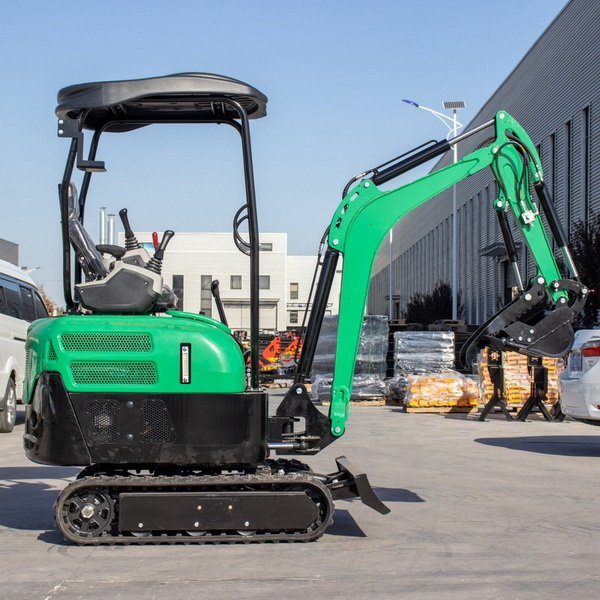
Compact mini excavators have become essential profit-generating assets for entrepreneurs, contractors, and equipment rental businesses worldwide. With the global compact excavator market projected to reach $11.88 billion by 2033 and growing at a CAGR of 6.40%, these versatile machines offer remarkable revenue opportunities across multiple industries. Whether you’re launching an excavation service, starting a rental business, or expanding your existing equipment fleet, understanding how to maximize profitability with compact excavators is crucial for achieving strong ROI and sustainable business growth.
Why Compact Excavators Are Exceptional Revenue Generators
Compact mini excavators deliver superior profitability compared to larger construction equipment due to their versatility, lower operating costs, and high utilization rates. Operating costs are significantly reduced—fuel consumption is one-third to half that of large machines, transportation requires only a standard pickup truck, and operators need basic training rather than specialized certifications.
The financial performance is compelling: a 1.5-3 ton mini excavator generates $2,000-$4,000 monthly rental income, translating to $24,000-$48,000 annually. With acquisition costs ranging from $20,000-$60,000, investors typically recover their investment within 8-18 months, making mini excavators one of the most profitable equipment categories in the construction industry. Operating a fleet of 5-10 units can yield $120,000-$480,000 in annual revenue.
Top 12 Money-Making Opportunities with Compact Excavators
1. Launch a High-Demand Equipment Rental Business
Equipment rental represents the fastest path to profitability with mini excavators. Daily rental rates typically range from $200-$500, weekly rentals earn $1,200-$2,500, and monthly rentals command $3,500-$8,000. If you rent out your mini excavator for just 15-20 days per month at $300 per day, you’ll generate $3,000-$6,000 in monthly revenue.
Key success factors:
– Strategic pricing: Analyze local market rates and adjust seasonally
– Multi-channel marketing: List on equipment rental platforms, Google My Business, and construction contractor networks
– Preventive maintenance: Implement scheduled servicing to maximize uptime and minimize repair costs
– GPS tracking systems: Install telematics for fleet management and theft prevention
– Flexible rental terms: Offer daily, weekly, and monthly packages with discounted long-term rates
The rental market continues expanding as contractors increasingly prefer renting over purchasing, creating sustainable demand for well-maintained equipment.
2. Provide Professional Landscaping and Hardscaping Services
The landscaping industry increasingly relies on compact excavators for precision work in residential and commercial properties. Mini excavators equipped with three-tine grapples and hydraulic clamps excel at creating elaborate hardscapes, constructing retaining walls, building water features, and installing outdoor living spaces.
Profitable landscaping services:
– Retaining wall construction: High-margin projects requiring precise stone placement and grading
– Water feature installation: Creating ponds, waterfalls, and decorative streams with boulder placement
– Outdoor kitchen foundations: Excavating and grading for patios and entertainment areas
– Tree and stump removal: Using grapple attachments for efficient vegetation management
– Terrain grading and contouring: Shaping landscapes with grading buckets and tilt accessories
Service providers can charge $75-$150 per hour for excavation work, with typical projects lasting 3-8 hours and generating $600-$1,200 per job. The Pro Clamp system paired with three-tine grapples provides exceptional versatility for handling landscape boulders, timbers, and dimensional lumber.
3. Specialize in Utility Trenching and Underground Infrastructure
Utility contractors and municipalities require compact excavators for installing underground infrastructure with minimal surface disruption. Trenching buckets designed for narrow, precise excavation make mini excavators ideal for utility work in urban environments where space constraints prohibit larger equipment.
High-demand utility services:
– Fiber optic and broadband installation: Supporting expanding telecommunications infrastructure
– Irrigation system installation: Serving agricultural, golf course, and commercial landscaping clients
– Drainage solutions: Installing French drains, storm water systems, and erosion control
– Underground electrical work: Trenching for power lines and outdoor lighting systems
– Water and sewer line repair: Accessing buried infrastructure with precision excavation
With governments investing heavily in broadband expansion and utility infrastructure, demand for specialized trenching services continues growing.
4. Offer Demolition and Site Preparation Contracting
Compact excavators equipped with hydraulic breakers excel at small to medium-scale demolition projects. These machines deliver powerful demolition capabilities while maintaining the precision and maneuverability required for residential and commercial projects in confined spaces.
Demolition service opportunities:
– Concrete breaking and removal: Driveways, sidewalks, foundations, and parking areas
– Interior demolition: Stripping commercial spaces and residential remodels
– Pool removal and backfilling: Growing market as homeowners remove aging pools
– Deck and structure dismantling: Safe deconstruction with material sorting for recycling
– Asphalt removal: Parking lot repairs and driveway replacement projects
Hydraulic breakers represent 15.4% of the excavator attachment market, reflecting strong demand for demolition capabilities. Contractors can command premium rates for demolition services due to the specialized equipment and expertise required.
5. Develop Park, Recreation, and Trail Construction Services
Municipal governments and park districts invest continuously in recreational facilities, creating consistent demand for compact excavator services. The same machines and attachments used for residential construction translate seamlessly to park development, campsite construction, and trail maintenance.
Recreation construction services:
– Trail system development: Constructing and maintaining asphalt walking/biking paths and golf cart trails
– Campsite preparation: Clearing, grading, and leveling for camping facilities
– Boat ramp and marina construction: Grading and backfilling for waterfront access
– Playground installation: Augering holes for equipment posts and grading safety surfaces
– Shelter house construction: Site preparation and foundation work for park structures
Compact excavators with extendable arms and grading blades provide the versatility needed for varied terrain. Flail mowers paired with mini excavators create efficient solutions for maintaining areas along finished trails.
6. Establish Agricultural and Farm Service Operations
Agriculture represents a rapidly growing market segment for compact excavators as farms increasingly adopt mechanized practices. Mini excavators efficiently handle diverse agricultural tasks, from irrigation installation to land preparation, making them valuable assets for farm service businesses.
Agricultural service opportunities:
– Irrigation channel excavation: Creating efficient water distribution systems
– Land leveling and grading: Preparing fields for planting and improving drainage
– Pond construction and maintenance: Building livestock watering facilities and aquaculture operations
– Fence post installation: Using auger attachments for rapid post hole digging
– Material handling: Loading and moving feed, compost, and harvested crops with grapples
The versatility of compact excavators in agricultural applications drives growing adoption, particularly in regions transitioning to modern farming methods.
7. Provide Retaining Wall Construction and Erosion Control
Climate change and increased precipitation patterns create growing demand for erosion control and water management solutions. Compact excavators equipped with grading buckets and extendable arms excel at constructing various scales of retaining walls, from residential landscaping to large-scale levee maintenance.
Retaining wall specializations:
– Residential stone wall construction: High-margin projects enhancing property values
– Levee and dike reinforcement: Municipal contracts for flood control infrastructure
– Terraced landscape creation: Multi-level retaining systems for hillside properties
– Commercial highway walls: Subcontracting for large-scale transportation projects
– Soil stabilization projects: Installing geogrid systems and structural support
Mini excavators provide the precision required for placing large stones and the power needed to prepare substantial foundation excavations. Using tilt accessories allows operators to groom slopes and create proper drainage angles efficiently.
8. Launch a Foundation and Concrete Work Business
Residential and commercial foundation work requires the precision that compact excavators deliver, particularly in urban environments with limited access. Mini excavators maneuver in tight spaces where larger equipment cannot operate, creating competitive advantages for contractors serving metropolitan markets.
Foundation service offerings:
– House addition foundations: Excavating adjacent to existing structures without damage
– Basement excavation and underpinning: Expanding below-grade spaces in existing buildings
– Concrete footing preparation: Creating level, precisely-dimensioned trenches for structural support
– Pier and column hole excavation: Auger attachments for deep foundation elements
– Slab preparation: Grading and compacting for concrete pads and driveways
With urbanization driving residential construction growth, particularly in Asia-Pacific and African markets, foundation work opportunities continue expanding.
9. Create a Specialized Attachment Rental Service
The excavator attachment market is projected to reach substantial growth, with the compact attachment segment valued at $1,067.02 million in 2026 and expected to reach $1,920.37 million by 2033. Establishing an attachment-focused rental business allows you to serve multiple excavator owners without the capital investment required for complete machines.
High-demand attachment categories:
– Bucket varieties: Standard digging, trenching, grading, rock, and specialty buckets (52.7% market share)
– Grapples and clamps: Three-tine grapples, root grapples, and demolition grapples (18.9% market share)
– Hydraulic breakers: Concrete breakers and rock hammers for demolition work (15.4% market share)
– Augers: Various diameter earth augers for post holes and foundation piers (13% market share)
– Specialty attachments: Tilt rotators, compaction wheels, and flail mowers
Quick coupler systems have seen 46% adoption growth, making attachments increasingly interchangeable and rental-friendly. This business model requires lower capital investment while serving a broad customer base.
10. Establish Snow Removal and Seasonal Services
Diversifying into seasonal services maximizes equipment utilization year-round, particularly in regions with distinct winter weather. Compact excavators with appropriate attachments transform into versatile snow management tools.
Winter revenue opportunities:
– Commercial snow clearing: Parking lots, sidewalks, and loading areas
– Residential driveway services: Subscription-based seasonal contracts
– Ice management: Spreading salt and sand with bucket attachments
– Snow stacking and removal: Loading trucks for snow disposal operations
– Emergency access clearing: Premium-rate services for storm events
Seasonal service contracts provide predictable revenue streams and improve annual equipment ROI by maintaining utilization during traditional construction off-seasons.
11. Develop Infrastructure Inspection and Maintenance Contracts
Municipalities and utility companies require ongoing infrastructure maintenance, creating opportunities for recurring revenue contracts. Compact excavators excel at accessing and maintaining underground utilities and drainage systems with minimal disruption.
Maintenance contract services:
– Storm drain cleaning and repair: Accessing catch basins and underground drainage
– Utility exposure for inspection: Carefully excavating around buried infrastructure
– Road shoulder maintenance: Grading and erosion repair along roadways
– Bridge and culvert access: Creating safe working areas for inspection teams
– Vegetation management: Clearing growth from infrastructure areas
Long-term maintenance contracts provide stable cash flow and predictable scheduling, improving business planning and resource allocation.
12. Provide Disaster Recovery and Emergency Services
Natural disasters and extreme weather events create urgent demand for excavation services. Positioning your business to respond rapidly to emergencies allows premium pricing while serving critical community needs.
Emergency service specializations:
– Flood cleanup and debris removal: Using grapples to clear storm debris
– Emergency access restoration: Clearing roads and driveways after disasters
– Temporary drainage installation: Creating emergency water management systems
– Structural stabilization support: Excavating for emergency shoring and support
– Tree and hazard removal: Clearing fallen trees and dangerous structures
Establishing relationships with insurance companies, emergency management agencies, and restoration contractors creates referral networks for rapid deployment during emergencies.
Maximizing Profitability: Investment and ROI Analysis
Understanding the financial dynamics of compact excavator ownership is essential for maximizing returns. Current market data provides a comprehensive profitability analysis for strategic planning.
Initial Investment Requirements
Equipment acquisition costs:
– Mini excavators (1-6 tons): $20,000-$60,000
– Compact excavators (7-10 tons): $40,000-$100,000
– Essential attachment package: $5,000-$15,000
– Transportation trailer: $5,000-$15,000
– Insurance and registration: $3,000-$5,000 annually
Financing options: SBA 7(a) loans typically offer $50,000-$150,000 for equipment and startup costs with rates around Prime + 3%. Equipment financing uses the excavator as collateral, with down payments around 20% ($12,000 on a $60,000 machine). Many operators recover costs within 12-18 months through rental or service revenue.
Revenue Potential Analysis
Rental business model:
– Monthly gross revenue: $2,500-$3,500 per unit
– Monthly operating costs: $500 per unit (maintenance, insurance, storage)
– Monthly net profit: $2,000-$3,000 per unit
– Annual net profit: $24,000-$36,000 per unit
– Payback period: 8-12 months at 50% utilization
Service business model:
– Hourly service rate: $75-$150
– Average project duration: 3-8 hours
– Project revenue: $600-$1,200 per job
– Monthly potential (owner-operator): $5,000-$15,000
Cost Management Strategies
Operational efficiency improvements:
– Preventive maintenance scheduling: Reduces emergency repairs by 60-70%
– Operator training programs: Decreases equipment damage and improves productivity
– Fuel management systems: Tracking consumption reduces waste and identifies mechanical issues
– GPS telematics integration: Monitors utilization, location, and maintenance needs in real-time
– Attachment versatility: Investing in multiple attachments increases billable service offerings
The key to profitability lies in maximizing utilization rates while minimizing downtime through proactive maintenance and efficient scheduling systems.
Essential Attachments for Revenue Diversification
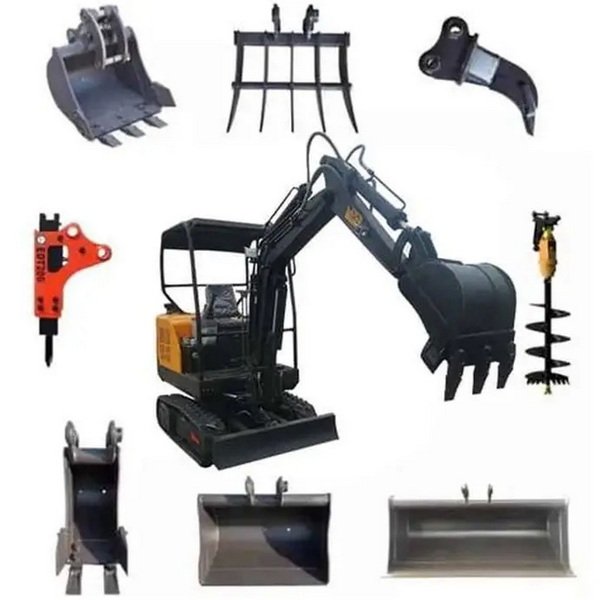
Strategic attachment investment dramatically expands your service capabilities and revenue potential. Begin with core attachments and expand based on your target market demands.
Foundation Attachment Package ($8,000-$12,000)
1. Bucket collection (most critical investment):
– Standard digging bucket: General excavation and material loading
– Trenching bucket: Narrow, deep excavation for utilities and drainage
– Grading bucket: Smooth, wide design for finish grading and backfilling
– Rock bucket: Reinforced with teeth for hard soil and rocky terrain
Buckets represent 52.7% of the attachment market, confirming their essential role.
2. Hydraulic thumb: The second-most important attachment provides exceptional efficiency for handling rocks, logs, debris, and irregular materials. This single attachment dramatically increases productivity in demolition, land clearing, and material sorting operations.
Revenue-Expanding Specialty Attachments
3. Auger systems ($2,500-$5,000): Earth augers with various diameter options excel at fence installation, foundation piers, tree planting, and sign post installation. Augers eliminate manual digging and reduce project time by 80-90%.
4. Hydraulic breaker ($3,000-$8,000): Essential for demolition services, hydraulic breakers break concrete, asphalt, and rock with powerful percussion. This attachment opens high-margin demolition and site prep markets.
5. Grapple attachments ($2,000-$4,000): Root grapples, demolition grapples, and material handling grapples provide versatility for landscaping, forestry work, and debris management. Combined with hydraulic clamps, grapples handle diverse materials efficiently.
6. Grading blade ($1,500-$3,000): Ideal for finish grading, backfilling, leveling, and road maintenance. Grading blades complement bucket work and provide precision surface preparation.
7. Ripper attachment ($1,000-$2,500): Rippers penetrate and scarify frost, hard-packed ground, and compacted soil, preparing surfaces for excavation or planting.
Advanced Revenue-Generating Attachments
8. Tilt rotator systems ($8,000-$15,000): Advanced positioning systems allow precise angle adjustments without repositioning the machine, dramatically improving efficiency in grading, slope work, and precision excavation.
9. Flail mower ($4,000-$7,000): Perfect for vegetation management along trails, right-of-ways, and maintenance contracts. Flail mowers create recurring revenue opportunities through long-term maintenance agreements.
10. Compaction wheel ($2,000-$3,500): Specialized attachment for compacting backfill in trenches and confined areas where traditional compaction equipment cannot reach.
Investing strategically in attachments based on your market demand creates multiple revenue streams from a single base machine investment.
Critical Success Factors for Excavator Businesses
Operator Training and Certification
While compact excavators require only basic operator training rather than specialized heavy equipment certifications, professional training significantly improves safety, productivity, and equipment longevity. Comprehensive training programs cover equipment operation, attachment changeovers, safety protocols, maintenance procedures, and emergency response.
Construction industry safety training certificates typically require coverage of occupational safety legislation, work safety concepts, potential hazards and preventions, emergency preparedness, accident reporting procedures, fire prevention, and personal protective equipment. Investment in operator training reduces insurance costs, minimizes equipment damage, and improves customer satisfaction through professional service delivery.
Business Development and Marketing Strategies
Digital marketing essentials:
– Google Business Profile optimization: Critical for local search visibility and customer reviews
– Construction industry directories: Register with contractor referral networks and equipment databases
– Social media showcase: Document projects with before/after photos demonstrating capabilities
– Website with service descriptions: Clear pricing information and easy quote request systems
– Video marketing: Demonstrate equipment capabilities and project completions
Relationship building:
– General contractor partnerships: Become the preferred subcontractor for excavation needs
– Landscape architect collaboration: Position as the implementation partner for design firms
– Municipal vendor registration: Qualify for government contracts and emergency response agreements
– Property management relationships: Secure recurring maintenance and renovation work
– Insurance company networks: Become an approved vendor for disaster recovery and restoration
Technology Integration for Competitive Advantage
Modern telematics and IoT connectivity dramatically improve operational efficiency and customer service. Advanced systems provide real-time performance monitoring, predictive maintenance alerts, GPS location tracking, utilization reporting, and remote diagnostics. These technologies reduce downtime, prevent theft, optimize scheduling, and provide customers with transparency regarding equipment location and project progress.
Quick coupler systems have seen 46% adoption growth, allowing rapid attachment changes that maximize billable hours and equipment versatility. Investing in quick-attach systems and maintaining diverse attachment inventories creates competitive advantages through service breadth and rapid response capabilities.
Market Trends Shaping Future Opportunities
Sustainability and Electric Equipment Adoption
The construction industry is experiencing significant transformation toward sustainable practices. Electric and hybrid compact excavators offer zero emissions, reduced noise levels, lower maintenance costs, and appeal to environmentally conscious customers. While representing higher initial investment, electric equipment attracts premium customers and positions businesses for future emission regulations.
Manufacturers are developing eco-friendly equipment with reduced emissions and improved energy efficiency in response to government incentives and carbon reduction commitments. Early adoption of electric equipment creates marketing differentiation and access to projects with sustainability requirements.
Autonomous and Semi-Autonomous Equipment
Compact equipment below 6 tons is experiencing 18.95% CAGR growth in autonomous capability adoption. Semi-autonomous features improve safety, reduce operator fatigue, and increase precision in repetitive tasks. While fully autonomous compact excavators remain in early development, features like grade control systems, automatic bucket positioning, and collision avoidance are becoming standard offerings.
Infrastructure Investment and Urbanization
Global urbanization continues driving construction demand, particularly in Asia-Pacific and African markets. Government infrastructure programs focusing on housing, electrification, broadband expansion, and urban renewal create sustained demand for compact excavation services. The U.S. compact construction equipment market alone is projected to reach $7 billion by 2035.
Smart city initiatives and infrastructure modernization programs ensure long-term demand stability for versatile, efficient compact excavators capable of working in congested urban environments where larger equipment cannot operate effectively.
Risk Management and Insurance Considerations
Proper insurance coverage protects your investment and business viability. Excavating businesses typically require commercial general liability insurance ($2,000-$4,000 annually), equipment insurance covering theft and damage, commercial auto insurance for transport vehicles, and workers’ compensation if employing operators.
Risk mitigation strategies:
– Pre-project site assessments: Identify underground utilities and hazards before excavation
– Call-before-you-dig compliance: Always contact utility location services to prevent damage
– Documented maintenance records: Prove equipment care in liability situations
– Customer contracts and waivers: Clear scope definitions and liability limitations
– Safety protocol enforcement: Consistent adherence to OSHA guidelines and manufacturer recommendations
Professional liability insurance and umbrella policies provide additional protection for businesses with significant revenue and multiple employees.
Scaling Your Compact Excavator Business
Fleet Expansion Strategy
Growing from a single machine to a fleet operation requires strategic planning and capital management. Operating 5-10 mini excavators can generate $120,000-$480,000 in annual revenue. Successful scaling involves gradual equipment additions based on utilization data, financing new units through profits from existing equipment, diversifying machine sizes to serve broader markets, establishing preventive maintenance systems, and hiring qualified operators as fleet grows.
Service Territory Expansion
Geographic expansion allows business growth without proportional equipment investment. Strategies include establishing satellite storage locations in underserved areas, partnering with local contractors for regional projects, offering transportation radius premiums for distant projects, and developing relationships with regional general contractors and developers.
Vertical Integration Opportunities
Expanding service offerings beyond excavation creates additional revenue streams and customer value. Consider material supply partnerships (delivering fill, gravel, and aggregates), erosion control product sales, landscaping material supply, concrete and asphalt contractor relationships, and equipment sales as a dealer or broker.
Start Your Profitable Compact Excavator Business Today
The compact excavator market offers exceptional opportunities for entrepreneurs ready to capitalize on growing construction, infrastructure, and rental demand. With proven ROI periods of 8-18 months and diverse revenue streams spanning rental operations, specialized services, and seasonal work, compact excavators represent one of the construction industry’s most accessible and profitable equipment investments.
Success requires strategic planning, quality equipment, diverse attachments, professional operation, and effective marketing. Whether launching a rental business with passive income potential, establishing specialized excavation services, or expanding your existing construction operations, compact mini excavators provide the versatility and profitability to build sustainable businesses.
Ready to capitalize on the compact excavator opportunity? Certeg manufactures high-quality excavators, skid steer loaders, road rollers, forklifts, tractors, and crawler carriers designed to meet diverse global construction needs. Our equipment delivers the reliability, versatility, and performance required for profitable excavation businesses. Contact Certeg today to discuss customized equipment solutions tailored to your specific market requirements and business objectives. Our team of construction equipment specialists will help you select the optimal machines and configurations to maximize your ROI and competitive positioning in your local market.
Contact us to get more information!
Frequently Asked Questions
1. What is the typical payback period for a compact mini excavator investment?
The payback period for a compact mini excavator typically ranges from 8-18 months depending on your business model and utilization rate. Rental businesses with 50% utilization (15 days per month) can expect payback within 8-12 months, while service-based businesses may extend to 12-18 months. Key factors affecting payback include initial acquisition cost, financing terms, local market rates, utilization percentage, and operating efficiency. With a $60,000 machine generating $2,500-$3,000 monthly net profit, most operators achieve full cost recovery within their first year of operation.
2. Which compact excavator attachments provide the highest return on investment?
The highest ROI attachments depend on your target market, but the universal foundation includes standard digging buckets (essential for all operations), hydraulic thumbs (dramatically improving material handling efficiency), and trenching buckets (accessing high-demand utility work). For specialized markets, augers deliver exceptional ROI in agricultural and fencing services (85-90% time savings), hydraulic breakers open lucrative demolition markets with premium pricing, and grapple attachments enable forestry and land clearing services. Begin with bucket variety and hydraulic thumb, then expand based on your most frequent customer requests and local market gaps.
3. How much can I earn renting out a compact excavator per month?
Monthly rental income for compact mini excavators typically ranges from $2,000-$4,000 depending on utilization rate and local market conditions. With daily rental rates of $200-$500 and weekly rates of $1,200-$2,500, renting your excavator for 15-20 days per month generates $3,000-$6,000 in gross revenue. After accounting for operating costs (maintenance, insurance, storage) averaging $500 monthly, net profit ranges from $2,000-$3,500 per unit. Markets with high construction activity and limited equipment availability command premium rates, while competitive markets require strategic pricing and superior customer service to maintain utilization.
4. What financing options are available for purchasing compact excavators?
Several financing pathways exist for compact excavator acquisition. SBA 7(a) loans offer $50,000-$150,000 for equipment and startup costs at rates around Prime + 3%, requiring credit scores of 680+ and detailed business plans. Equipment financing uses the excavator as collateral with typical terms matching equipment lifespan and down payments around 20% ($12,000 on a $60,000 machine). Additional options include manufacturer financing programs with promotional rates, equipment leasing with end-of-term purchase options, business lines of credit for established companies, and personal financing for first-time buyers with strong credit. Most lenders require down payments of $40,000-$50,000 for $200,000 equipment packages, with monthly payments around $3,400 on 10-year terms.
5. Do I need special certifications or licenses to operate a compact excavator business?
Licensing requirements vary by location, but compact excavators generally require less stringent certifications than heavy equipment. Most jurisdictions require business registration (LLC or corporation formation), general contractor licensing (if performing construction work beyond basic excavation), commercial driver’s license (CDL) if transporting equipment over certain weight thresholds, and basic operator safety training rather than specialized certifications. Construction industry safety training certificates covering occupational safety legislation, hazard identification, emergency procedures, and personal protective equipment are highly recommended and may be required for commercial and municipal projects. Additional considerations include liability insurance (typically $1-2 million coverage), bonding for larger commercial and government contracts, and local business permits and zoning compliance. While compact excavator operation doesn’t require the specialized certifications needed for large equipment, professional training significantly improves safety, efficiency, and insurance costs.
Citations:
1. https://www.build-review.com/a-contractors-guide-to-mini-excavator-rentals-for-cost-savings-in-2026/
2. https://www.linkedin.com/pulse/mini-excavator-market-2026-deep-dive-trends-growth-projections-ayilc
3. https://www.reflowx.com/blogs/mid-size-excavators-construction-equipment-2026
4. https://www.strategicrevenueinsights.com/industry/compact-excavator-market
5. https://www.fortunebusinessinsights.com/press-release/excavators-market-9159
6. https://www.womiconstruction.com/industry-trends/mini-excavator-for-rent/
7. https://www.bestsupply.com/best-supply-blog/profit-watch-maximizing-roi-on-construction-machinery
8. https://www.skyquestt.com/report/mini-excavators-market
9. https://normanmachines.com/mini-excavator-rental-business-guide/
10. https://www.futuremarketinsights.com/reports/united-states-compact-construction-equipment-market
11. https://quipli.com/resources/the-most-rented-pieces-of-construction-equipment/
12. https://www.mordorintelligence.com/industry-reports/autonomous-construction-equipment-market
13. https://www.thebusinessresearchcompany.com/report/mini-excavators-global-market-report
14. https://www.nicosail.com/how-much-money-can-you-make-with-a-mini-excavator/
15. https://www.linkedin.com/pulse/compact-excavator-attachments-market-size-2026-zrp1c
16. https://www.factmr.com/report/370/compact-excavator-market
17. https://www.marketgrowthreports.com/market-reports/mini-excavator-attachment-market-106751
18. https://qilumachinery.com/top-5-attachments-to-transform-your-mini-excavator-in-2026/
19. https://www.businessresearchinsights.com/market-reports/excavator-attachments-market-105261
20. https://startupfinancialprojection.com/blogs/capex/construction-equipment-rental
21. https://www.hkmanpower.com/eng/safety_card.php
22. https://mechmaxx.com/blogs/news/what-kind-of-business-can-i-start-with-a-mini-excavator
23. https://www.jim.com/blog/how-to-start-an-excavating-business
24. https://www.coursera.org/learn/construction-equipment-maintenance–safety
25. https://quipli.com/resources/how-much-does-an-excavator-cost/
26. https://www.excavatinginsurancepartners.com/post/how-much-does-it-cost-to-start-an-excavating-business
27. http://www.cmttc.com.hk/en/index.asp
28. https://www.statsmarketresearch.com/global-compact-loader-attachments-forecast-market-8066691
29. https://financescope.com/construction-equipment-financing/excavator-equipment-financing/
Hot Tags:Mini Excavator Attachments,Compact Excavator Business Ideas, Mini Excavator, Compact Excavator Attachments, Mini Excavator Applications, Excavator Side Hustle Ideas, Compact Excavator Jobs, Mini Excavator For Landscaping, Excavator, Small Excavator Business