
Snow Pushers for Skid Steers: The Ultimate 2026 Guide for Big Spaces and High-Volume Winter Work
Content Menu
● What is a snow pusher for skid steers
● Snow pusher vs bucket vs blade vs blower
● Where snow pushers deliver the most value
● How a snow pusher works in high‑volume snow
● Choosing the right snow pusher size for your skid steer
>> Horsepower, operating weight, and traction
● Standard vs sectional snow pusher designs
>> Sectional and trip‑edge designs
● Cutting edge, skids, and wear parts
● Operating best practices for skid steer snow pushers
● Safety and surface protection
● Maintenance and lifecycle cost
● When a snow pusher is not the best choice
● Strategic CTA: pair the right snow pusher with the right machine
● FAQs about skid steer snow pushers
>> FAQ 1: How wide should a skid steer snow pusher be
>> FAQ 2: Are snow pushers better than buckets for big parking lots
>> FAQ 3: What surfaces are snow pushers safe for
>> FAQ 4: How much maintenance does a snow pusher need
>> FAQ 5: When should a snow blower be used instead of a snow pusher
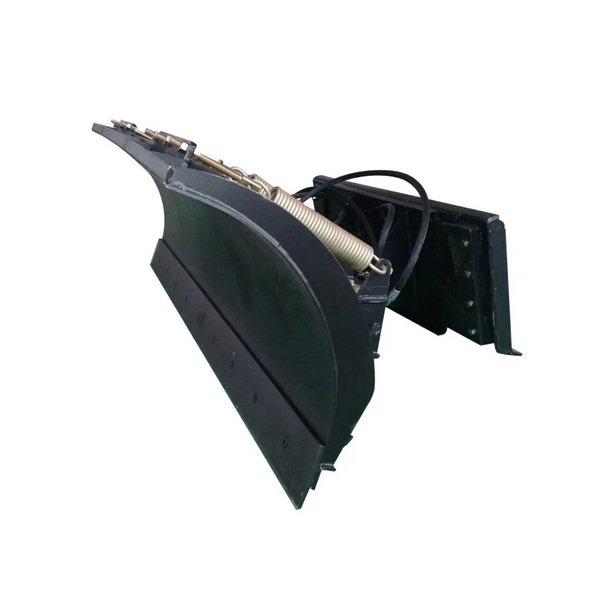
Snow pushers turn a skid steer or compact track loader into a high‑productivity snow clearing machine for large, open sites such as commercial parking lots, industrial yards, farmyards, airports, and logistics hubs. Compared with snow buckets, straight blades, V‑blades, and even some blowers, a containment‑style snow pusher can move more snow per pass, reduce cleanup passes, and lower total operating costs in high‑volume winter conditions.
Core keywords and intent
This guide targets contractors, property managers, fleet owners, and dealers who want to:
– Understand what a skid steer snow pusher is and how it works.
– Compare snow pushers with buckets, blades, and blowers for different winter jobs.
– Select the right pusher width, weight, and design for their skid steer or track loader.
– Optimize setup, operation, and maintenance to maximize ROI in tough winter seasons.
Primary keyword phrases are naturally integrated into headers, the introduction, and strategic body sections to send clear topical signals to search engines while maintaining readability for human users.
What is a snow pusher for skid steers
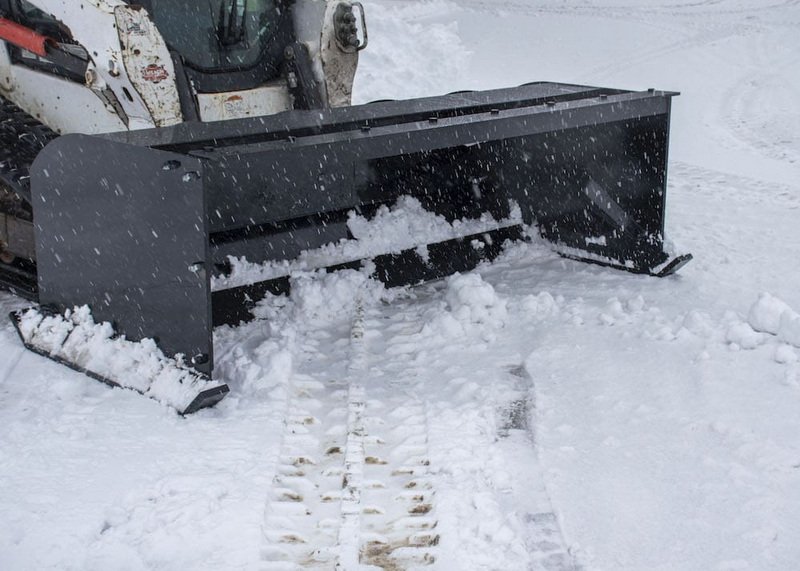
A snow pusher is a snow blade attachment with boxed‑in side wings that contain snow, allowing the operator to capture, carry, and stack large volumes in fewer passes. Instead of windrowing snow off to one side like a conventional blade, the snow pusher works more like a containment plow or box plow, gathering snow and pushing it toward a designated dump area with minimal side spillage.
Key characteristics of a skid steer snow pusher:
– Boxed‑in side walls to prevent snow from spilling and to build a high, consolidated pile.
– Tall moldboard for rolling and containing high volumes of snow, especially wet and heavy material.
– Reinforced cutting edge and skids, often with bolt‑on, replaceable parts to extend service life.
For contractors responsible for large sites, the containment effect often makes a snow pusher the most efficient first‑pass tool compared to buckets or traditional plows.
Snow pusher vs bucket vs blade vs blower
Different winter attachments excel in different conditions. The table below summarizes core differences for a skid steer or compact track loader working on commercial sites.
| Attachment type | Best applications | Main advantages | Key limitations |
|---|---|---|---|
| Snow pusher / box plow | Large open lots, industrial yards, wide access roads | Highest productivity per pass, strong containment, minimal side spill, gentle on paved surfaces | Less precise near tight obstacles, limited stacking height without advanced systems |
| Snow bucket | Loading trucks, tight spaces, small areas | Already on many machines, good for lifting and loading, lower purchase cost | Less efficient for long pushes, more passes, more fuel and cycle time on big sites |
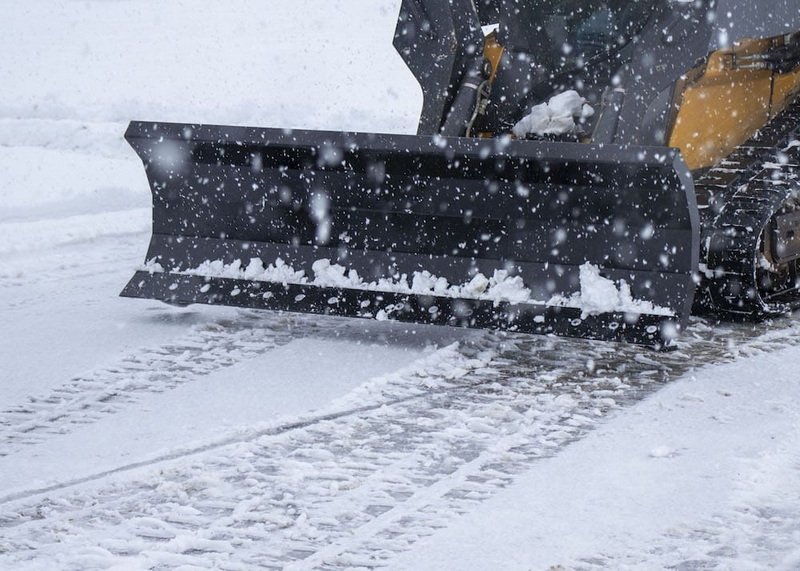
| Straight / V‑blade | Driveways, roads, angled plowing | Flexible plowing angles, good for windrowing streets and long lanes | More spillage, less containment, more cleanup passes in parking lots |
| Snow blower | Deep snow, narrow corridors, where snow must be cast away | Throws snow far from the working area, handles very deep drifts | Slower ground speed, higher complexity and cost, more maintenance |
For high‑volume winter work on wide, open surfaces, a skid steer snow pusher usually offers the best balance of speed, fuel efficiency, and surface protection.
Where snow pushers deliver the most value
Snow pushers shine in environments where long, straight pushes and large volumes of snow are the norm rather than the exception.
Typical high‑ROI applications:
– Supermarket, big‑box retail, and shopping center parking lots.
– Distribution centers, warehouses, and port or rail terminals with wide yards.
– Farmyards, feedlots, and agricultural storage areas with frequent heavy snow events.
– School campuses, airport service areas, and municipal lots maintained by fleets.
Because a snow pusher can clear a broad lane in one pass and leave a clean surface with few ridges or windrows, operators spend less time on rework and back‑dragging. This efficiency directly reduces labor hours, diesel consumption, and wear on both the machine and the attachment.
How a snow pusher works in high‑volume snow
A skid steer snow pusher uses its wings and tall moldboard to scoop and roll snow forward, turning the loader into a containment tool rather than a simple plow. As the pusher fills up, the operator keeps pushing until reaching a dump zone, where the snow is piled or stacked for removal.
Key working principles:
– Snow is captured and compressed between the side plates, minimizing leakage along the edges.
– The cutting edge and skids keep the pusher at the correct height to protect the surface while scraping compacted snow.
– Some sectional or trip‑edge designs allow separate sections of the cutting edge to move independently over manhole covers, curbs, and uneven surfaces, reducing shock loads and improving surface cleaning.
On large, flat lots, this containment‑style operation is typically more productive than pushing snow sideways and then returning to clean up windrows.
Choosing the right snow pusher size for your skid steer
Selecting the correct width and capacity is critical for performance, traction, and machine longevity. A snow pusher that is too wide or heavy for the skid steer will bog the machine down once the box is full, wasting time and fuel.
Basic sizing rules
Common guidelines when sizing a snow pusher for a skid steer or compact track loader:
– The pusher should be at least as wide as the machine or slightly wider, so the tires or tracks stay inside the cleared path.
– Avoid oversizing on smaller skid steers; a full box can exceed available tractive effort and hydraulic power, especially in wet snow.
– Typical matches: 6‑ to 7‑ft snow pushers for compact tractors and smaller skid steers; 8‑ft units for machines with at least 40 hp; 10‑ft pushers for larger loaders with at least 70 hp.
This balance between width, machine weight, and horsepower protects the driveline and ensures consistent pushing power through the entire pass.
Horsepower, operating weight, and traction
Three factors determine whether a skid steer can keep moving with a full snow pusher:
– Horsepower and hydraulic power: Higher‑hp machines maintain speed and hydraulics under load, particularly in dense, wet snow.
– Operating weight and balance: Heavier units with good weight distribution and quality tires or tracks maintain traction on slick surfaces.
– Ground contact: Wide, aggressive tires or rubber tracks increase the contact patch, improving grip and reducing wheel slip.
For contractors using multiple skid steers in one fleet, matching each machine class to an appropriately sized snow pusher maximizes overall site productivity.
Standard vs sectional snow pusher designs
Modern snow pusher technology goes beyond simple fixed boxes. Sectional pushers and trip‑edge systems help operators maintain high productivity on uneven surfaces while limiting damage and downtime.
Standard fixed snow pusher
Standard snow pushers feature a rigid moldboard and continuous cutting edge.
Pros:
– Lower purchase price and simpler design for fleets and rental houses.
– Fewer moving parts, often easier to maintain and repair in‑house.
– Effective on relatively smooth, flat lots with limited obstacles.
Cons:
– Less ability to follow severe crown, deep dips, or raised structures such as manholes.
– Higher risk of catching edges on hidden obstacles, transferring shock to the loader arms and the operator.
Sectional and trip‑edge designs
Sectional pushers divide the cutting edge into segments that move independently, often with trip mechanisms and oscillation.
Benefits:
– Each section can rise, oscillate, or trip over obstacles, maintaining more constant ground contact and scraping pressure on the rest of the blade.
– Better performance on crowned roads, uneven pavement, and surfaces with frequent manholes or drainage inlets.
– Reduced shock loads, helping protect the skid steer, attachment, and operator from sudden impacts.
Fleet owners responsible for aging or uneven surfaces often see a strong ROI from sectional containment plows because they significantly reduce rework and damage.
Cutting edge, skids, and wear parts
Snow pusher productivity over multiple seasons depends heavily on the cutting edge material and the skid design. Many manufacturers offer different edge materials and wear packages to match surface types and expected hours of use.
Common cutting edge options:
– Steel edges: Aggressive scraping for packed snow and ice, often with replaceable carbide inserts on premium models.
– Rubber edges: Gentler on decorative concrete, pavers, and sensitive surfaces, but may leave a thin film of packed snow or ice.
– Carbide‑reinforced edges: Long‑life solution for high‑hour contractors and municipal fleets working on abrasive surfaces.
Skids and side plates are frequently bolt‑on and reversible so operators can flip or replace them when worn, extending the service life of the snow pusher attachment at lower cost.
Operating best practices for skid steer snow pushers
Efficient snow pusher operation is about more than just driving forward and pushing a full box. Proper technique improves cycle times, reduces fuel usage, and protects equipment.
Recommended operating practices:
1. Plan passes
– Lay out straight, efficient pushing lanes from the furthest point of the site back toward the stacking area.
– Avoid excessive turning with a full pusher to reduce side stress on the loader arms.
2. Maintain a consistent ground speed
– Use a steady pace that keeps the pusher filling without stalling the machine.
– In heavy snow or tight areas, reduce speed before turns and obstacles.
3. Manage stacking zones
– Designate clear areas for piling snow that do not block sightlines, fire access, loading docks, or drainage.
– Build piles gradually; avoid sudden impacts into frozen stacks that can damage the cutting edge or loader.
Contractors who train operators on these fundamentals typically reduce site time and rework by a noticeable margin each winter season.
Safety and surface protection
Modern snow pushers are engineered to protect both the machine and the working surface when used correctly. Still, safe operating practices remain essential.
Safety and protection tips:
– Perform a walk‑through before the first snowfall to mark curbs, islands, drains, speed bumps, and utility covers.
– Always inspect the attachment’s pins, mounts, and safety restraints before starting work, particularly in sub‑zero temperatures where steel becomes more brittle.
– Use rubber or urethane edges on sensitive surfaces such as decorative concrete, pavers, or parking garages.
– Follow local regulations related to snow storage, visibility, and ice control, including the use of de‑icing materials on high‑traffic areas.
Sectional and trip‑edge pushers offer an additional margin of safety by allowing edge segments to move independently over obstacles rather than transmitting full impact forces to the machine.
Maintenance and lifecycle cost
Snow pushers are relatively simple attachments, but consistent inspection and maintenance are essential to maximize uptime in the toughest winter weeks.
Core maintenance tasks:
– After each storm: Check cutting edge wear, skid shoes, side plates, and mounting hardware; tighten bolts and replace damaged components.
– Periodically: Inspect welds, the moldboard, and structural members for cracking or deformation, especially on high‑hour units.
– Seasonally: Clean and repaint worn or rusty areas, grease any moving parts on sectional or hydraulic systems, and store the pusher on a level surface to protect skids.
Contractors often track cost per cleared square foot or per hour by attachment, and well‑maintained snow pushers consistently deliver one of the lowest lifecycle costs of any winter tool for large sites.
When a snow pusher is not the best choice
Despite their advantages, snow pushers are not ideal for every winter task.
Scenarios where another attachment may be better:
– Extremely deep drifts or narrow corridors where snow must be thrown over tall obstacles, such as roadside banks or retaining walls, often favor a snow blower.
– Long, narrow lanes, alleys, or sidewalks with many tight turns and limited stacking space can favor angled blades or specialized sidewalk attachments.
– Situations where snow must be loaded into trucks and hauled off‑site may require high‑capacity buckets or a combination of pusher and loader work.
Many professional fleets run a mixed strategy: snow pushers for bulk clearing on big areas, complemented by blades, brooms, or blowers for edge work and specialty tasks.
Strategic CTA: pair the right snow pusher with the right machine
For contractors, rental houses, and facility managers, the fastest path to winter productivity is pairing a correctly sized snow pusher with a robust skid steer or compact track loader and a clear site plan. A well‑matched combination can turn even severe winter events into predictable, profitable work across multiple seasons.
If your fleet includes multitasking machines such as skid steer loaders, compact track loaders, tractors, or forklifts, now is the ideal time to evaluate which sizes and styles of snow pushers will unlock the most value on your specific sites. Work with a trusted equipment partner to match attachment width, weight, and cutting edge options to your machines and winter workloads, so every storm becomes an opportunity to strengthen customer relationships and grow your snow removal business.
Contact us to get more information!
FAQs about skid steer snow pushers
FAQ 1: How wide should a skid steer snow pusher be
For most machines, the snow pusher should be at least as wide as the skid steer or compact track loader so the tires or tracks stay inside the cleared path. Smaller loaders may pair best with 6‑ to 7‑ft pushers, while larger units with 40–70+ hp can handle 8‑ to 10‑ft boxes, depending on typical snow depth and density.
FAQ 2: Are snow pushers better than buckets for big parking lots
On large, open lots, a containment‑style snow pusher is generally more efficient than a bucket because it carries more snow per pass and reduces the number of trips to the stacking area. Buckets still have a role for loading trucks and working in tight spaces, but they usually cannot match pusher productivity on wide areas.
FAQ 3: What surfaces are snow pushers safe for
Standard snow pushers with steel cutting edges work well on asphalt and robust concrete surfaces, especially in commercial and industrial yards. For sensitive surfaces like decorative concrete, pavers, or parking garages, many manufacturers offer rubber or urethane edges and adjustable skids to reduce scratching and impact.
FAQ 4: How much maintenance does a snow pusher need
Snow pushers require regular inspections of cutting edges, skid shoes, side plates, and mounting hardware, especially after major storms or impacts. Replacing bolt‑on wear parts and touching up paint as needed helps extend the attachment’s service life and keeps cost per cleared square foot low for high‑hour operators.
FAQ 5: When should a snow blower be used instead of a snow pusher
Snow blowers are preferred when snow depths are very high, stacking space is limited, or snow must be thrown over barriers such as guardrails or existing piles. In those conditions, blowers can relocate snow without the traction and pushing limits that even a large snow pusher may encounter with very heavy loads.
References:
1. https://compactequip.com/attachments/snow-pushers-the-ultimate-skid-steer-attachment-for-big-spaces-and-high-volume-winter-work/
2. https://www.virnigmfg.com/the-ultimate-guide-to-skid-steer-snow-removal-attachments/
3. https://igniteattachments.com/attachments/snow-pushers
4. https://snowplows.hiniker.com/article/skid-steer-snow-pushers-that-tackle-winter-like-a-pro/
5. https://blog.primeattach.com/snow-removal-attachments-what-is-your-best-fit
Hot Tags: Giyi Skid Steer Mulcher Reviews, Drop Hammer for Skid Steer, Snow Pusher Attachment, Skid Steer Snow Pusher, Snow Removal Attachments, Skid Steer Snow Removal, Heavy Duty Snow Pusher, Snow Pusher For Skid Steer, Commercial Snow Removal Equipment, Winter Maintenance Attachments