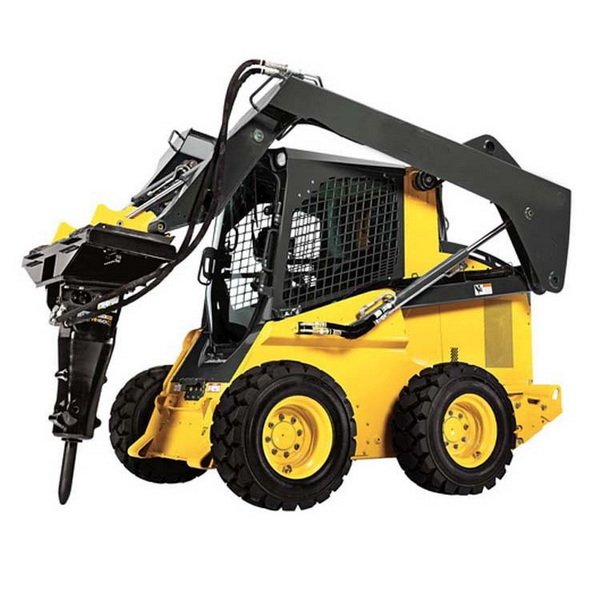

Optimized for Forestry Work: How to Outfit a Compact Track Loader for High-Profit Vegetation Management (2025 Guide)
Content Menu
● What Is Forestry Vegetation Management with a Compact Track Loader?
● 1. Choose a Forestry-Dedicated Compact Track Loader
● 2. Get the Hydraulic System Right for Forestry Attachments
>> 2.1 Match Auxiliary Flow and Pressure
>> 2.2 Use Flow Reduction When Attachments Are the Limiting Factor
● 3. Optimize the Forestry Head and Drive Settings
>> 3.1 Pulley Configuration and Tip Speed
>> 3.2 Two-Speed Drive Motors and Shift Points
● 4. Forestry Guarding and Operator Protection Are Non-Negotiable
● 5. Calibrate Operator Preferences for Forestry Productivity
>> 5.1 Loader Arm Speed and Tilt Response
>> 5.2 Creep Mode for Better Cutting Consistency
>> 5.3 Flow Sharing and Drive-Attachment Balance
● 6. Maintenance Practices That Keep Forestry CTLs Profitable
>> 6.1 Daily and Weekly Checks for Compact Track Loaders
>> 6.2 Track and Undercarriage Care in Forestry
● 7. Safety Best Practices for Compact Track Loader Forestry Work
● 8. Forestry Mulcher vs. Brush Cutter: Matching the Tool to the Job
● 9. Real-World Use Cases: Where Forestry-Optimized CTLs Excel
● 10. How Certeg Can Support Your Compact Track Loader Forestry Needs
● 11. Actionable Checklist: How to Outfit a Compact Track Loader for Forestry Today
● Upgrade Your Fleet with Certeg Today
● FAQs: Compact Track Loader Forestry and Vegetation Management
>> Q1: Do I need a dedicated forestry compact track loader, or can I use my standard CTL?
>> Q2: How much hydraulic flow do I need for a forestry mulcher?
>> Q3: How often should I service a compact track loader used for forestry work?
>> Q4: Is a forestry mulcher or a heavy-duty brush cutter better for land clearing?
>> Q5: What safety measures are most important when running a forestry mulcher on a CTL?
Forestry vegetation management has shifted from simple brush clearing to high-productivity mulching and land-clearing that demands purpose-built compact track loaders (CTLs) and carefully matched attachments. When you optimize the machine, hydraulics, safety guarding and operating practices as a complete system, you unlock faster job completion, lower downtime and higher ROI on every acre you clear.

What Is Forestry Vegetation Management with a Compact Track Loader?
Forestry vegetation management is the process of cutting, shredding and controlling trees, brush and undergrowth to maintain rights-of-way, prepare construction sites, reduce wildfire risk and reclaim overgrown land. A forestry-ready compact track loader equipped with a mulcher or brush cutter turns dense vegetation into mulch in a single pass, often replacing chainsaws, excavators and hauling equipment on many jobs.
Key benefits of CTL-based vegetation management include:
– Single-machine operation with fewer workers on site.
– Better access on soft, uneven or steep terrain.
– Mulched residue that protects soil and reduces erosion.
1. Choose a Forestry-Dedicated Compact Track Loader
For high-demand forestry work, a standard construction CTL with a bucket is rarely enough. The most profitable vegetation management fleets rely on machines designed specifically for continuous, high-load mulching and brush cutting.
When selecting a forestry-dedicated compact track loader, evaluate:
– Engine horsepower and hydraulic horsepower for continuous load.
– High-flow auxiliary hydraulics matched to forestry mulchers and cutters.
– Cooling system sized for hot, dusty, high-load conditions.
– Forestry guarding and reinforced cabins for operator protection.
Some modern forestry CTLs are engineered to operate at or near 100 percent load in ambient temperatures exceeding 118 °F, provided cooling packages and airflow are optimized. This kind of specification becomes crucial when you are mulching all day in hot climates or heavy timber.
2. Get the Hydraulic System Right for Forestry Attachments
Hydraulics are the heart of a compact track loader forestry setup because they directly power the mulcher or brush cutter. If flow, pressure or hose routing are wrong, attachment performance drops and component wear accelerates.
2.1 Match Auxiliary Flow and Pressure
Forestry mulchers and high-capacity brush cutters need a specific hydraulic flow range (gpm) and pressure rating to reach their design tip speed and torque.
Follow these best practices:
– Check the attachment’s required flow and pressure on the data tag or spec sheet.
– Compare to the CTL’s standard-flow and high-flow ratings.
– Use high-flow mode only when the attachment is designed for it.
– Avoid oversupplying flow; it can overheat the attachment and reduce life.
Many premium forestry CTLs feature oversized auxiliary pumps that allow you to drive the machine without robbing flow from the attachment, maintaining cutting performance while you reposition.
2.2 Use Flow Reduction When Attachments Are the Limiting Factor
If your compact track loader’s hydraulic capacity exceeds an attachment’s maximum rating, you must deliberately reduce flow to protect seals, motors and bearings.
Most modern CTLs let you:
– Dial down auxiliary flow via the in-cab display.
– Store settings by attachment or operator profile.
– Combine flow limits with engine speed presets for consistent operation.
You won’t reach 100 percent of the machine’s theoretical capacity in this configuration, but the attachment will operate at its best efficiency and life expectancy.
3. Optimize the Forestry Head and Drive Settings
Even when hydraulic specs match on paper, the attachment may not be pulleyed or geared correctly for the CTL’s actual flow and pressure. This is where vegetation management contractors gain a performance edge.
3.1 Pulley Configuration and Tip Speed
Mulching heads often ship with a default pulley ratio that does not perfectly align with every CTL in the field. To get the most from a high-flow compact track loader forestry setup:
– Work with the attachment manufacturer or dealer to re-pulley the head to your CTL’s gpm.
– Target the recommended tip speed range for the material you cut most often.
– Verify performance with a tachometer or telematics data when available.
For example, if your CTL delivers 45 gpm and the head is set up for 35 gpm, re-pulleying can dramatically improve tip speed and recovery.
3.2 Two-Speed Drive Motors and Shift Points
Many professional forestry mulchers now use two-speed hydraulic motors with automatic shifting modes. These allow the attachment to:
– Shift to a lower speed / higher torque when hitting dense material.
– Shift to higher speed for lighter brush to cover more ground.
To unlock this capability:
1. Set the motor shift pressure range to match your CTL’s hydraulic pressure.
2. Confirm the shift behavior under load in real work conditions.
3. Adjust as needed to avoid unnecessary stalling or slow recovery.
4. Forestry Guarding and Operator Protection Are Non-Negotiable
Forestry work exposes operators and machines to flying debris, falling limbs and intense dust loads. Forestry-spec guarding is essential for a safe compact track loader forestry package.
Critical guarding features include:
– Heavy-gauge cab structure with enhanced ROPS/FOPS certification.
– Reinforced, impact-resistant front door and side windows.
– Steel or polycarbonate guarding over lights, condenser and rear screen.
– Belly and undercarriage guards to deflect stumps, rocks and debris.
Some CTLs also integrate auto-reversing, hydraulically driven cooling fans that periodically reverse airflow to blow mulch dust and debris out of engine screens, maintaining cooling efficiency during long forestry shifts.
5. Calibrate Operator Preferences for Forestry Productivity
Even the best mechanical setup underperforms if operator controls are not tuned to the application. Modern CTLs let you customize drive response, boom speed and accessory modes in the display.
5.1 Loader Arm Speed and Tilt Response
For vegetation management, most operators benefit from moderate arm and tilt speeds that support precise control rather than fast cycling. Slower, controlled motion:
– Keeps the mulcher or cutter at the optimal cutting height.
– Reduces impact loads when contacting stumps or rock.
– Helps maintain even ground speed and cut quality.
Adjust these settings in the menu and test in a small area before full production.
5.2 Creep Mode for Better Cutting Consistency
Creep mode allows the CTL to travel at a fixed, slow ground speed while the engine and hydraulics operate in an optimal range. This is extremely valuable for forestry mulching because:
– The operator can concentrate on head position rather than throttle and travel.
– Tip speed remains consistent over varying terrain.
– Productivity and finish quality improve.
Some models let you quickly disengage creep when you need to reposition in two-speed travel, then return to the saved creep setting with a single button.
5.3 Flow Sharing and Drive-Attachment Balance
Advanced CTLs may use an auxiliary pump with a higher maximum flow than the system will actually send to the attachment. In forestry mode, flow sharing logic allows:
– Full cutting speed even while turning or climbing.
– Automatic balancing of drive and attachment demands.
If you sense the mulch head slowing when you maneuver, revisit flow sharing and drive response settings to maintain cut performance.
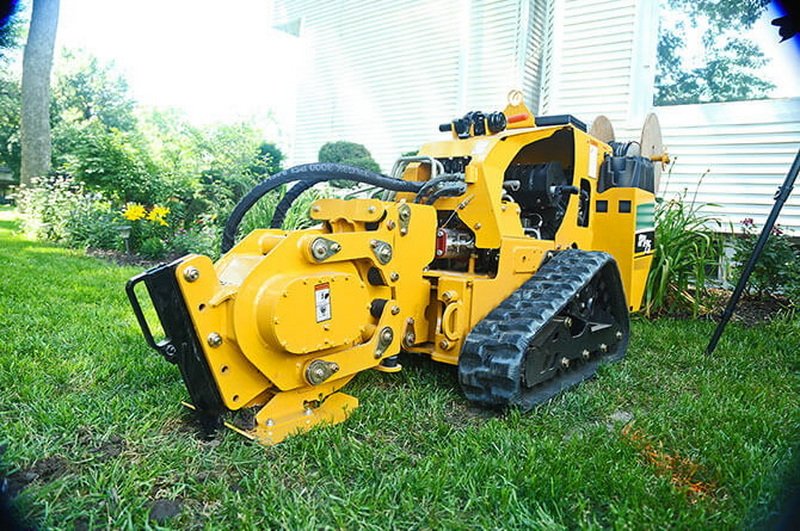
6. Maintenance Practices That Keep Forestry CTLs Profitable
Forestry environments are brutal on tracks, hydraulic components and cooling systems, so proactive maintenance is a core part of any vegetation management strategy.
6.1 Daily and Weekly Checks for Compact Track Loaders
Leading CTL maintenance experts recommend that operators follow a daily checklist that includes:
– Engine oil, hydraulic fluid and coolant level checks.
– Fuel tank filling and visual inspection of fuel lines and clamps.
– Air cleaner inspection and dust evacuation.
– Track condition, track sag and undercarriage cleanliness.
Weekly checks typically add more detailed inspections of track tension, hoses and structural components.
6.2 Track and Undercarriage Care in Forestry
Forestry jobs quickly pack the undercarriage with mulch, mud and debris. To extend track life:
– Clean tracks and undercarriage daily, especially around rollers and sprockets.
– Maintain track sag within the manufacturer’s recommended range; tracks too tight wear prematurely, while loose tracks can derail and reduce stability.
– Avoid sharp pivot turns on abrasive surfaces whenever possible.
7. Safety Best Practices for Compact Track Loader Forestry Work
Forestry vegetation management adds safety risks beyond typical construction tasks, including limited visibility, flying material and uneven terrain. A structured safety approach protects both operators and bystanders.
Key safety practices include:
– Drive at slow, controlled speeds, especially on slopes or uneven ground.
– Keep the attachment or bucket as low as practical when traveling to maintain stability.
– Maintain safe distances from trenches, drop-offs and other equipment.
– Use appropriate PPE: hard hat, eye and face protection, hearing protection and high-visibility clothing.
Always train operators on the specific forestry attachment, including start-up, shutdown, emergency stops and clearing jams. Never service or unclog an attachment with the engine running or hydraulics pressurized.
8. Forestry Mulcher vs. Brush Cutter: Matching the Tool to the Job
Choosing the right attachment is as important as choosing the right compact track loader forestry platform. Forestry mulchers and heavy-duty brush cutters serve overlapping but distinct roles.
| Application focus | Forestry mulcher | Brush cutter / rotary mower |
|---|---|---|
| Primary use | High-density trees and heavy brush | Grass, light brush, saplings |
| Material size | Often up to 8–14 in diameter, depending on drum or disc design | Typically small trees and brush |
| Finish quality | Fine mulch layer, minimal debris handling | Rougher cut, more material left standing |
| Productivity | High on overgrown tracts and timber | High on pastures, ROWs with lighter growth |
| Carrier demands | Requires high-flow CTL, strong cooling, robust guarding | Standard or high-flow CTL depending on deck rating |
Modern forestry mulchers may use variable torque motors and bite-limiter teeth to maintain cutting power while reducing stalling and hydraulic temperature. These technologies are particularly beneficial on high-horsepower compact track loaders that run all day in demanding conditions.
9. Real-World Use Cases: Where Forestry-Optimized CTLs Excel
A properly outfitted compact track loader forestry package is versatile across industries and job types. Common high-value applications include:
– Right-of-way and utility line management: Maintaining access and clearance for power lines, pipelines and communications corridors.
– Construction site preparation: Clearing undergrowth and small timber before earthmoving begins.
– Wildfire risk reduction: Creating firebreaks and removing ladder fuels in fire-prone regions.
– Farmland and pasture reclamation: Opening up idle land and removing invasive species to restore productivity.
Because one CTL can often replace multiple machines and manual crews, contractors can bid competitively while still improving profit margins.
10. How Certeg Can Support Your Compact Track Loader Forestry Needs
As a global manufacturer of compact equipment and construction machinery, Certeg can supply the power platforms contractors need to build a profitable vegetation management fleet. Your business may already rely on:
– Excavators for stump removal and final grading.
– Skid steer and compact track loaders for mulching and brush cutting.
– Road rollers and tractors for access road construction and maintenance.
– Forklifts and crawler transporters for moving materials and attachments on site.
By pairing forestry-optimized CTLs with the rest of a Certeg equipment lineup, land-clearing contractors can deliver end-to-end services—from initial vegetation removal through compaction and material handling—using a unified, reliable machine fleet.
11. Actionable Checklist: How to Outfit a Compact Track Loader for Forestry Today
Use this step-by-step checklist to turn a standard CTL into a vegetation management profit center:
1. Confirm that your compact track loader meets or exceeds the horsepower and hydraulic requirements of the intended forestry mulcher or cutter.
2. Upgrade to a forestry guarding package with reinforced cab, window guards and undercarriage protection.
3. Select a forestry attachment (mulcher vs. brush cutter) based on your primary vegetation type and desired finish quality.
4. Match the CTL’s auxiliary flow and pressure to the attachment’s rating; enable flow reduction if the machine exceeds the attachment’s maximum.
5. Work with your dealer to optimize pulley configurations and two-speed motor settings for tip speed and torque in your core applications.
6. Configure operator preferences such as arm speed, creep mode and flow sharing and test on a small site before large projects.
7. Implement a forestry-specific maintenance schedule, including daily track and undercarriage cleaning plus frequent cooling system inspections.
8. Train operators on safety protocols for forestry, including PPE, safe travel speeds and emergency procedures.
Upgrade Your Fleet with Certeg Today
Ready to transform your compact track loader into a forestry powerhouse? Contact Certeg now for expert guidance on selecting the perfect high-flow CTL, matching attachments and custom configurations tailored to your vegetation management jobs. Visit our website or call our sales team to schedule a demo and boost your land-clearing productivity starting today.
Contact us to get more information!
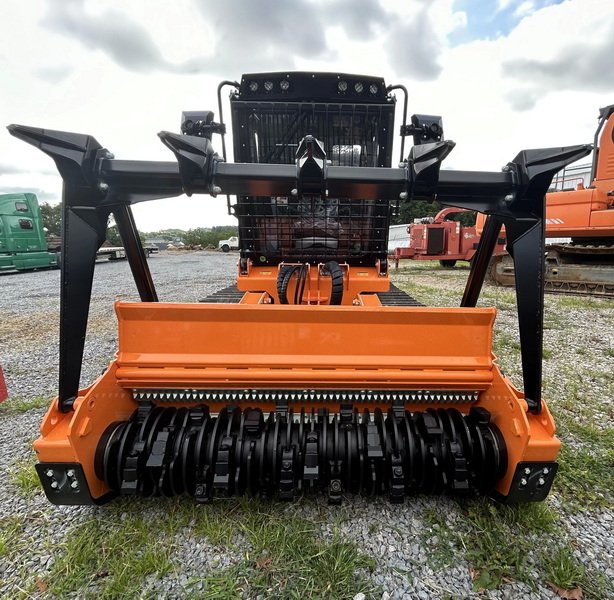
FAQs: Compact Track Loader Forestry and Vegetation Management
Q1: Do I need a dedicated forestry compact track loader, or can I use my standard CTL?
A standard CTL can handle light brush work, but for daily mulching and dense vegetation, a forestry-spec machine with high-flow hydraulics, heavy guarding and enhanced cooling is strongly recommended to avoid downtime and premature wear.
Q2: How much hydraulic flow do I need for a forestry mulcher?
Most professional drum and disc mulchers require high-flow hydraulics, with specific gpm and pressure values listed by the manufacturer; matching these specs is essential to reach full cutting speed and torque.
Q3: How often should I service a compact track loader used for forestry work?
You should perform daily inspections for fluids, tracks, couplers and debris buildup, followed by weekly and hourly-interval service tasks according to the CTL and attachment manuals. Forestry work often justifies more frequent cleaning and cooling system checks because of dust and debris.
Q4: Is a forestry mulcher or a heavy-duty brush cutter better for land clearing?
Forestry mulchers excel in dense trees and brush and create a fine mulch finish, while brush cutters are ideal for lighter vegetation and pasture maintenance; many contractors run both to cover different job types efficiently.
Q5: What safety measures are most important when running a forestry mulcher on a CTL?
Key practices include slow, controlled travel, keeping the head low while moving, maintaining exclusion zones around the machine, using full PPE and never servicing the attachment with the engine running. Forestry guarding and clean sight lines through reinforced windows are equally important.
References
1. – https://compactequip.com/compact-track-loaders/optimized-for-forestry-work-six-tips-to-outfit-a-compact-track-loader-for-vegetation-management-applications/
2. – https://skidpro.com/best-skid-steer-for-forestry-mulching/
3. – https://www.landscapemanagement.net/top-10-tips-for-track-loader-maintenance/
4. – https://compactequip.com/attachments/how-to-outfit-a-compact-track-loader-for-brush-cutting-and-land-management-applications/
5. – https://kelbebros.com/why-a-forestry-mulcher-for-your-skid-steer-is-a-game-changer-for-land-clearing/
6. – https://www.rentcoequipment.com/2023/02/track-loader-safety-tips/
7. – https://www.newenglandconstruction.news/NEC/article/7B8D1C05-six-tips-to-optimize-compact-track-loader-forestry-performance
8. – https://fecon.com/how-to-choose-the-right-forestry-mulcher/
9. – https://www.landscapemanagement.net/the-top-maintenance-tips-to-keep-your-compact-track-loaders-running-smooth/
10. – https://www.equipmentjournal.com/construction-news/land-clearing-attachments/
Hot Tags: Skid Steer Wood Chipper Attachment, Forestry Compact Track Loader, Vegetation Management Equipment, Forestry Track Loader Attachments, Compact Track Loader Forestry Setup, Land Clearing Track Loaders, Forestry Mulching Equipment, Heavy-Duty Track Loaders, Vegetation Control Machinery, Compact Loader Forestry Applications