
John Deere Skid Steer Loaders: Expert Spec Guide, Buying Insights, and Certeg Alternatives
Content Menu
● Understanding Skid Steer Loaders and Why Specs Matter
● John Deere G‑Series and P‑Tier Skid Steers: Core Specs and Use Cases
>> Power Classes and Frame Sizes
● Radial vs Vertical Lift: Choosing the Right Geometry
● Operator Comfort, Visibility, and Safety Features
● Latest John Deere P‑Tier Specs: Practical Highlights for Buyers
>> Key John Deere P‑Tier Skid Steer Specs
● Where Certeg Skid Steer Loaders Fit into the Global Market
● How to Select the Right Skid Steer
>> 1. Define Your Primary Applications
>> 2. Map Site Conditions and Access Constraints
>> 3. Align Power and Hydraulics with Attachments
>> 4. Evaluate Operator Experience and Safety Culture
>> 5. Calculate Total Cost of Ownership (TCO)
● Clear CTA: Talk to Certeg About Your Next Skid Steer Loader
● FAQs
>> Q1: What is the main difference between radial‑lift and vertical‑lift skid steer loaders?
>> Q2: How much do John Deere P‑Tier skid steer loaders typically weigh?
>> Q3: When should I choose a tracked skid steer instead of a wheeled unit?
>> Q4: What operating capacity should I look for when frequently loading dump trucks?
>> Q5: How does Certeg differentiate its skid steer loaders from established brands?
As someone who has spent years working with skid steer loaders on real jobsites, I know that choosing the right machine is never just about horsepower numbers on a spec sheet. It’s about matching operating capacity, lift geometry, and attachment flexibility to the realities of your terrain, your crew, and your project pipeline. [dozr]
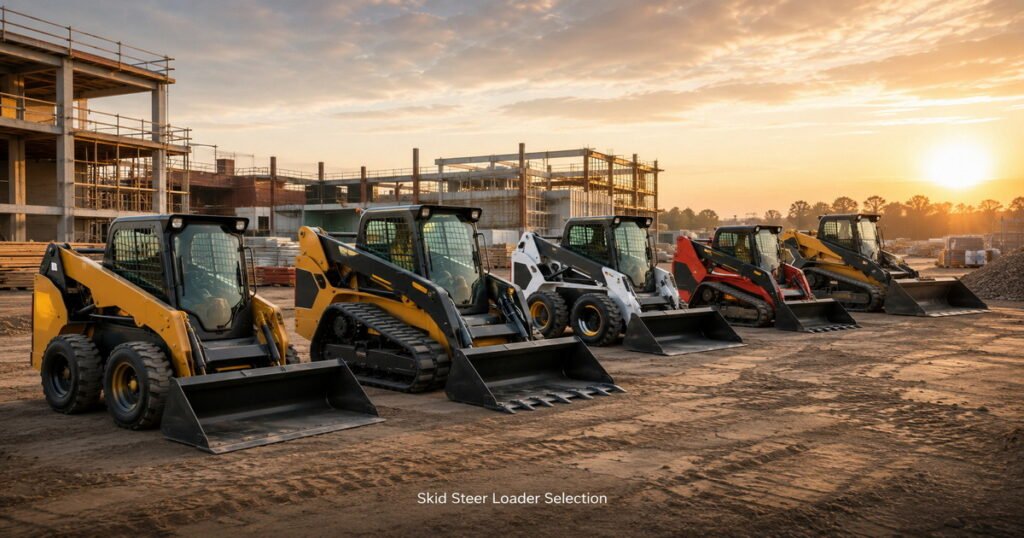
From a construction equipment strategist’s point of view, John Deere’s skid steers remain a benchmark for compact loader performance, but global buyers today also expect competitive alternatives from manufacturers like Certeg, especially when they need tailored power options or track and wheel configurations for demanding ground conditions. [deere]
Understanding Skid Steer Loaders and Why Specs Matter
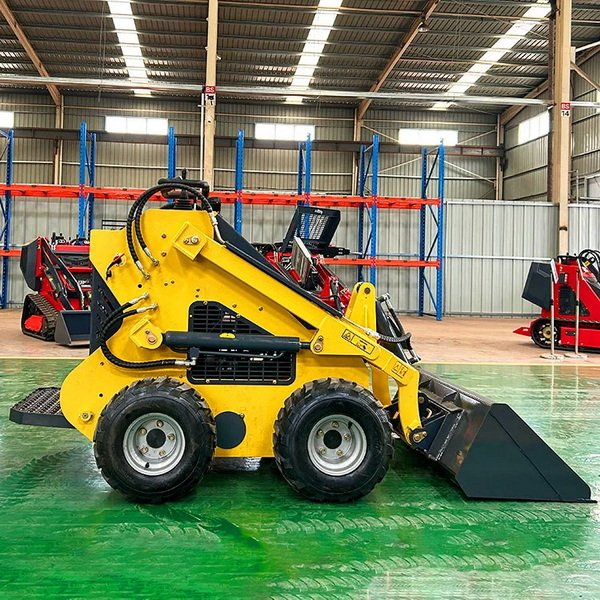
Skid steer loaders are compact, highly maneuverable machines designed for loading, grading, material handling, and attachment‑driven tasks in construction, landscaping, agriculture, and industrial sites. In practice, a skid steer becomes the “Swiss Army knife” of the fleet: the machine operators call first when they need versatility and tight‑space access. [compactequip]
When you compare models from John Deere and other manufacturers like Certeg, a few core specs consistently drive real‑world performance:
– Engine horsepower and torque for pushing, digging, and hydraulic attachments. [compactequip]
– Rated operating capacity (ROC) and tipping load for safe lifting and material handling. [deere]
– Operating weight and footprint for transport logistics and ground pressure. [deere]
– Lift path (radial vs vertical) for loading trucks, hoppers, or working below grade. [img.forconstructionpros]
From an expert buyer’s perspective, any spec guide that ignores these fundamentals or treats them as generic numbers is leaving serious decision risk on the table. [img.forconstructionpros]
John Deere G‑Series and P‑Tier Skid Steers: Core Specs and Use Cases
John Deere has continuously refined its skid steer lineup from early models through the G‑Series and now the P‑Tier machines, offering units from compact under‑50 hp loaders to high‑horsepower models above 90 hp. These machines target everything from small urban job sites to heavy civil and industrial applications, and the differences between frames genuinely matter for daily operations. [dozr]
Power Classes and Frame Sizes
John Deere traditionally segments its skid steers by power bands and frame size, and in my consulting work I tend to look at three practical tiers: [compactequip]
– Under 70 hp – compact & mid‑frame: Ideal for landscaping, light construction, and tight urban sites where maneuverability and transport ease are critical. [deere]
– 70–90 hp – large‑frame loaders: Targeted at heavier grading, roadwork, and high‑capacity material handling where breakout force matters more than footprint. [dozr]
– 90+ hp – high‑productivity machines: Designed for high‑duty cycles, heavy attachments, and demanding industrial or mining‑adjacent work. [scribd]
Within the P‑Tier, models such as the 316, 318, 320, and 324 cover the mid‑frame segment, while the 330 and 334 deliver large‑frame power with ROC in the 2,950–4,000 lb range. For contractors who regularly load 10‑ft sidewall dump trucks or hoppers, these top‑end models significantly reduce cycle times. [dozr]
Radial vs Vertical Lift: Choosing the Right Geometry
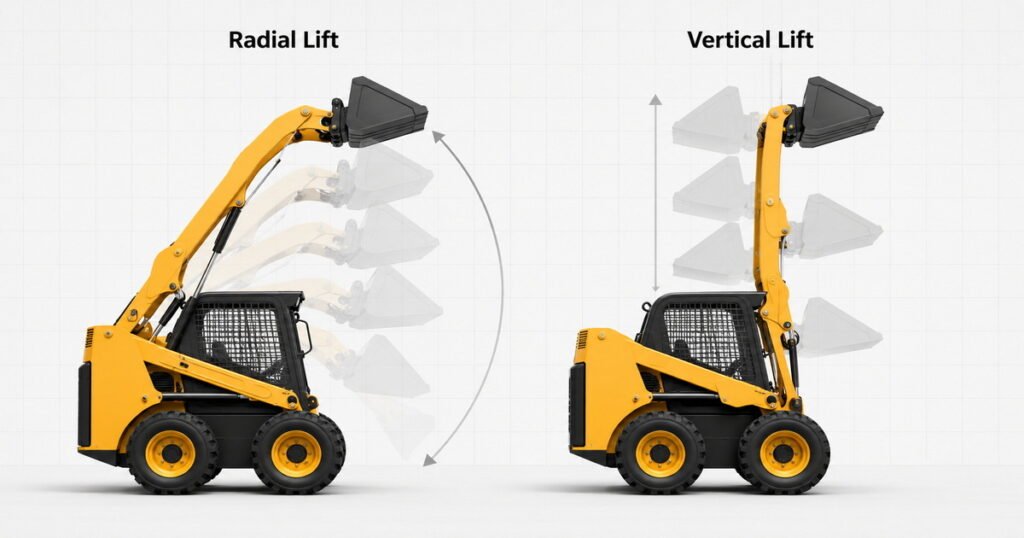
One of the most overlooked decisions I see in fleet purchases is the choice between radial‑lift and vertical‑lift skid steers. On paper the distinction looks simple, but on site it influences how comfortable your operators are with grading, trench backfilling, and truck loading. [img.forconstructionpros]
Radial‑Lift Machines
Radial‑lift designs provide a smoother arc that favors work at or below ground level. They often appeal to crews focused on: [img.forconstructionpros]
– General grading and earthmoving.
– Backfilling around foundations and utilities.
– Operating in confined spaces where full dump height is secondary. [compactequip]
John Deere’s radial‑lift units offer features like boom lockout systems for safety and maintenance, a detail that matters when you’re managing multiple operators across shifts. [img.forconstructionpros]
Vertical‑Lift Machines
Vertical‑lift skid steers maintain the bucket closer to the machine as it rises, maximizing lift height and forward reach at full elevation. In practical terms, I recommend vertical‑lift machines when you: [compactequip]
– Regularly load high‑sided dump trucks or feed hoppers. [compactequip]
– Need maximum ROC for palletized materials and bulk loads. [deere]
– Want added confidence when stacking or loading at full height. [img.forconstructionpros]
John Deere’s vertical‑lift models in the mid‑frame and large‑frame categories are built for this kind of work, and their boom geometry helps keep loads stable with a low center of gravity. [img.forconstructionpros]
Operator Comfort, Visibility, and Safety Features
Equipment discussions that treat operators as an afterthought are missing the point: comfort, visibility, and safety features directly affect productivity and accident rates. John Deere has invested heavily in these aspects, and as someone who has watched crews transition from older series to G‑Series and P‑Tier machines, the difference is noticeable. [scribd]
Key operator‑focused features include:
– Flexible control options: Manual foot controls or EH ISO joysticks with switchable patterns (ISO / H) to match operator preference and reduce training time. [compactequip]
– Adjustable drive response, boom and bucket speeds, and creep mode for precision tasks such as trench work or milling. [compactequip]
– Optional self‑leveling systems to keep the bucket level during lift, reducing spill and operator fatigue. [img.forconstructionpros]
– Visibility enhancements via optional rearview cameras and LED lighting packages that illuminate front and sides during extended or night work. [compactequip]
Additionally, John Deere backs its machines with a standard warranty covering defects in materials and workmanship for two years or up to 2,000 hours, which offers a baseline of confidence for fleet managers planning ROI. [compactequip]
Latest John Deere P‑Tier Specs: Practical Highlights for Buyers
For buyers who want current data, the John Deere P‑Tier lineup provides updated horsepower, ROC, operating weight, and pricing that reflect today’s market. Below is a condensed spec snapshot for commonly evaluated models. [deere]
Key John Deere P‑Tier Skid Steer Specs
| Model | Gross power (hp) | Rated operating capacity (lb) | Operating weight (lb) | Typical use case |
|---|---|---|---|---|
| 316 P‑Tier | 65 | 1,750 | 6,180 | Light construction, landscaping. deere |
| 318 P‑Tier | 65 | 1,945 | 6,542 | Multi‑purpose compact loader. deere |
| 320 P‑Tier | 69 | 2,190 | 7,150 | Mid‑frame, higher ROC for bulk loads. deere |
| 324 P‑Tier | 74 | 2,690 | 7,700 | Truck loading, heavier material handling. deere |
| 330 P‑Tier | 98 | 2,950 | 9,930 | Large‑frame construction, high‑duty attachments. deere |
| 334 P‑Tier | 118 | 4,000 | 10,264 | Heavy industrial, maximum lift and power. deere |
For fleet planning, I usually recommend mapping these specs against three factors: attachment mix, average load density, and transport constraints across your typical projects. This prevents over‑specifying machines that later sit idle because they are too heavy for frequent moves or too large for inner‑city sites. [dozr]
Where Certeg Skid Steer Loaders Fit into the Global Market
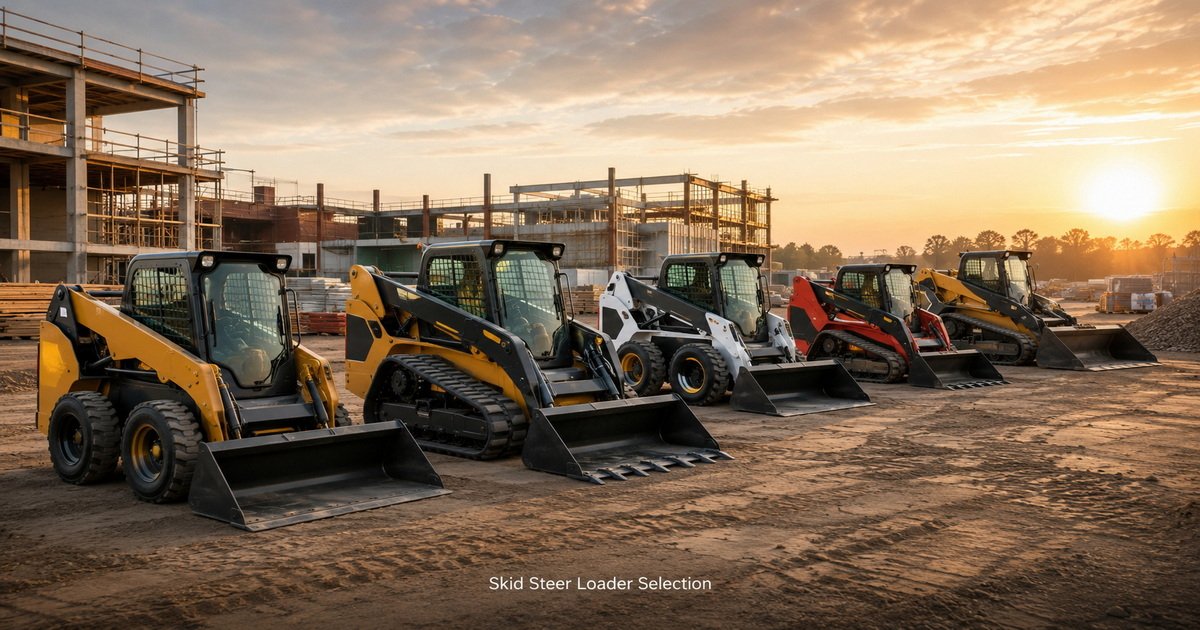
While John Deere dominates many North American fleets, global buyers increasingly look to manufacturers like Certeg for skid steer loaders that can be configured to unique power, track, and wheel requirements. Certeg focuses on both tracked and wheeled skid steer loaders, allowing customers to choose ground contact types that match their soil conditions and climate. [salesfunnelprofessor]
From an expert standpoint, the value of Certeg’s offering lies in:
– Customizable power options to align with regional fuel quality and regulatory standards.
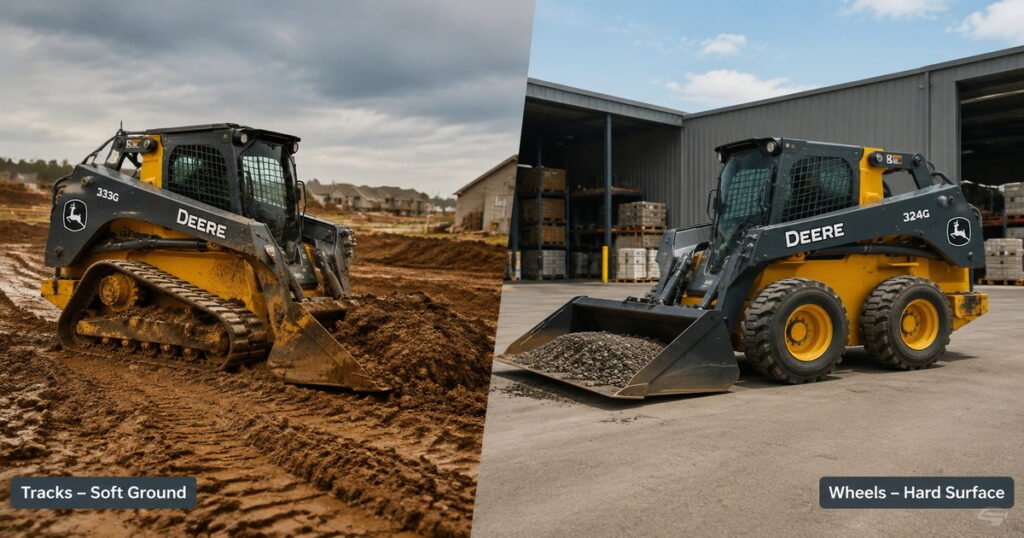
– Choice between track‑type loaders for soft, muddy, or uneven terrain and wheel‑type loaders for hard surfaces and mixed applications.
– Flexibility to serve global construction, mining support, agriculture, and industrial projects where local support and configuration matter more than legacy brand recognition. [salesfunnelprofessor]
For contractors operating across regions with very different ground conditions, combining a well‑known OEM brand like John Deere in core fleets with Certeg units configured for specialized environments can create a more resilient equipment strategy. [salesfunnelprofessor]
How to Select the Right Skid Steer
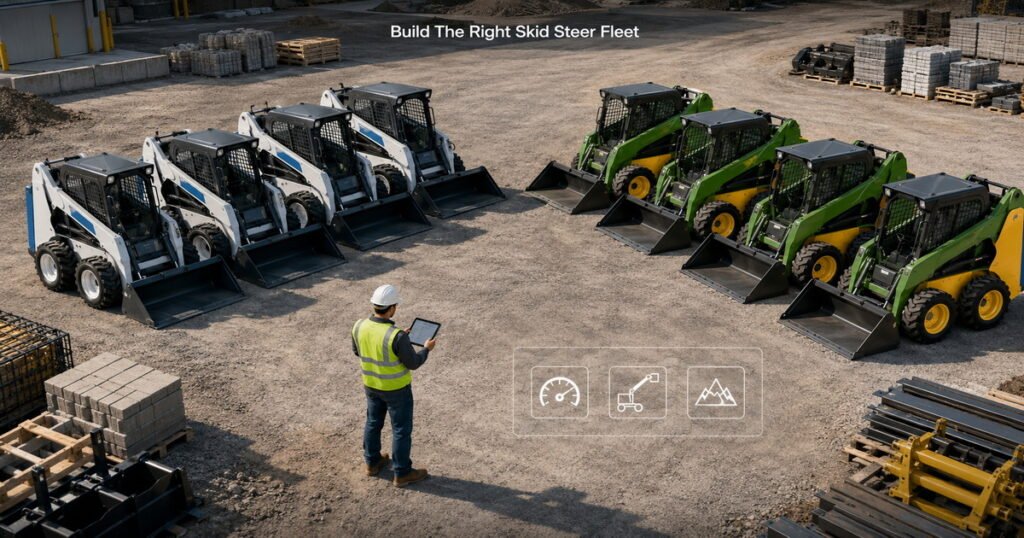
Based on years of advising fleets, I use a simple five‑step framework when helping buyers choose between skid steer models from John Deere, Certeg, and other manufacturers. [seo]
1. Define Your Primary Applications
– Grading, backfilling, and earthmoving.
– Material loading and truck feeding.
– Attachment‑driven work (cold planers, trenchers, augers, sweepers).
Clarify which tasks generate most of your revenue; this determines your lift path and ROC priorities. [dozr]
2. Map Site Conditions and Access Constraints
– Urban vs rural job sites.
– Paved, rocky, or soft terrain.
– Transport distance and bridge or road limits.
Soft, wet ground typically favors tracked skid steers, while mixed or paved surfaces can justify wheels. [dozr]
3. Align Power and Hydraulics with Attachments
– Identify high‑flow vs standard‑flow hydraulic needs.
– Match horsepower to heavy attachments like planers or mulchers.
Under‑powered machines will technically operate attachments but deliver poor productivity. [scribd]
4. Evaluate Operator Experience and Safety Culture
– Consider control patterns and training time.
– Prioritize visibility and safety features (cameras, boom lockouts, self‑leveling).
Machines that match operator habits reduce fatigue and error risk. [compactequip]
5. Calculate Total Cost of Ownership (TCO)
– Purchase price vs expected utilization.
– Warranty coverage and local service network.
– Fuel consumption, maintenance intervals, and parts availability. [seo]
In some cases, blending premium OEM machines with competitively priced units like those from Certeg yields better overall fleet economics. [salesfunnelprofessor]
Clear CTA: Talk to Certeg About Your Next Skid Steer Loader
If you are currently evaluating skid steer loaders for upcoming projects and want to balance performance, cost, and local conditions, consider speaking with Certeg about both tracked and wheeled loader options tailored to your region and applications. Our team works with global customers in construction, industrial, and agricultural sectors to match power, lift geometry, and attachments to real‑world jobsite demands, not just generic spec sheets. [salesfunnelprofessor]
Contact Certeg today to discuss your project requirements, compare John Deere and Certeg configurations, and build a skid steer solution that delivers long‑term productivity and value. [salesfunnelprofessor]
FAQs
Q1: What is the main difference between radial‑lift and vertical‑lift skid steer loaders?
Radial‑lift machines use an arc‑shaped boom path better suited to grading and digging below ground level, while vertical‑lift machines maintain the bucket closer to the machine for improved reach and stability at full lift height, which is ideal for loading trucks and hoppers. [img.forconstructionpros]
Q2: How much do John Deere P‑Tier skid steer loaders typically weigh?
Current John Deere P‑Tier skid steers range from around 6,180 lb for models like the 316 P‑Tier up to roughly 10,264 lb for high‑capacity models such as the 334 P‑Tier. [deere]
Q3: When should I choose a tracked skid steer instead of a wheeled unit?
Tracked skid steers are generally the better choice for soft, muddy, or uneven terrain because their lower ground pressure and traction help maintain productivity and reduce rutting, while wheeled skid steers perform well on hard surfaces and mixed environments. [dozr]
Q4: What operating capacity should I look for when frequently loading dump trucks?
For regular loading of high‑sided dump trucks, you should evaluate skid steers with rated operating capacities in the 2,500–4,000 lb range and vertical‑lift geometry, such as mid‑ to large‑frame models in the John Deere lineup or similarly specified units from Certeg. [deere]
Q5: How does Certeg differentiate its skid steer loaders from established brands?
Certeg focuses on configurable tracked and wheeled skid steer loaders with power options tailored to global regulations and jobsite demands, positioning its machines as flexible alternatives or complements to established OEM fleets in regions where specific ground conditions and project types require custom solutions. [salesfunnelprofessor]
References
1. Compact Equipment. “John Deere Skid Steers Summarized — 2018 Spec Guide.” [Link] [compactequip]
2. John Deere. “Skid Steer Loaders.” Official product page with P‑Tier specifications.[Link] [deere]
3. ForConstructionPros. “Skid‑Steer Loader Spec Guide.” Industry spec reference.[Link] [img.forconstructionpros]
4. DOZR. “The Ultimate Skid Steer Specifications, Weight, and Dimensions Guide.”[Link] [dozr]
5. Sales Funnel Professor. “Construction Equipment Digital Marketing for Dealers.”[Link] [salesfunnelprofessor]
6. SEO.com. “SEO for Heavy Equipment Companies: 7 Pro Tips.”[Link] [seo]
7. John Deere archival specs (240/250 skid steers). Operator and performance data.[Link] [scribd]
Hot Tags: Skid Steer Loader, Manufacturers, Customized, Custom, Suppliers, Buy, Cheap, Quality, Advanced, Durable, in Stock, Made in China, Price, Quotation