
How to Select and Use a Silt Fence Installer Attachment: The Complete 2026 Guide
Content Menu
● Why Silt Fence Installer Attachments Are Critical for Modern Construction
>> Regulatory Compliance and Time Efficiency
>> Economic Impact and Market Growth
● Understanding Silt Fence Installer Attachment Components
>> The Coulter, Tooth, and Blade System
>> Mounting Frame Configurations
● How to Select the Right Silt Fence Installer Attachment
>> Matching Attachment Capacity to Host Machine Specifications
>> Evaluating Durability and Build Quality
>> Determining the Optimal Mounting Configuration
● Advanced Features That Enhance Installation Capabilities
>> Wire Backing Integration Systems
>> Hydraulic Requirements and Flow Optimization
● Step-by-Step Operating Procedures for Maximum Productivity
>> Pre-Operation Preparation and Safety Protocols
>> Installation Technique for Optimal Results
>> Post-Installation Soil Compaction
● Erosion Control Best Practices for Construction Sites
>> Integrated Sediment Management Strategies
>> Regulatory Compliance and Environmental Protection
● Cost Analysis and Return on Investment
>> Equipment Investment vs. Labor Savings
>> Rental vs. Purchase Decision Factors
● Maintenance and Troubleshooting
>> Routine Maintenance Schedules
>> Common Installation Problems and Solutions
● Safety Considerations and Risk Management
>> Ground Condition Assessment
● Choosing the Right Silt Fence Installer Manufacturer
>> Leading Industry Manufacturers
>> Certeg Construction Equipment Solutions
● Future Trends in Erosion Control Technology
>> Automation and GPS-Guided Installation
>> Advanced Geotextile Materials
● Transform Your Erosion Control Operations with Certeg
>> 1. What size skid steer do I need to operate a silt fence installer attachment?
>> 2. How fast can a silt fence installer attachment install fencing compared to manual methods?
>> 3. Do I need a side-shift silt fence installer or will a rigid mount work for my applications?
>> 4. How do I maintain proper installation depth and prevent fence pullout?
>> 5. What is the typical ROI timeline for purchasing a silt fence installer attachment?
Silt fence installer attachments have transformed erosion control operations on construction sites, enabling contractors to install thousands of feet of protective barriers in hours rather than days. These specialized tools combine trenching and fence installation into a single mechanized process, dramatically reducing labor costs while ensuring compliance with increasingly stringent environmental regulations. With the global silt fence installer attachment market reaching USD 412.7 million in 2024 and the erosion control sector projected to grow from USD 1.2 billion to USD 2.5 billion by 2032, understanding how to properly select and operate these attachments has become essential for competitive construction businesses.[1][2][3]

Why Silt Fence Installer Attachments Are Critical for Modern Construction
Regulatory Compliance and Time Efficiency
Silt fences serve as mandatory erosion control barriers on most construction projects, required by DOT regulations and environmental protection agencies to prevent soil migration into roadways, waterways, and drainage systems. Traditional manual installation methods require multiple workers digging trenches, positioning fabric, driving stakes, and backfilling—a labor-intensive process that costs between $2 to $8 per linear foot when performed by hand. In contrast, mechanized silt fence installers paired with skid steers or compact track loaders can install thousands of feet per hour, cutting installation time by up to 66% compared to traditional trenching methods.[4][1]
Economic Impact and Market Growth
The United States silt fence market alone was valued at $14.94 billion in 2025 and is projected to grow at a CAGR of 15.36% through 2033, reflecting the construction industry’s increasing investment in efficient erosion control solutions. For contractors managing projects across multiple acres—where a single acre requires approximately 835 linear feet of fencing—the productivity gains from using dedicated installer attachments translate directly to competitive bidding advantages and improved profit margins.[5][4]
Understanding Silt Fence Installer Attachment Components
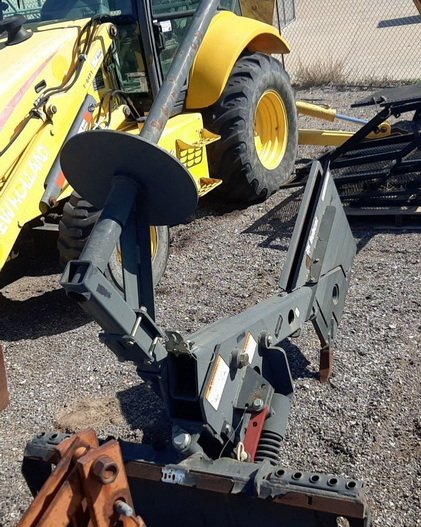
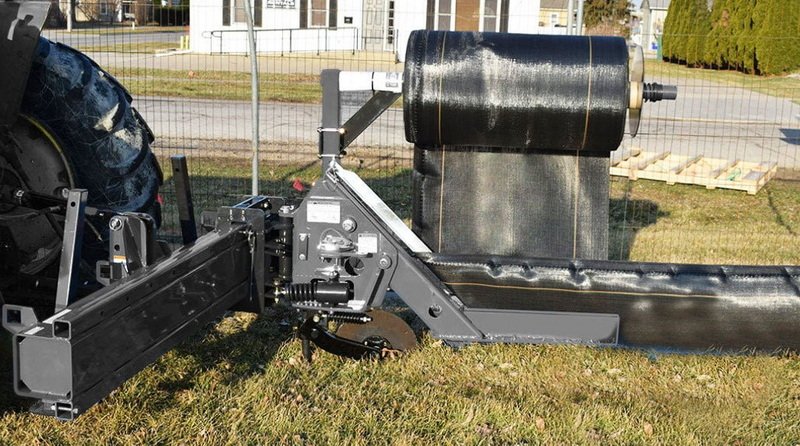
The Coulter, Tooth, and Blade System
Every silt fence installer attachment relies on three primary components that determine performance quality:[1]
– Coulter wheel: Slices through the surface layer and cuts roots, creating a clean initial path
– Cutting tooth: Penetrates compacted soil and breaks through subsurface obstacles
– Installation blade: Creates the trench depth and guides the fence fabric into position
The durability of these components directly impacts operational efficiency and maintenance requirements. High-quality attachments feature hardened steel construction with replaceable wear components, ensuring consistent performance across thousands of linear feet without frequent part replacement.[1]
Mounting Frame Configurations
Modern silt fence installers offer multiple mounting options to accommodate different host machines and operational requirements:[1]
– Rigid loader mount: Standard configuration for straightforward installation work
– Side-shift loader mount (78-inch): Enables installation closer to obstacles like buildings and guardrails
– Three-point tractor mount (rigid): Compatible with agricultural tractors for rural applications
– Three-point tractor mount (side-shift): Provides tractor compatibility with offset capability
Side-shift models have proven particularly valuable for contractors working in constrained urban environments, as they allow operators to install fencing up to 20 inches deep while positioning installations at the edge of the machine’s track width rather than being restricted to the centerline.[1]
How to Select the Right Silt Fence Installer Attachment
Matching Attachment Capacity to Host Machine Specifications
The host machine’s size and capabilities fundamentally determine which silt fence installer attachment will perform effectively. Skid steers and compact track loaders are classified by operating capacity:[1]
– Small-frame models (3,000-6,000 lbs): ROC of 760-1,550 lbs—insufficient for most silt fence installers
– Medium-frame models (6,000-7,000 lbs): ROC of 1,750-2,200 lbs—suitable for standard installations
– Large-frame models (7,000-12,000 lbs): ROC over 2,200 lbs—ideal for challenging soil conditions
Attempting to operate silt fence installers on undersized equipment like mini skid steers typically results in poor performance, as these machines lack sufficient downforce and traction to properly embed the fence fabric at the required depth. Always verify that your host machine’s hydraulic flow rate, pressure specifications, and weight capacity exceed the attachment’s requirements before purchasing.[6][7][1]
Evaluating Durability and Build Quality
Investing in a quality attachment that consistently performs without maintenance issues saves significant time and frustration across project lifecycles. When evaluating build quality, examine:[1]
– Weld integrity: Look for continuous, full-penetration welds rather than intermittent tack welds
– Material thickness: Frame components should use minimum 1/4-inch steel plate
– Wear surface treatment: Hardened or replaceable cutting edges extend operational lifespan
– Bearing quality: Sealed bearings protect against soil intrusion and reduce maintenance
Premium attachments cost between $8,000 to $11,000 depending on mounting configuration, but this investment typically pays for itself within the first major project through reduced labor costs and eliminated manual installation requirements.[1]
Determining the Optimal Mounting Configuration
Standard rigid-mount installers work efficiently in open areas with unrestricted positioning, but side-shift capabilities become essential when working near fixed obstacles. The 78-inch side-shift range allows operators to install silt fencing closer to guardrails, building foundations, and property boundaries without requiring manual finishing work in tight zones.[1]
Projects in urban environments, highway work zones, and sites with existing infrastructure typically justify the additional cost of side-shift models through labor savings and eliminated hand-digging requirements. Conversely, agricultural applications and open-field projects may not require offset capability, making rigid-mount configurations the more economical choice.
Advanced Features That Enhance Installation Capabilities
Wire Backing Integration Systems
Many contractors specify wire-backed silt fences for Type C high-durability applications, particularly in regions with heavy rainfall or extended project timelines. Wire unroller features integrated into the installer attachment allow operators to simultaneously install both geotextile fabric and wire backing in a single pass. This capability provides:[4][1]
– Increased fence strength: Wire backing prevents fabric tearing under high sediment loads
– Extended service life: Enhanced structural integrity supports 18-36 month performance specifications
– Reduced installation time: Eliminates separate wire installation operations
Advanced composite silt fence materials like Siltron® now offer 3-layer geotextile construction that eliminates wire backing requirements while maintaining extended functional lifespan, simplifying the installation process while reducing potential failure points.[8]
Hydraulic Requirements and Flow Optimization
While silt fence installers are primarily passive attachments that don’t require continuous hydraulic power, some models incorporate hydraulic angle adjustment or depth control features. When selecting attachments with hydraulic functions, verify that your host machine’s auxiliary hydraulic circuit provides adequate flow rate (typically 8-15 GPM) and pressure (2,000-3,000 PSI) to operate these features without compromising loader function performance.[7]
Step-by-Step Operating Procedures for Maximum Productivity
Pre-Operation Preparation and Safety Protocols
Before operating any silt fence installer attachment, thoroughly review the owner’s manual to understand specific operational characteristics and safety requirements. Critical pre-operation steps include:[1]
1. Attachment inspection: Verify all bolts are torqued to specification and cutting components show no excessive wear
2. Fence material loading: Mount fabric roll on the designated spindle with proper tension adjustment
3. Depth setting verification: Adjust the installation blade to achieve the specified 6-8 inch burial depth
4. Operational clearance check: Ensure adequate overhead and lateral clearance for reverse operation
Because silt fence installers operate in reverse to allow the operator clear visibility of the installation path, heightened awareness of surroundings becomes essential for safe operation.[1]
Installation Technique for Optimal Results
Keeping the silt fence installer level with the ground during operation ensures proper penetration and secure fence seating. If the attachment angles too high, the fabric won’t achieve sufficient burial depth, creating risk of pullout under sediment load. Conversely, excessive downward angle can cause the attachment to plow rather than slice through soil, resulting in uneven installation and increased equipment strain.[1]
Operating in straight lines maximizes productivity and creates the most effective erosion control barriers. When approaching corners:[1]
– Stop forward travel before attempting direction changes
– Lift the attachment clear of the ground
– Reposition the machine to establish the new installation line
– Resume installation in the new direction
Attempting to curve around corners while maintaining installation typically produces poor results with inconsistent depth and potential fabric bunching. The additional time required to properly reposition for square corners is offset by elimination of rework and improved fence performance.[1]
Post-Installation Soil Compaction
Freshly installed fence lines create loose, disturbed soil that presents trip hazards for site personnel and leaves the fence vulnerable to pullout if subjected to early sediment loading. After completing each section of installation:[1]
1. Drive the host machine directly over the installed fence line
2. Make multiple passes if soil remains notably loose
3. Compact the soil to approximately 80-85% of original density
4. Visually inspect for any fence fabric protrusion or instability
This compaction step reduces both safety hazards and the risk of premature fence failure, ensuring the installation performs as designed throughout the project duration.[1]
Erosion Control Best Practices for Construction Sites
Integrated Sediment Management Strategies
While silt fences remain prevalent erosion control tools, they function most effectively when integrated into comprehensive sediment management programs. Best practices for construction site erosion control include:[9]
– Phased construction sequencing: Minimize the total area of exposed soil at any given time
– Vegetative stabilization: Establish temporary or permanent vegetation on completed areas
– Multiple barrier types: Combine silt fences with sediment ponds, gravel entrances, and riparian buffers
– Regular maintenance inspections: Check fence integrity and sediment accumulation every 7-14 days
Silt fences require sediment removal when accumulation reaches 50% of fence height to maintain effectiveness. Proper positioning at the base of slopes—with increased setback distance on steeper or longer slopes—ensures adequate sediment capture without overwhelming the barrier capacity.[10][9]
Regulatory Compliance and Environmental Protection
Federal and state regulations mandate erosion control measures on construction projects that disturb more than one acre of land or are part of larger common development plans. Compliance requires:[1]
– SWPPP documentation: Stormwater Pollution Prevention Plans specifying erosion control BMPs
– Installation verification: Photographic documentation of properly installed barriers
– Maintenance records: Regular inspection logs demonstrating ongoing compliance
– Performance monitoring: Evidence that erosion control measures function as designed
Failure to implement adequate erosion control can result in regulatory fines, stop-work orders, and costly remediation requirements. The investment in proper silt fence installer attachments and trained operators pays for itself through avoided compliance penalties and streamlined project execution.[8]
Cost Analysis and Return on Investment
Equipment Investment vs. Labor Savings
Silt fence installer attachments typically cost between $8,000 to $11,000 depending on mounting configuration and features. To evaluate ROI, consider:[1]
Manual Installation Costs:
– 3-person crew installing 300 linear feet per day
– Labor cost of $150-200 per hour for crew
– Installation rate of $5-8 per linear foot including labor[4]
Mechanized Installation Performance:
– Single operator installing 2,000+ linear feet per hour
– Equipment and operator cost of $100-125 per hour
– Installation rate of $0.50-0.75 per linear foot including equipment
On a project requiring 5,000 linear feet of silt fence, manual installation costs approximately $25,000-40,000, while mechanized installation costs $2,500-3,750—a savings of $21,250-36,250 on a single project. This demonstrates that the attachment investment can be recovered on the first substantial project.[4]
Rental vs. Purchase Decision Factors
Approximately 15% of silt fence installer attachment usage occurs through rental fleets. Rental makes economic sense when:[1]
– Project duration is less than 2-3 weeks
– Total installation requirement is under 10,000 linear feet
– Irregular project frequency doesn’t justify ownership
– Cash flow considerations limit capital equipment purchases
For contractors with consistent erosion control requirements across multiple projects annually, ownership provides better long-term value through eliminated rental fees and immediate equipment availability.
Maintenance and Troubleshooting
Routine Maintenance Schedules
To ensure consistent operation and maximize attachment lifespan, implement these maintenance protocols:
Daily Pre-Operation Checks:
– Inspect all bolts and verify tightness
– Check cutting edge wear and replace if depth exceeds 1/4 inch
– Lubricate spindle bearings and pivot points
– Verify fabric roll is properly seated and tensioned
Weekly Service Requirements:
– Clean soil accumulation from frame and blade surfaces
– Inspect welds for crack initiation
– Verify hydraulic connections are leak-free (if equipped)
– Check side-shift mechanism operation and alignment
Seasonal Storage Preparation:
– Thoroughly clean all components
– Apply rust preventive coating to exposed steel surfaces
– Store in dry location protected from weather
– Remove fabric rolls and store separately
Common Installation Problems and Solutions
Safety Considerations and Risk Management
Operator Safety Protocols
Because silt fence installers operate in reverse, operators must maintain constant awareness of their surroundings. Safety best practices include:[1]
– Conduct complete 360-degree site survey before beginning installation
– Use ground personnel as spotters when visibility is limited
– Install temporary barricades to prevent pedestrian entry to work zones
– Utilize backup alarms and cameras on the host machine
– Never operate on slopes exceeding the machine’s rated capacity
Ground Condition Assessment
Before beginning installation, conduct thorough site assessment to identify:
– Buried utilities: Coordinate with utility locating services and verify clearances
– Underground obstructions: Survey for buried foundations, debris, or rock formations
– Unstable soil conditions: Avoid areas with recent fill or saturated ground
– Overhead hazards: Verify clearance from power lines and tree branches
Striking underground utilities while installing silt fence can result in service disruption, property damage, and serious injury—thorough pre-construction investigation prevents these incidents.[10]
Choosing the Right Silt Fence Installer Manufacturer
Leading Industry Manufacturers
Bobcat offers comprehensive silt fence installer lineups with four primary mounting configurations: loader mount rigid, loader mount side-shift, three-point mount rigid, and three-point mount side-shift. The company has streamlined its mounting frame options to simplify the ordering process while maintaining compatibility across its extensive equipment fleet. Approximately 15% of Bobcat silt fence installer volume moves through dealer rental programs, indicating strong rental market support.[1]
Blue Diamond Attachments specializes in side-shift mount models capable of installing fence up to 20 inches deep, with particular popularity among contractors working in constrained spaces. Their wire unroller feature provides additional versatility for contractors specifying wire-backed fence installations. The company emphasizes quality construction that minimizes maintenance requirements and maximizes uptime across challenging jobsite conditions.[1]
Certeg Construction Equipment Solutions
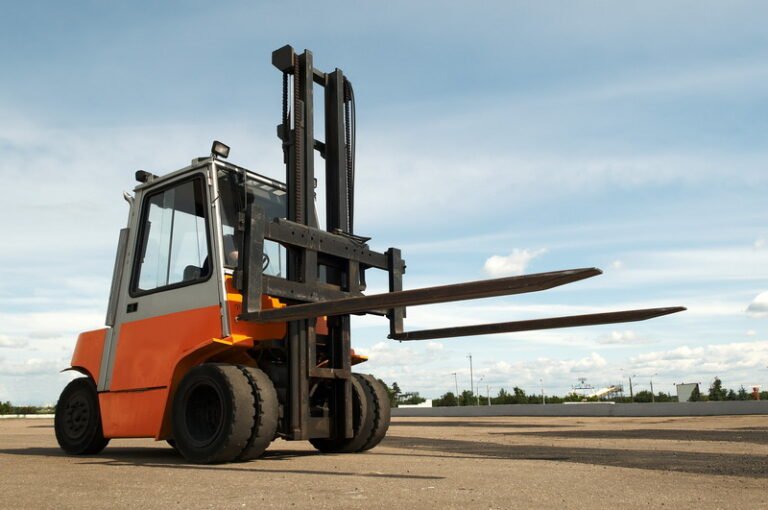
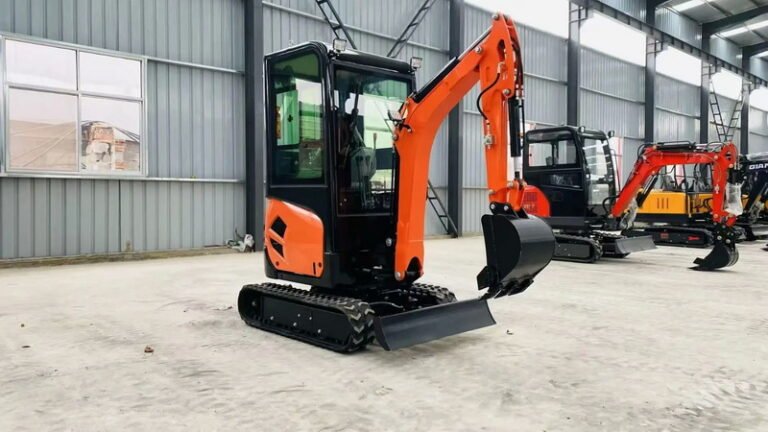
As a manufacturer of excavators, skid steer loaders, road rollers, forklifts, tractors, and tracked transporters, Certeg provides comprehensive construction machinery solutions that address diverse power requirements for global customers. Our equipment platforms are engineered to deliver optimal performance when paired with specialized attachments like silt fence installers, ensuring maximum productivity across erosion control applications. With robust hydraulic systems, superior traction characteristics, and universal quick-attach compatibility, Certeg machines provide the ideal foundation for mechanized silt fence installation operations in any terrain or soil condition.
Future Trends in Erosion Control Technology
Automation and GPS-Guided Installation
Emerging technologies in construction equipment increasingly incorporate GPS guidance and automated control systems. Future silt fence installer attachments may feature:[6]
– Automated depth control: Sensors maintain consistent burial depth regardless of ground contour
– GPS line following: Pre-programmed installation paths reduce operator input requirements
– Telematics integration: Real-time monitoring of installation linear footage and productivity rates
– Machine learning optimization: Systems that adjust operating parameters based on soil conditions
These technological advances will further reduce labor requirements while improving installation consistency and quality.
Advanced Geotextile Materials
The development of high-performance composite geotextile materials continues to evolve, with products like Siltron® offering extended 18-36 month functional lifespans without wire backing requirements. These advanced materials simplify installation while reducing failure points and maintenance requirements. As material science progresses, future silt fence products may incorporate:[8]
– Self-healing fabrics that resist tear propagation
– Biodegradable options for permanent installations that vegetate over time
– Sensor-embedded materials that monitor sediment load and structural integrity
– UV-resistant formulations that extend service life in high-exposure applications
Transform Your Erosion Control Operations with Certeg
The construction industry continues to demand faster, more cost-effective erosion control solutions that meet stringent regulatory requirements while maximizing profitability. Silt fence installer attachments represent a proven technology that delivers immediate ROI through labor savings, faster project completion, and improved compliance performance. As demonstrated throughout this guide, selecting the right attachment for your host machine specifications and operational requirements determines long-term success.
Certeg offers the complete solution for mechanized silt fence installation—from heavy-duty skid steer loaders and compact track loaders engineered with superior hydraulic capacity and traction characteristics, to expert consultation on attachment selection and operational best practices. Our global construction equipment platforms are designed to maximize attachment performance across diverse soil conditions, ensuring consistent results whether you’re working in urban environments, highway corridors, or remote agricultural applications.
Ready to reduce your erosion control installation costs by 85% while improving quality and compliance? Contact Certeg today to discuss your specific project requirements and discover how our integrated equipment solutions can transform your construction operations. Our technical team will help you specify the optimal machine and attachment combination for your applications, ensuring maximum productivity and profitability from day one.
Visit www.certeg.com or call our construction equipment specialists to schedule a personalized consultation and equipment demonstration.
Frequently Asked Questions
1. What size skid steer do I need to operate a silt fence installer attachment?
You need a minimum medium-frame skid steer (6,000-7,000 lbs) with a rated operating capacity (ROC) of at least 1,750 lbs to effectively operate most silt fence installer attachments. Mini skid steers and small-frame loaders lack sufficient downforce and traction to properly embed the fence fabric at the required 6-8 inch depth, resulting in poor installation quality and potential fence failure. Large-frame models (7,000-12,000 lbs) with ROC over 2,200 lbs provide optimal performance in challenging soil conditions like clay or rocky terrain.[6][1]
2. How fast can a silt fence installer attachment install fencing compared to manual methods?
Mechanized silt fence installers can install thousands of linear feet per hour, compared to manual installation rates of approximately 300 linear feet per day for a 3-person crew. This represents productivity gains of 600-700%, reducing installation time by approximately 66% compared to traditional trenching methods. On a project requiring 5,000 linear feet of silt fence, mechanized installation can be completed in 2-3 hours versus 16-17 days for manual installation, dramatically reducing labor costs from $25,000-40,000 to $2,500-3,750.[4][1]
3. Do I need a side-shift silt fence installer or will a rigid mount work for my applications?
Side-shift models become essential when working in constrained spaces near buildings, guardrails, property boundaries, or other fixed obstacles where positioning the skid steer centerline over the desired fence location is impossible. The 78-inch side-shift range allows installation at the edge of the machine’s track width rather than only on centerline, eliminating manual finishing work in tight zones. If your projects primarily involve open areas with unrestricted positioning, rigid-mount configurations provide adequate capability at lower cost. Urban construction, highway work zones, and sites with existing infrastructure typically justify the additional $1,500-2,000 cost premium for side-shift capability.[1]
4. How do I maintain proper installation depth and prevent fence pullout?
Maintaining the silt fence installer level with the ground during operation ensures proper penetration and secure fence seating at the specified 6-8 inch burial depth. If the attachment angles too high, insufficient burial depth creates pullout risk under sediment load; excessive downward angle causes plowing rather than slicing, producing uneven installation. After completing each section, drive the host machine directly over the installed fence line to compact the disturbed soil to 80-85% of original density, reducing trip hazards and ensuring fence security. Regular inspection of cutting edge wear is also critical—replace the tooth when wear depth exceeds 1/4 inch to maintain consistent penetration performance.[1]
5. What is the typical ROI timeline for purchasing a silt fence installer attachment?
Most contractors recover the $8,000-11,000 attachment investment on their first substantial project requiring 5,000+ linear feet of installation. Manual installation at $5-8 per linear foot costs $25,000-40,000 for 5,000 linear feet, while mechanized installation costs $2,500-3,750, generating savings of $21,250-36,250 per project. For contractors with consistent erosion control requirements across 2-3 projects annually, the payback period is typically 3-6 months. Rental makes more sense for one-time projects under 10,000 linear feet or when project frequency is less than twice annually. Additional ROI factors include eliminated manual labor requirements, faster project completion enabling earlier revenue recognition, and improved regulatory compliance reducing fine risk.[4][1]
Citations:
[1] https://www.linkedin.com/pulse/united-states-erosion-control-silt-fence-market-forecast-2026-ojuke
[2] https://dataintelo.com/report/silt-fence-installer-attachment-market
[3] https://dataintelo.com/report/erosion-control-silt-fence-market
[4] https://www.angi.com/articles/silt-fence-installation-cost.htm
[5] https://www.linkedin.com/pulse/united-states-silt-fence-market-insights-technology-iozwc
[6] https://blog.primeattach.com/the-ultimate-guide-to-skid-steer-attachments-types-features-tips
[7] https://www.skidsteersolutions.com/inside-the-cab-skid-steer-solutions/are-skid-steer-attachments-universal-a-comprehensive-guide/
[8] https://www.mkbcompany.com/how-silt-fences-impact-water-quality-and-stormwater-management/
[9] https://www.superiorgroundcover.com/erosion-control-on-construction-sites/
[10] https://www.pathlightpro.com/erosion-and-sediment-control-best-practices/
Hot Tags:Silt Fence Skid Steer Attachment, Silt Fence Attachment for Skid Steer, Skid Steer Silt Fence Installer, Silt Fence Installer Attachment, Silt Fence Installation Equipment, Skid Steer Silt Fence Installer, Excavator Silt Fence Attachment, Silt Fence Driver Attachment, Erosion Control Fence Installer, Construction Silt Fence Equipment