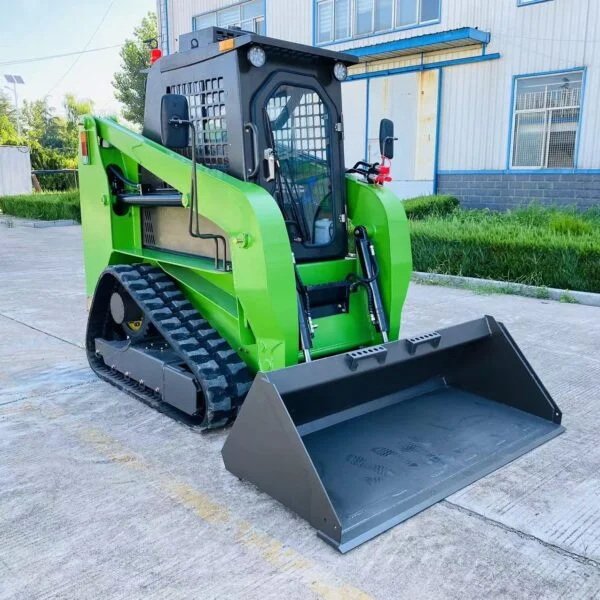

How to Pick an Auger Attachment for a Stand-On Compact Tool Carrier: The Complete 2026 Buyer’s Guide
Content Menu
● Understanding Auger Drive Systems: Direct Drive vs. Planetary
>> Direct Drive Augers: Speed-Optimized Performance
>> Planetary Drive Augers: Maximum Torque for Challenging Terrain
● Auger Bit Selection: Matching Diameter, Depth, and Soil Conditions
>> Diameter Specifications for Common Applications
>> Specialized Bit Designs for Ground Conditions
● Hydraulic System Compatibility: Critical Specifications for Optimal Performance
>> Flow Rate Requirements (GPM)
>> Pressure Ratings and Torque Output
>> Attachment Plate Compatibility
● Leading Auger Attachment Manufacturers and Model Selection
>> Vermeer High-Speed and High-Torque Systems
>> Land Pride CSA10 Planetary Compact Auger
>> Ditch Witch AD132 Auger Driver
>> Premier Attachments Duo Tach Innovation
● Investment Analysis: Pricing Expectations and ROI Considerations
● Pre-Operation Protocols: Safety and Site Preparation
>> Underground Utility Identification
>> Equipment Familiarization and Training
>> Personal Protective Equipment Requirements
● Operational Best Practices: Maximizing Efficiency and Equipment Longevity
>> Proper Angle and Positioning
>> Debris Management and Lift Technique
>> High-Flow Auxiliary Function Utilization
● Maintenance Protocols: Extending Attachment Service Life
>> Lubrication and Fluid Management
>> Cleaning and Corrosion Prevention
>> Dealer Support and Local Expertise
● Emerging Technology Trends: The Future of Auger Attachments
>> Telematics and Smart Technology Integration
>> Sustainable Operations and Electrification
● Market Context: Industry Growth and Opportunity
● Making Your Final Selection: A Strategic Framework
● Take Action: Elevate Your Construction Equipment Performance Today
>> 1. What hydraulic flow rate (GPM) do I need for a 24-inch tree auger?
>> 2. Can I use the same auger attachment on both my mini skid steer and full-size skid steer?
>> 3. How often should I change the gearbox oil in my planetary auger drive?
>> 4. What’s the difference between rock bits and standard dirt auger bits?
>> 5. Is it more cost-effective to buy or rent an auger attachment for occasional use?
Selecting the right auger attachment for your stand-on compact tool carrier can transform your drilling efficiency and project profitability. With the global skid steer attachments market projected to reach $3,500 million by 2035, growing at a CAGR of 4.67%, investing in the correct auger configuration has never been more critical for contractors and landscaping professionals. This comprehensive guide walks you through every consideration—from drive systems and hydraulic matching to bit selection and operational best practices—ensuring you maximize ROI while minimizing downtime.[1]

Understanding Auger Drive Systems: Direct Drive vs. Planetary
The foundation of effective auger selection begins with choosing the appropriate drive system for your soil conditions and application requirements. Two primary drive configurations dominate the market, each engineered for specific ground conditions.[2]
Direct Drive Augers: Speed-Optimized Performance
Direct drive augers deliver higher rotational speeds with reduced torque output, making them ideal for softer to moderate soil conditions including sand, loose dirt, and loamy compositions. These units excel in high-volume landscaping operations where rapid hole creation is paramount. The simplified mechanical design typically results in lower initial investment costs and reduced maintenance requirements compared to planetary systems.[2]
Planetary Drive Augers: Maximum Torque for Challenging Terrain
Planetary augers generate substantially higher torque at lower rotational speeds, engineered specifically for penetrating dense materials such as compacted clay, root-laden soil, and semi-rocky terrain. According to industry expert Cole Chesnut from Vermeer, planetary drive systems can accommodate auger bits ranging from 6 to 36 inches in diameter, providing exceptional versatility for diverse applications. The Land Pride CSA10 Planetary Compact Auger, for example, delivers 1,775 ft-lbs of torque at 3,000 psi, demonstrating the substantial power advantage for demanding excavation tasks.[2]
Auger Bit Selection: Matching Diameter, Depth, and Soil Conditions
Choosing the correct auger bit configuration directly impacts drilling efficiency, operational costs, and project completion timelines. Professional landscapers and contractors must evaluate three critical dimensions when specifying bits.[3][2]
Diameter Specifications for Common Applications
Standard diameter selections address the majority of commercial and residential projects:[2]
– 6-12 inch bits: Fence post installation, deck footings, sunroom pilings, and sign post placement
– 12-18 inch bits: Foundation piers, pole barn footings, and medium-scale planting operations
– 24-36 inch bits: Large tree planting, commercial landscaping installations, and soil remediation projects requiring extensive root zone preparation
Industry data indicates that 12-inch augers represent the most commonly deployed size for general contracting applications, while landscaping professionals frequently utilize 24-36 inch tree augers to ensure proper soil breakup for optimal root growth.[2]
Specialized Bit Designs for Ground Conditions
Bit tooth configuration must align with anticipated subsurface conditions to maximize penetration rates and minimize equipment wear:[3]
– Standard dirt bits: General-purpose teeth for loose to moderately compacted soil
– Rock bits: Carbide-tipped or hardened steel teeth designed for rocky, gravelly terrain
– Heavy-duty bits: Reinforced construction for abrasive soils, root-dense areas, and mixed-condition environments
– Tree planting bits: Wider flighting with aggressive teeth patterns optimized for large-diameter holes
Professional landscaping operations benefit from maintaining multiple bit sizes and configurations, enabling rapid adaptation to varying jobsite conditions without equipment mobilization delays.[2]
Hydraulic System Compatibility: Critical Specifications for Optimal Performance
Ensuring hydraulic flow compatibility between your compact tool carrier and auger attachment represents one of the most crucial—yet frequently overlooked—selection criteria. Mismatched specifications result in suboptimal performance, potential equipment damage, and compromised operational efficiency.[2]
Flow Rate Requirements (GPM)
Hydraulic flow rates measured in gallons per minute (GPM) directly determine auger rotational speed and drilling productivity. Contemporary compact tool carriers typically offer auxiliary hydraulic flow in two configurations:[2]
– Standard flow: 10-20 GPM for light to medium-duty applications[2]
– High-flow: 25-40 GPM for maximum productivity and larger diameter bits[4][5]
According to manufacturer specifications, Kubota’s SVL65-2 compact track loader delivers 17.4 GPM standard flow and 27 GPM high-flow capacity, while Case Construction Equipment models provide up to 37.6 GPM for demanding attachment operations. Matching your auger’s flow requirements to your carrier’s output capabilities ensures optimal drilling performance without hydraulic system strain.[5][4]
Pressure Ratings and Torque Output
Hydraulic pressure specifications, measured in pounds per square inch (PSI), determine the torque available for penetrating resistant materials. Premium planetary auger drives operate effectively within 2,500-3,500 PSI ranges, with the Land Pride CSA10 functioning optimally at 3,000 PSI. Operating attachments below specified pressure thresholds results in reduced torque output and diminished productivity, particularly in challenging soil conditions.[2]
Attachment Plate Compatibility
Universal plate systems vary across manufacturers, requiring verification that your selected auger matches your compact tool carrier’s mounting configuration. Premier Attachments’ innovative Duo Tach system addresses this challenge by integrating mini skid steer mounts within full-size skid steer brackets, enabling equipment sharing across mixed fleets. This patented technology proves particularly valuable for rental operations and contractors managing diverse equipment inventories.[2]
Leading Auger Attachment Manufacturers and Model Selection
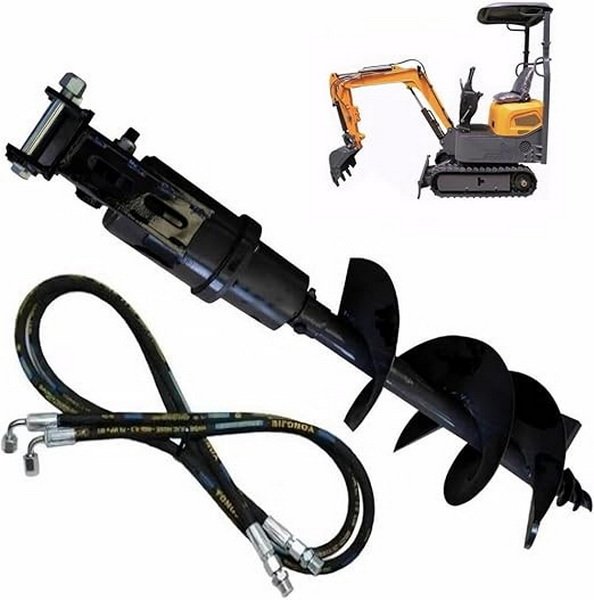
The competitive auger attachment landscape offers numerous options, each with distinct performance characteristics and application specializations. Understanding key manufacturers and their flagship models streamlines the selection process.[2]
Vermeer High-Speed and High-Torque Systems
Vermeer’s partnership with Stanley Decker has produced two complementary auger configurations addressing diverse operational requirements:[2]
– High-speed auger drive: Optimized for softer soil conditions, accommodating bits up to 12 inches in diameter
– High-torque auger drive: Engineered for dense clay and compacted materials, compatible with 6-36 inch bits
Both systems integrate seamlessly with Vermeer’s complete line of mini skid steers and compact articulated wheel loaders, ensuring compatibility across equipment fleets.[2]
Land Pride CSA10 Planetary Compact Auger
Kubota’s collaboration with Land Pride delivers the CSA10 Planetary Compact Auger, specifically engineered for compact tool carriers with 10-20 GPM flow rates. The unit features hydraulic reversibility and 1,775 ft-lbs torque capacity at 3,000 PSI, with double-flight auger options from 6-24 inches and rock-penetrating configurations in 6, 9, and 12-inch sizes.[2]
Ditch Witch AD132 Auger Driver
Ditch Witch’s AD132 attachment targets landscaping and tree care professionals requiring expedited hole creation for tree planting and fence installation applications. Compatible with Ditch Witch SK600, SK800, SK900, SK1050, and SK1550 models, the AD132 accommodates 6-30 inch diameter bits with manufacturer-specific mounting requirements.[2]
Premier Attachments Duo Tach Innovation
Premier Attachments’ Duo Tach system represents a significant advancement in fleet versatility, enabling the same auger drive to function on both full-size skid steers and compact tool carriers. Management consultant Keith Wells emphasizes the patented design’s value for contractors operating mixed equipment fleets and rental facilities seeking inventory optimization.[2]
Investment Analysis: Pricing Expectations and ROI Considerations
Auger attachment pricing typically ranges from $3,000 to $4,000 for the drive unit, with additional costs for specialized bits based on diameter and tooth configuration. Jerry Corder, Kubota’s construction equipment product manager, notes that contractors typically achieve rapid return on investment through increased productivity and reduced labor costs.[2]
For DIY applications and occasional-use scenarios, rental options provide cost-effective access to complete compact tool carrier and auger packages without capital investment. Rental strategies prove particularly advantageous for homeowners tackling fence installations, deck construction, or landscape renovation projects requiring temporary equipment access.[2]
Pre-Operation Protocols: Safety and Site Preparation
Before commencing any auger drilling operation, comprehensive site preparation and safety protocols protect personnel and prevent costly utility strikes.[2]
Underground Utility Identification
Call 811 at least 48-72 hours before beginning excavation to ensure proper utility marking by local providers. Cole Chesnut emphasizes the critical importance of walking the jobsite after utility marking to verify that no subsurface infrastructure exists near planned drilling locations. Underground electrical lines, gas mains, water services, telecommunications cables, and fiber optic networks represent significant safety hazards and potential liability exposures.[2]
Equipment Familiarization and Training
Comprehensive operator training significantly reduces injury risk and equipment damage while improving operational efficiency. Brant Kukuk, Ditch Witch’s compact equipment product manager, recommends reviewing safety instructions and learning all attachment features before commencing production work. Manufacturers including Ditch Witch offer free online training courses through their customer portals, providing valuable operational guidance and best practice recommendations.[2]
Personal Protective Equipment Requirements
Appropriate PPE for auger operations includes:
– Safety glasses or face shields for debris protection
– Steel-toed boots for foot protection
– Heavy-duty work gloves for hand safety
– Hearing protection for extended operation periods
– High-visibility vests for multi-worker jobsites
Operational Best Practices: Maximizing Efficiency and Equipment Longevity
Implementing proven operational techniques dramatically improves drilling productivity while extending attachment service life.[6][3][2]
Proper Angle and Positioning
Maintain the auger at 90 degrees perpendicular to the ground surface throughout the drilling process to ensure optimal digging force and uniform hole geometry. Angular deviation results in oval holes, increased equipment wear, and potential bit binding in compacted materials.[2]
Down Pressure Application
Apply moderate downward pressure to assist penetration without overwhelming the drive system. Excessive down pressure causes the auger to bog down, reducing rotational speed and potentially stalling the hydraulic motor. Industry expert guidance emphasizes allowing the auger rotation to perform the excavation work rather than forcing penetration through excessive pressure.[6][2]
Debris Management and Lift Technique
Periodically lift the auger every few inches of depth to remove accumulated soil and prevent flighting clog. This technique proves particularly critical in clay-rich soils and moisture-saturated conditions where material adhesion impedes drilling progress. When reaching desired depth, continue rotation while lifting to prevent bit binding and facilitate clean extraction.[6][2]
High-Flow Auxiliary Function Utilization
Operating attachments on high-flow auxiliary hydraulics delivers optimal performance for auger applications. Standard-flow operation reduces rotational speed and torque output, extending project timelines and potentially causing premature equipment wear due to inadequate power delivery.[2]
Maintenance Protocols: Extending Attachment Service Life
Implementing systematic maintenance procedures prevents premature failures and maximizes equipment investment returns.[2]
Pre-Operation Inspections
Visual equipment assessment before each use identifies potential issues before they escalate into costly repairs:[2]
– Component alignment verification
– Tooth wear examination
– Flighting condition assessment
– Attachment pin inspection
– Hydraulic connection evaluation
Lubrication and Fluid Management
Gearbox maintenance represents the most critical service requirement for planetary auger drives. Jerry Corder recommends:[2]
– Maintaining light multi-purpose grease film on gearbox output shaft
– Monitoring gearbox oil level before each operation
– Changing gearbox oil every 100 hours or 12 months, whichever occurs first
Cleaning and Corrosion Prevention
Post-operation cleaning removes corrosive soil, clay, and organic matter that accelerate component degradation. Pressure washing or brush cleaning of the drive unit, flighting, and teeth followed by protective coating application significantly extends attachment longevity, particularly in coastal or chemically active soil environments.[2]
Dealer Support and Local Expertise
Local equipment dealers provide invaluable resources for maintenance guidance and operational optimization. Dealers possess comprehensive knowledge of regional soil conditions and can recommend specific bit configurations, maintenance intervals, and operational techniques tailored to local geological characteristics.[2]
Emerging Technology Trends: The Future of Auger Attachments
The compact equipment attachments sector continues evolving with technological innovations that enhance productivity, safety, and operational efficiency.[1]
Telematics and Smart Technology Integration
Advanced monitoring systems increasingly integrate with auger attachments, providing real-time performance data including hydraulic flow rates, torque output, operational hours, and maintenance alerts. These systems enable predictive maintenance scheduling and performance optimization while documenting equipment utilization for cost allocation and billing purposes.[1]
Automated Control Systems
Precision drilling technologies leverage sensors and automated controls to maintain optimal penetration rates, prevent overload conditions, and ensure consistent hole depth across large-scale projects. These innovations reduce operator fatigue while improving drilling consistency and productivity.[1]
Sustainable Operations and Electrification
Electric compact tool carriers represent an emerging market segment, requiring auger manufacturers to develop attachments optimized for electric hydraulic systems. This transition aligns with broader construction industry sustainability initiatives and emission reduction mandates in urban environments.[1]
Market Context: Industry Growth and Opportunity
The global skid steer attachments market demonstrates robust growth trajectories, with projections indicating expansion from $2,226.6 million in 2025 to $3,500 million by 2035. This growth reflects increased mechanization in construction, landscaping, and agricultural sectors, particularly within rapidly developing Asia-Pacific markets. For contractors and equipment rental operations, understanding these trends informs strategic investment decisions and fleet composition planning.[1]
Making Your Final Selection: A Strategic Framework
Successful auger attachment procurement requires synthesizing technical specifications, application requirements, and financial considerations into a coherent decision framework:
Assess your primary applications: Document typical hole diameters, depths, and soil conditions to establish baseline requirements.
Evaluate your compact tool carrier specifications: Verify auxiliary hydraulic flow rates, pressure capabilities, and attachment plate compatibility.
Define your drive system needs: Select direct drive for softer conditions or planetary drives for challenging terrain.
Specify bit inventory: Determine essential diameters and tooth configurations for your operational profile.
Research manufacturer options: Compare warranty terms, dealer support availability, and parts accessibility.
Calculate total cost of ownership: Include initial investment, anticipated maintenance costs, and productivity improvements in ROI analysis.
Prioritize operator training: Allocate resources for comprehensive training programs to maximize safety and efficiency.
By systematically addressing each consideration, contractors and landscaping professionals can confidently select auger attachments that deliver sustained performance, operational safety, and financial returns throughout extended service lives.
Take Action: Elevate Your Construction Equipment Performance Today
The right auger attachment transforms your compact tool carrier from basic earth-moving equipment into a precision drilling powerhouse. Whether you’re a landscaping professional installing hundreds of trees annually, a contractor establishing foundation footings across multiple projects, or a utility company managing consistent excavation demands, selecting the optimal auger configuration directly impacts your bottom line.
Don’t leave productivity and profitability to chance. Certeg manufactures high-performance excavators, skid steer loaders, road rollers, forklifts, tractors, and tracked transporters engineered to meet diverse global construction machinery requirements. Our technical specialists understand the hydraulic specifications, drive system configurations, and operational demands that define successful equipment integration.
Contact Certeg today to discuss how our construction equipment solutions can enhance your operational capabilities. Our engineering team will evaluate your specific application requirements, soil conditions, and production targets to recommend the ideal compact tool carrier platform for your auger attachment investments. Experience the difference that properly matched equipment delivers—improved drilling efficiency, reduced operational costs, and maximized ROI across every project.
Visit our website or call our equipment specialists now to schedule a consultation and discover why contractors worldwide trust Certeg for reliable, powerful construction machinery that performs under the most demanding conditions.
Frequently Asked Questions
1. What hydraulic flow rate (GPM) do I need for a 24-inch tree auger?
A 24-inch tree auger typically requires high-flow hydraulics delivering 25-35 GPM for optimal performance. Standard-flow systems (10-20 GPM) will operate larger bits but with significantly reduced rotational speed and drilling efficiency. Always consult your auger manufacturer’s specifications to ensure compatibility with your compact tool carrier’s hydraulic capabilities.[4][2]
2. Can I use the same auger attachment on both my mini skid steer and full-size skid steer?
Yes, with certain attachment systems like Premier Attachments’ patented Duo Tach design, which integrates mini skid steer mounts within full-size skid steer brackets. However, most conventional auger attachments require specific mounting plates matched to either compact tool carriers or full-size skid steers, necessitating separate attachments for different equipment classes.[2]
3. How often should I change the gearbox oil in my planetary auger drive?
Gearbox oil should be changed every 100 operating hours or 12 months, whichever occurs first. Additionally, maintain proper oil levels before each operation and keep the output shaft lubricated with a light film of multi-purpose grease. Regular maintenance prevents premature gearbox failure and maintains optimal torque output throughout the attachment’s service life.[2]
4. What’s the difference between rock bits and standard dirt auger bits?
Rock bits feature carbide-tipped or hardened steel teeth designed to penetrate rocky, gravelly terrain without excessive wear. Standard dirt bits have general-purpose teeth optimized for loose to moderately compacted soil conditions. Using dirt bits in rocky conditions causes rapid tooth degradation and reduced drilling efficiency, while rock bits in soft soil may provide slower penetration rates due to their specialized tooth geometry.[3][2]
5. Is it more cost-effective to buy or rent an auger attachment for occasional use?
For occasional residential or DIY applications, renting a complete compact tool carrier and auger package typically provides better cost efficiency than purchasing. With auger attachments costing $3,000-$4,000 plus bits, contractors performing frequent drilling operations achieve rapid ROI through ownership, while homeowners tackling periodic projects benefit from rental flexibility without capital investment or maintenance responsibilities.[2]
Citations:
[1] https://www.wiseguyreports.com/reports/skid-steer-attachments-market
[2] https://www.linkedin.com/pulse/skid-steer-loader-market-analysis-emerging-trends-qjbef
[3] https://www.landscapemanagement.net/digging-into-proper-auger-and-drill-operation/
[4] https://kubota.ca/products/SVL652
[5] https://compactequip.com/compact-track-loaders/case-construction-equipment-compact-track-loader-specs-and-product-summary/
[6] https://www.echo-usa.com/tips/how-to-use-an-auger
Hot Tags:Kubota Skid Steer Auger Attachment, Mini Skid Steer Post Hole Digger, Auger Attachment Selection, Stand-On Compact Tool Carrier Auger, Auger Attachment Guide, Compact Tool Carrier Auger, Hydraulic Auger Attachment, Earth Auger For Compact Loader, Post Hole Auger Attachment, Skid Steer Auger Attachment