
How to Choose the Best Tree Spade Attachment for Your Skid Steer or Track Loader
Content Menu
● What Is a Tree Spade Attachment and How Does It Work?
● Key Benefits of Using a Tree Spade Attachment
● Step‑by‑Step: How to Pick the Right Tree Spade Attachment
>> Define Your Primary Application
>> Match Blade Configuration and Soil Conditions
>> Size the Root Ball and Tree Diameter
● Matching Tree Spade Size to Your Loader or Skid Steer
>> Rated Operating Capacity and Attachment Weight
>> Skid Steer vs. Compact Track Loader
● Hydraulic and Electrical Requirements You Must Check
>> Electrical Connections and Controls
● Tree Spade Blade Angles and Basket Compatibility
● Advanced Buying Checklist for Tree Spade Attachments
● Operating Best Practices for Healthy Transplants
● Maintenance and Safety Tips to Extend Attachment Life
● Integrating Tree Spades into a Modern Compact Equipment Fleet
● Real‑World Use Cases and Productivity Gains
● Choosing Between Entry‑Level and Professional‑Grade Tree Spades
● Call to Action: Plan Your Next Tree Spade Investment
● FAQs About Tree Spade Attachments for Skid Steers and Track Loaders
>> 1. Can I run a tree spade on any skid steer or track loader?
>> 2. Which blade angle is best for my soil?
>> 3. Do I need high‑flow hydraulics for a tree spade?
>> 4. How big of a tree can I move with a compact tree spade?
>> 5. How often should I service a tree spade attachment?
Tree spade attachments transform a skid steer or compact track loader into a high‑productivity tree transplanting machine, cutting labor costs and making jobs safer and faster for landscapers, nurseries and contractors. Choosing the right model, size and blade configuration is critical if you want clean root balls, healthy transplants and reliable performance in your soil conditions.
What Is a Tree Spade Attachment and How Does It Work?
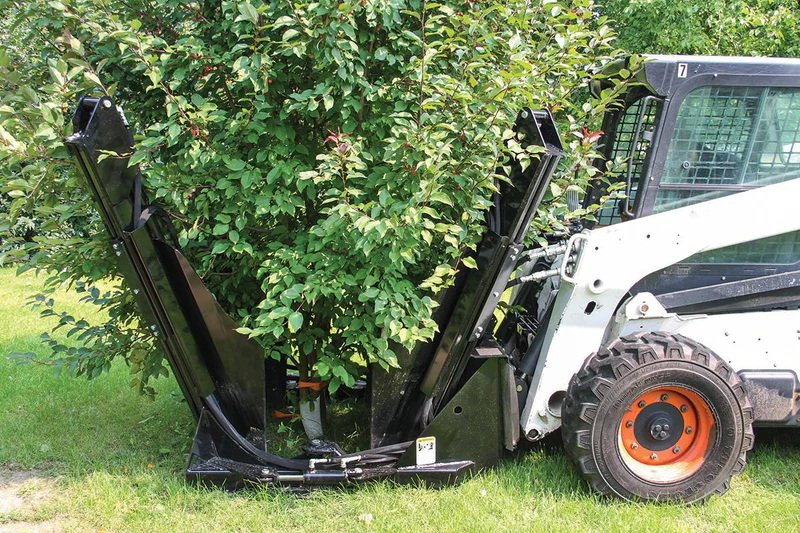
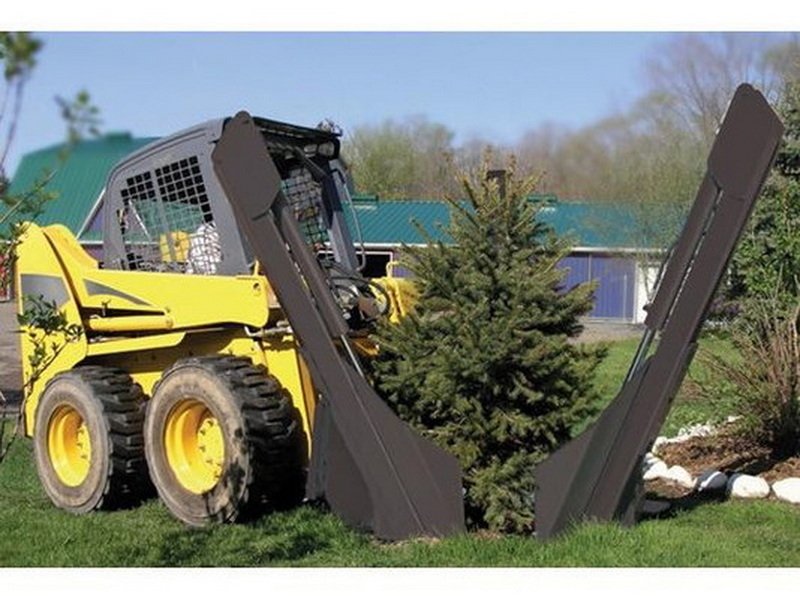
A tree spade attachment is a hydraulically driven implement that surrounds a tree or shrub with multiple blades, cuts a root ball and lifts it with the surrounding soil for transport or replanting. It mounts to a skid steer or track loader via a standard quick‑attach plate and uses the carrier’s auxiliary hydraulics and electrical controls for operation.
Typical tree spades for compact equipment feature three or four curved blades that form a cone or truncated cone around the root ball. A front gate opens to position the spade around the tree, then closes while stabilizers and blades work together to dig and lift the tree out of the ground.
Basic operating sequence:
1. Position the loader and open the tree spade gate.
2. Center the tree inside the frame and close the gate.
3. Lower rear stabilizers to transfer weight to the attachment.
4. Drive the blades into the ground until they reach full depth and meet.
5. Raise stabilizers and lift the tree and root ball.
6. Transport the tree to the new location or to a staging area for wire basket and burlap.
These attachments are widely used by nurseries, landscape contractors, municipalities, farmers and construction companies that regularly plant, remove or relocate trees.
Key Benefits of Using a Tree Spade Attachment
Tree spades deliver several high‑value advantages compared to manual digging or traditional methods.
– Faster transplanting: One operator can dig and move trees from the cab, dramatically increasing productivity on planting or relocation projects.
– Lower labor cost: Mechanization reduces crew size and minimizes manual shovel work and root‑ball handling.
– Improved safety: The operator stays inside the cab while the attachment handles heavy lifting, reducing strain and accident risk.
– Consistent root balls: Properly matched blade angles and basket standards produce uniform, marketable root balls for nursery operations.
– Versatile applications: The same attachment can be used for transplanting, packaging into baskets, removing unwanted trees and installing landscaping on new construction sites.
Step‑by‑Step: How to Pick the Right Tree Spade Attachment
Selecting the best tree spade attachment for a skid steer or compact track loader requires a structured approach that considers soil, tree size, root ball diameter and machine capacity.
Define Your Primary Application
Start with how you plan to use the attachment most of the time.
– Nursery production and resale of trees.
– Landscape installation and on‑site transplanting.
– Municipal tree relocation and street‑tree maintenance.
– Farm and estate management, windbreak relocation or reforestation.
Clarifying the main application helps narrow down the blade angle, ball size and frame configuration you actually need.
Match Blade Configuration and Soil Conditions
Tree spades for skid steers are commonly available in cone and modified blade configurations, often defined by blade angle (22°, 25° or 30°).
– 30° cone blade: All‑purpose, compact and relatively lightweight, suitable for many soil types except extremely loose “sugar‑sand” or very tap‑rooted trees.
– 25° modified blade: Produces a flat‑bottom, wide root ball that stores and displays upright; performs well in loam and clay‑loam but is not recommended for sandy soils.
– 22° truncated blade: Designed for heavy soils, forming a pot‑shaped root ball with more soil and root mass that fits standard 22‑degree baskets.
When soil is sandy or hard‑packed, a cone configuration with the appropriate tower angle improves penetration and overall digging performance. For heavier loams and clays, modified blades offer better ball shape and stability during storage.
Size the Root Ball and Tree Diameter
Tree spades are classified by the diameter of the root ball they can produce. Manufacturers typically offer ball diameters ranging from around 18 to 44 inches for compact equipment.
As a rule, you should match root ball size to trunk caliper and species requirements to maintain tree health during transplant. For example, larger trees and sensitive species often require bigger, deeper balls to preserve sufficient roots.
Experts recommend choosing a tree spade that can safely handle the largest tree size you realistically plan to move, not just average jobs. This avoids over‑loading the attachment, damaging trees or needing to upgrade prematurely.

Matching Tree Spade Size to Your Loader or Skid Steer
Correctly matching the attachment to your skid steer or compact track loader is essential for safety, stability and performance.
Rated Operating Capacity and Attachment Weight
You need to account for both the attachment weight and the maximum filled root ball weight. As one manufacturer example, a tree spade designed for a 44‑inch root ball can weigh around 1,875 lb and produce a ball of up to about 1,500 lb.
That means the loader must offer a rated operating capacity (ROC) high enough to safely lift the combined load, often exceeding 3,300 lb at 50 percent of tipping weight for that configuration. Undersizing the carrier can lead to instability, tipping risk and excessive wear on the machine.
Skid Steer vs. Compact Track Loader
Both skid steers and compact track loaders can operate tree spades, but track loaders provide some clear advantages for heavy transplanting work.
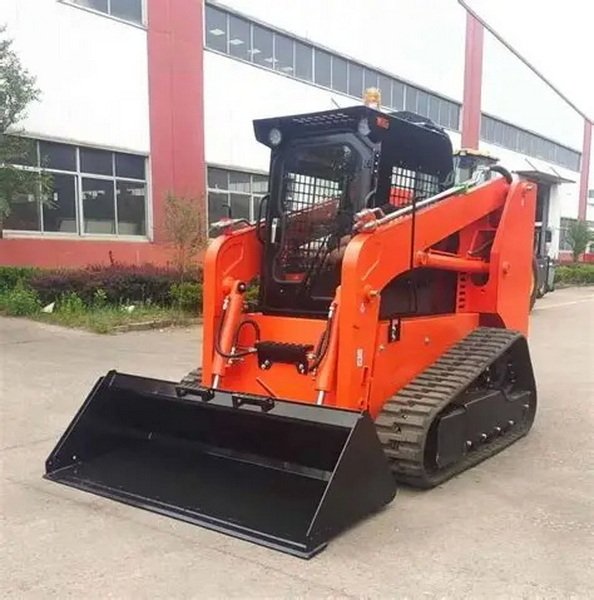
– Track loaders provide a longer track base and larger ground contact area, improving stability when lifting a heavy, tall tree and root ball.
– Tracks distribute weight better on soft or landscaped surfaces, reducing rutting and turf damage.
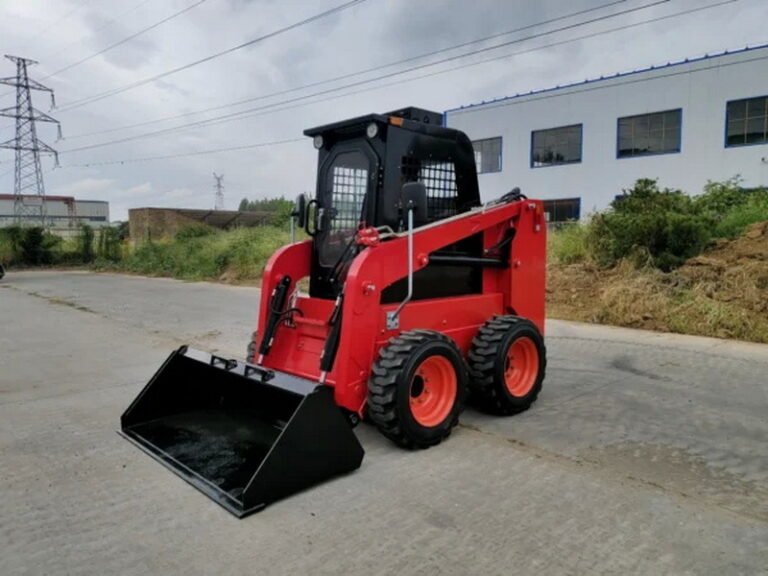
– Skid steers with tires may be preferable on hard surfaces or where travel speed and lower upfront costs matter more.
For continuous nursery production or large transplanting projects, a compact track loader is often recommended as the primary carrier platform.
Hydraulic and Electrical Requirements You Must Check
Tree spade attachments rely on the loader’s auxiliary hydraulics for blade actuation and stabilizer operation. Choosing an attachment that fits your machine’s hydraulic capacity is crucial.
Flow Rate and Pressure
Many compact tree spades require a maximum auxiliary flow of up to about 25 gpm to operate efficiently. Larger models and high‑capacity spades may demand higher flow and pressures approaching 4,000 psi, which typically calls for high‑flow or enhanced high‑flow hydraulic packages.
If your loader cannot deliver the required flow and pressure, cycle times will be slow and digging performance will suffer. Always compare the attachment specifications with your machine’s hydraulic chart before purchasing or renting.
Electrical Connections and Controls
Many modern tree spades use 7‑pin or 14‑pin electrical connections to operate blade sequencing, gates and stabilizers from in‑cab controls.
– A 7‑pin control device allows fingertip operation from steering levers, improving ergonomics and responsiveness.
– A convertible valve design enables operation via integrated loader controls or a pendant control box and lets a single spade run on different loader brands.
Ensuring compatibility with your loader’s electrical system simplifies setup and avoids the need for custom wiring on the jobsite.
Tree Spade Blade Angles and Basket Compatibility
Blade angle not only affects soil penetration and root ball shape, but also determines compatibility with standard nursery baskets.
| Blade Angle | Common Name | Ideal Soils | Root Ball Shape / Use Case |
|---|---|---|---|
| 22° | Truncated spade | Heavy soils, clay‑heavy fields | Pot‑shaped, heavy balls; designed to match standard 22° nursery baskets |
| 25° | Modified spade | Loam and clay‑loam, heavier than 30° uses | Wide, flat‑bottom ball for upright storage in 25° baskets |
| 30° | Cone spade | General purpose, most soils except sugar‑sand | Cone ball that fits 30° baskets and leaves unnecessary sub‑root soil in ground |
For nursery operations, choosing a blade angle that matches your preferred basket standard streamlines packaging, storage and transport. For general landscaping, an all‑purpose cone spade often provides the most flexible solution.
Advanced Buying Checklist for Tree Spade Attachments
To go beyond basic specifications and make a smart purchase, evaluate these advanced factors before you invest.
1. Frame design and visibility
– Look for open‑frame designs that maximize visibility to the blades and tree trunk for precise centering.
– Check tower height and geometry to ensure you can work near buildings, fences or low branches.
2. Build quality and wear components
– Review blade material, thickness and edge hardness for long life in rocky or abrasive soils.
– Confirm availability of replacement blades, wear pads and pins from the manufacturer or dealer.
3. Transport and maintenance access
– Evaluate how easily the attachment can be loaded, hauled and secured on a trailer with your loader.
– Ensure there is straightforward access to grease points, hydraulic hoses and electrical connectors.
4. Rental vs. ownership economics
– Contractors with seasonal demand may benefit from renting high‑capacity tree spades instead of buying.
– High‑volume nurseries and landscape firms typically see better ROI from owning dedicated attachments.
Operating Best Practices for Healthy Transplants
Correct operation protects both the tree and the attachment and helps you deliver professional‑grade results.
– Centering the tree: Always position the trunk precisely in the middle of the spade to avoid uneven loads and damaged root balls.
– Proper depth: Drive blades until they meet and reach full extension so the root ball stays intact during lifting.
– Soil moisture: Working in slightly moist, not saturated or bone‑dry soil, usually produces cleaner cuts and more stable balls.
– Lift and carry smoothly: Use slow, controlled movements and avoid sudden turns or stops while transporting the tree.
– Replanting technique: When re‑installing, match hole size to the root ball, backfill carefully and water thoroughly to eliminate air pockets.
Maintenance and Safety Tips to Extend Attachment Life
Well‑planned maintenance keeps your tree spade productive and reduces unexpected downtime.
– Clean after use: Remove packed‑in dirt and mud from blades, towers and stabilizers to preserve smooth operation.
– Inspect hydraulics: Check hoses and couplers for leaks, crimps and abrasions, keeping them routed away from pinch points.
– Lubricate regularly: Follow manufacturer greasing schedules for pivot points, pins and cylinders.
– Check fasteners: Retighten blade bolts, tower hardware and frame connections as needed, especially after working in rocky soils.
– Operator training: Make sure operators understand the weight limits, safe lifting angles and proper stabilizer use for the loader and attachment.
Adhering to these practices extends attachment life, improves uptime and reduces the risk of accidents on site.
Integrating Tree Spades into a Modern Compact Equipment Fleet
Tree spade attachments can be strategically combined with other loader tools to create a more efficient and profitable equipment fleet.
– Pairing with forks and grapples: Forks and grapples on skid steers or mini loaders help handle wire baskets, pallets of trees and debris from removal work.
– Using augers and trenchers: Augers can pre‑drill planting holes for larger caliper trees in compacted soils, speeding up installation.
– Leveraging mini track loaders: Smaller tree spades on mini loaders allow access into tight residential yards where full‑size machines cannot operate.
– Data and job planning: Contractors increasingly rely on digital job‑planning tools and fleet telematics to schedule equipment and optimize tree‑moving routes.
In a diversified fleet, tree spades become part of a system that supports full‑service landscaping, from site prep to final planting and cleanup.
Real‑World Use Cases and Productivity Gains
Across nurseries, municipalities and commercial landscape firms, tree spades are proven productivity multipliers.
– Nursery operations: Large nurseries use skid steer or track‑loader spades to dig, ball and burlap hundreds of trees per season, standardizing root ball sizes and reducing manual labor.
– Urban tree relocation: Municipal crews rely on compact track loaders with tree spades to relocate street trees during road or utility projects, minimizing traffic disruption.
– High‑end landscaping: Landscape contractors use tree spades to transplant mature trees into new residential or commercial developments, adding instant shade and visual impact.
In each scenario, the ability to move trees quickly and safely with one operator translates into higher job margins and better service for clients.
Choosing Between Entry‑Level and Professional‑Grade Tree Spades
The compact equipment market offers both value‑focused and heavy‑duty tree spade options, and the right choice depends on your workload.
– Entry‑level models: Typically feature smaller ball sizes and simpler controls, targeting landscapers with occasional transplanting needs.
– Professional‑grade spades: Offer larger capacities, reinforced towers, high‑flow hydraulic capability and advanced control systems for daily nursery or municipal use.
– Brand ecosystem: Some manufacturers design tree spades specifically for their own skid steer or track loader lines, optimizing hydraulic and electrical integration.
Before buying, compare your projected annual hours of use and average tree size against the cost difference between value and premium models to find the best long‑term fit.
Call to Action: Plan Your Next Tree Spade Investment
If you regularly plant, move or remove trees with skid steers or track loaders, investing in a well‑matched tree spade attachment can transform your productivity and project quality. Evaluate your soil conditions, tree sizes, machine capacities and workload, then specify the blade angle, ball diameter and hydraulic requirements that fit your real jobs.
Next step: create a short checklist of your typical tree sizes, soil types and loader models, then contact your preferred equipment dealer or manufacturer to compare at least two tree spade options side by side before you buy or rent.
Contact us to get more information!
FAQs About Tree Spade Attachments for Skid Steers and Track Loaders
1. Can I run a tree spade on any skid steer or track loader?
Not every loader is suitable; you must match the tree spade’s weight and root ball capacity to the loader’s rated operating capacity and hydraulic specs. Always verify flow, pressure, ROC and electrical compatibility before use.
2. Which blade angle is best for my soil?
Cone‑style 30° blades work in most soils except very loose sugar sand, while 25° modified and 22° truncated spades perform better in heavier loam and clay‑rich fields and match corresponding basket standards.
3. Do I need high‑flow hydraulics for a tree spade?
Many compact tree spades operate within standard‑flow ranges up to about 25 gpm, but larger, high‑capacity models often require high‑flow or enhanced high‑flow packages with higher pressure.
4. How big of a tree can I move with a compact tree spade?
Maximum tree size depends on ball diameter, species, soil and loader capacity; some compact attachments handle root balls up to roughly 44 inches, suitable for mid‑sized ornamental and shade trees.
5. How often should I service a tree spade attachment?
Follow the manufacturer’s maintenance intervals, but in general you should clean the attachment, inspect hoses and electrical connectors, and grease all pivots after heavy use or at least weekly during peak seasons.
References
1. – https://compactequip.com/attachments/transplants-how-to-pick-a-tree-spade-attachment-for-a-track-loader-or-skid-steer/
2. – https://tcimag.tcia.org/safety/equipment-safety-mechanization/selecting-one-implement-for-a-compact-loader-or-skid-steer/
3. – https://www.equipmentworld.com/attachments/compact-equipment-attachments/article/15281537/19-attachments-for-skid-steers-and-com
4. – https://www.casece.com/en-us/northamerica/products/attachments/full-size-attachments/tree-spades
5. – https://big-john.com/skid-steer-spades-blade-configurations/
6. – https://www.triangleequipmentgroup.com/blog/tree-spade-attachment–71458
7. – https://www.youtube.com/watch?v=LinKJlJKarc
8. – https://www.spartanequipment.com/blog/skid-steer-attachments-for-tree-removal-and-transplanting-a-comprehensive-guide/
9. – https://www.lawnandlandscape.com/news/tree-spade-attachment-selection-tips/
10. – https://www.skidsteersolutions.com/mini-skid-steer-tree-spade-bradco/
11. – https://skidpro.com/skid-steer-attachments/augers-backhoes-blades-landscape-and-fencing/tree-spade/
12. – https://big-john.com/ultimate-guide-tree-spades/
13. – https://www.bobcat.com/na/en/attachments/tree-spade
14. – https://big-john.com/choose-tree-moving-attachments/
Hot Tags: Skid Steer Tree Spade Attachment, Tree Spade Skid Steer Attachment, Tree Spade for Mini Skid Steer, Skid Steer Spade Attachment, Tree Spade Attachment for Skid Steer, Skidsteer Tree Spade, Tree Spade Skid Steer, Skid Steer Tree Spade, Track Loader Tree Spade, Skid Steer Attachments