
Drop Hammer Attachment for Construction Equipment: Complete 2026 Guide to Concrete Demolition Excellence
Content Menu
● What Is a Drop Hammer Attachment and How Does It Work?
>> Key Components of Drop Hammer Systems
● Drop Hammer vs Hydraulic Breaker: Performance Comparison
● Why Drop Hammers Outperform Hydraulic Breakers for Flat Concrete
>> Greater Impact Energy Transfer
>> Reduced Flying Debris and Dust
● Strategic Applications: When to Deploy Drop Hammer Attachments
>> Parking Lot and Pavement Demolition
● Proven Operational Techniques for Maximum Efficiency
>> Sequential Impact Pattern Method
>> Large Area Breaking Strategy
● Maintenance Requirements and Cost of Ownership
● Selecting the Right Drop Hammer for Your Fleet
>> Application-Specific Features
>> Manufacturer Support and Parts Availability
● Safety Considerations for Drop Hammer Operations
>> Underground Utility Protection
>> Personal Protective Equipment
● Environmental and Noise Considerations
● Integration with Modern Construction Equipment
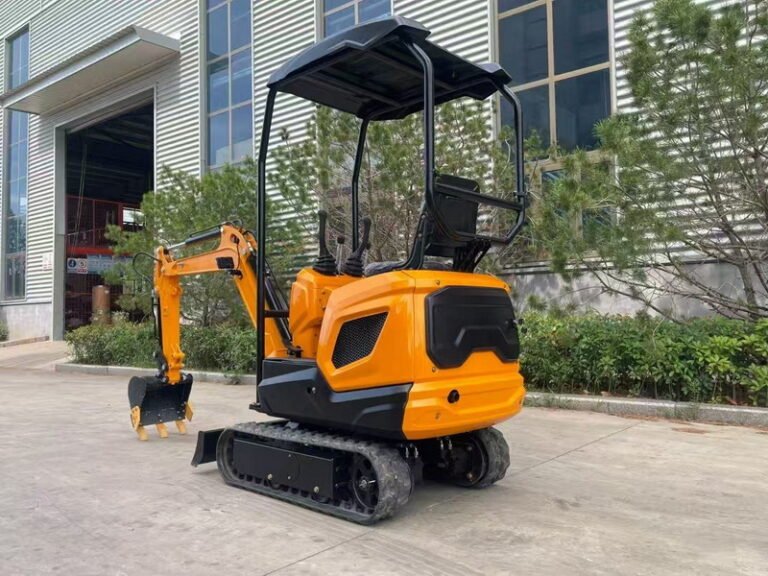
>> Excavator Mounting Applications
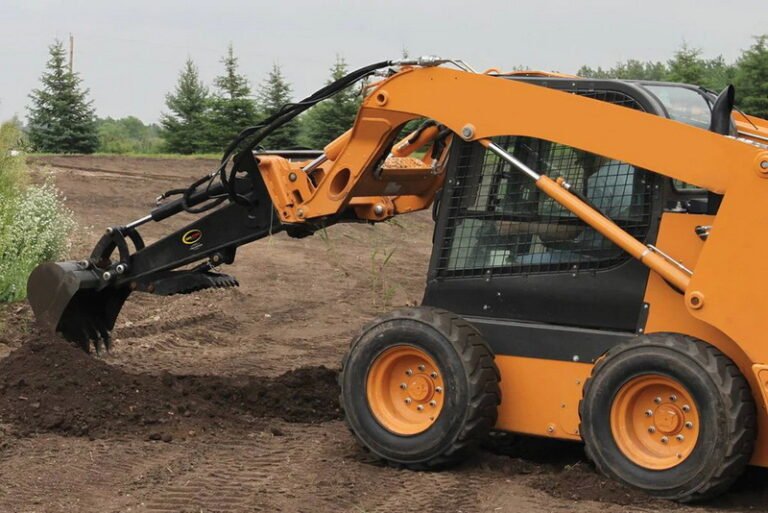
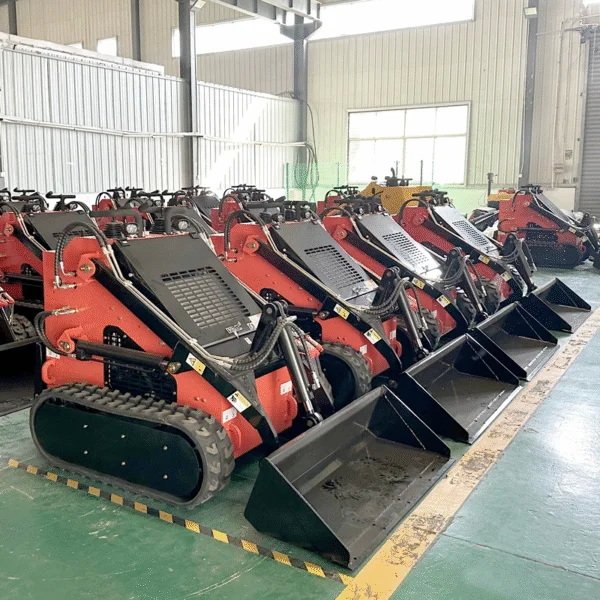
>> Skid Steer and Compact Track Loader Use
>> Attachment Versatility for Complete Projects
● Future Trends in Concrete Demolition Technology
>> Smart Technology Integration
>> Sustainability and Green Construction
>> Automation and Remote Operation
● Transform Your Demolition Operations with Drop Hammer Technology
>> 1. Can drop hammer attachments break reinforced concrete effectively?
>> 2. What size carrier vehicle do I need for drop hammer attachments?
>> 3. How does drop hammer maintenance compare to hydraulic breaker upkeep?
>> 4. Are drop hammers suitable for vertical concrete demolition?
>> 5. What is the typical return on investment timeline for drop hammer attachments?
Drop hammer attachments have revolutionized concrete demolition for construction contractors worldwide, offering a cost-effective, low-maintenance alternative to traditional hydraulic breakers. With the global hydraulic attachments for demolition market projected to reach $4.61 billion by 2029 at a 6.3% CAGR, understanding which concrete breaking technology delivers maximum ROI has never been more critical for equipment operators. This comprehensive guide explores how drop hammer attachments work, their competitive advantages over hydraulic breakers, and why they’re becoming the preferred choice for excavator, skid steer, and loader operators tackling concrete demolition projects.[1]
What Is a Drop Hammer Attachment and How Does It Work?
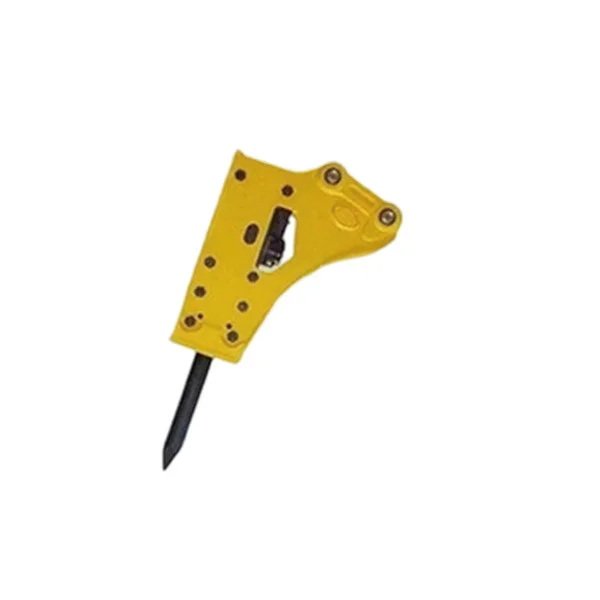
A drop hammer attachment is a gravity-powered concrete breaking tool that uses a free-fall weight system to fracture concrete slabs through kinetic energy transfer. Unlike hydraulic breakers that rely on pressurized fluid and nitrogen gas springs, drop hammers employ a remarkably simple yet effective mechanism: a heavy weight (typically 500-700 lbs) is raised by a hydraulic motor, then released to fall under gravity’s influence, striking concrete with a blunt impact point.[2]
The operational principle leverages fundamental physics—when the massive weight falls from heights of 40 inches or more, it generates impact forces exceeding 82,000 pounds upon contact with the concrete surface. This tremendous force transfers through the concrete slab, creating multiple fracture lines that radiate outward from the impact zone. The blunt point design distributes force across a larger surface area compared to hydraulic breaker chisels, resulting in more efficient slab fracturing with fewer blows required.[3][2]
Key Components of Drop Hammer Systems
Drop hammer attachments consist of several essential components that work together seamlessly:
– Weight assembly: The primary striking element, usually constructed from hardened steel
– Guide channel: A vertical track system that ensures precise vertical alignment during free fall
– Hydraulic lift motor: Powers the upward movement of the weight between strikes
– Blunt striking point: The impact surface designed to fracture rather than penetrate concrete
– Quick-attach mounting plate: Universal connection system for compatibility with various carrier vehicles
– Anti-dry fire mechanism: Prevents equipment damage by ensuring proper contact before weight release[3]
Drop Hammer vs Hydraulic Breaker: Performance Comparison
The choice between drop hammer attachments and hydraulic breakers significantly impacts project efficiency, equipment costs, and maintenance requirements. Understanding the technical differences helps contractors select the optimal tool for their specific demolition applications.[4][5]
The concrete cutting and demolition market, valued at $6.15 billion in 2025, is projected to reach $8.87 billion by 2032, driven by infrastructure renewal projects where drop hammers excel in flat slab applications.[2]
Why Drop Hammers Outperform Hydraulic Breakers for Flat Concrete
Drop hammer attachments deliver superior performance in horizontal concrete demolition scenarios through several mechanical and operational advantages that directly impact project profitability.
Greater Impact Energy Transfer
While hydraulic breakers deliver 1,500-1,800 blows per minute, each individual strike transmits relatively modest impact energy focused on a small chisel point. Drop hammers concentrate the entire kinetic energy of a 500-700 lb weight falling through 40+ inches into a single, devastating blow. This approach fractures concrete more efficiently, creating spider-web crack patterns that facilitate faster removal.[6][2][3]
Superior Rebar Separation
Concrete reinforcing rods present significant challenges during demolition. Hydraulic breaker chisels often become lodged in rebar or struggle to penetrate reinforced sections effectively. Drop hammers transfer shockwave energy through the entire slab, causing concrete to separate cleanly from reinforcing steel. This characteristic dramatically reduces cleanup time and prevents the frustrating scenario of rebar-entangled concrete chunks that require additional breaking.[2]
Reduced Flying Debris and Dust
The blunt point impact creates a controlled fracture zone rather than explosive concrete fragmentation. Hydraulic breakers’ rapid chisel action pulverizes concrete into fine particles, generating substantial dust clouds and dangerous projectiles. Drop hammers produce larger, more manageable concrete pieces with significantly less airborne dust—a critical safety advantage when working near occupied buildings, vehicles, or sensitive equipment.[2]
Strategic Applications: When to Deploy Drop Hammer Attachments
Understanding the optimal use cases for drop hammer technology ensures maximum equipment utilization and project efficiency for construction contractors.
Parking Lot and Pavement Demolition
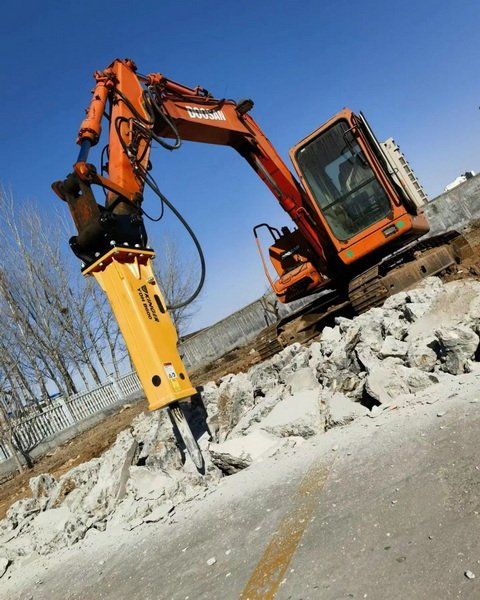
Drop hammers excel at breaking large expanses of flat concrete surfaces including parking lots, airport aprons, and roadway sections. The ability to systematically fracture concrete in 6-12 inch intervals allows operators to establish efficient working patterns that minimize equipment repositioning. For projects involving 4-10 inch concrete slabs, drop hammers complete demolition 40-60% faster than comparable hydraulic breakers.[2]
Sidewalk and Curb Removal
Municipal infrastructure projects frequently require sidewalk replacement and curb modifications. Drop hammers’ blunt point design prevents damage to adjacent structures and underground utilities while efficiently fracturing narrow concrete runs. The lower blow rate (less than 100 BPM) reduces noise pollution in residential areas—a significant advantage for contractors working under strict sound ordinances.[2]
Foundation Pad Breaking
Building demolition projects often leave behind substantial concrete foundation pads that must be removed before new construction begins. Drop hammers systematically fracture these thick slabs by concentrating impact force to create penetration points, then working outward in controlled patterns. The fracture-rather-than-pulverize approach produces concrete pieces sized appropriately for excavator bucket removal.[2]
Industrial Floor Removal
Warehouse renovations, manufacturing facility updates, and commercial property redevelopment frequently involve removing damaged or outdated concrete floors. Drop hammers attached to skid steers or compact track loaders maneuver effectively in confined indoor spaces where larger excavators cannot operate. The minimal hydraulic system strain means extended operating hours without carrier vehicle overheating concerns.[2]
Proven Operational Techniques for Maximum Efficiency
Professional operators employ specific methodologies when using drop hammer attachments to optimize concrete breaking performance and minimize project duration.
Sequential Impact Pattern Method
The most effective drop hammer technique involves concentrated repetitive strikes followed by systematic progression across the work area:[2]
1. Position the blunt point on the concrete surface at your starting location
2. Allow the hammer to strike the same spot 2-3 consecutive times until visible cracking begins
3. Move the equipment 6-12 inches laterally and repeat the process
4. Continue this sequence in a 3-5 foot row across the slab width
5. Reposition the carrier vehicle and begin a new row
This methodical approach creates interconnected fracture zones that facilitate complete slab removal without requiring excessive equipment repositioning. For sidewalks and narrow slabs, operators work from front to back in the host vehicle’s width, maximizing accessibility.[2]
Large Area Breaking Strategy
Expansive concrete pads such as parking lots or warehouse floors require strategic planning to minimize wasted motion:[2]
– Start in one corner of the demolition area to establish a working edge
– Break concrete across the full width of your carrier vehicle’s reach from front to back
– Progress the entire length of the slab in this working width before repositioning
– Move the carrier vehicle back to the starting end and work an adjacent strip
– Continue until the entire surface is fractured
This systematic approach ensures operators never work themselves into corners or create obstacles that complicate equipment access.
Avoiding Point Penetration
A critical operational principle involves preventing the blunt point from pushing completely through the concrete slab and contacting the substrate. When the point penetrates below the slab surface, lateral equipment movement creates:[2]
– Excessive stress on the drop hammer frame components
– Carrier vehicle arm strain that accelerates wear and maintenance
– Reduced operational efficiency from repeated point extraction
For easily fractured concrete, operators should strike each location only once before moving to the next impact point, establishing a grid pattern that comprehensively weakens the entire slab.[2]
Maintenance Requirements and Cost of Ownership
Drop hammer attachments deliver exceptional return on investment through remarkably simple maintenance requirements compared to hydraulic breaker alternatives.
Minimal Service Demands
The mechanical simplicity of gravity-powered drop hammers translates directly to reduced maintenance costs:[7][2]
– Grease application: 2-3 grease fittings (zerks) require lubrication before each full day of operation
– Guide channel maintenance: The vertical weight track needs periodic greasing according to manufacturer specifications
– Hydraulic coupler care: Store couplers connected when not in use to prevent debris contamination
– Visual inspection: Quick checks for component wear, fastener tightness, and structural integrity
No gas spring recharging, seal replacement, or specialized hydraulic servicing is required—maintenance tasks that hydraulic breakers demand regularly. Contractors report 80-90% lower maintenance costs over the equipment’s operational lifespan.[4]
Purchase Price Comparison
Drop hammer attachments offer significant upfront cost advantages over hydraulic breaker alternatives:[2]
– Drop hammer price range: $5,850 to $12,000 depending on size and manufacturer
– Hydraulic breaker price range: $7,000 to $15,000+ for comparable capacity units
For contractors evaluating rental vs. ownership, the combination of lower purchase price, minimal maintenance, and negligible carrier vehicle wear makes drop hammers attractive for long-term ownership. The ability to respond immediately to demolition projects without rental availability constraints or daily rate expenses provides scheduling flexibility that improves bid competitiveness.[2]
Operational Readiness
Drop hammer attachments achieve job site operational status in minutes, requiring only hydraulic coupler connection and a quick visual inspection. This rapid deployment capability contrasts sharply with hydraulic breakers that may require:[2]
– Gas spring pressure verification and adjustment
– Hydraulic flow rate calibration
– Tool selection and installation
– Break-in operation periods
Selecting the Right Drop Hammer for Your Fleet
Equipment compatibility and project requirements should guide drop hammer attachment selection to ensure optimal performance and carrier vehicle longevity.
Weight Class Matching
Drop hammer attachments are designed for specific carrier vehicle size ranges. Matching attachment weight to your excavator, skid steer, or loader capacity prevents:
– Underpowered performance: Too-small hammers fail to generate sufficient impact force for thick concrete
– Carrier overload: Oversized attachments exceed hydraulic capacity or structural limits
– Hydraulic flow issues: Mismatched flow requirements cause slow cycle times or incomplete weight lifting
Professional guidance ensures you select attachments that maximize concrete breaking efficiency while preserving your equipment investment.[2]
Application-Specific Features
Modern drop hammers incorporate specialized features for enhanced performance:
– Anti-dry fire systems: Prevent weight release when the blunt point isn’t contacting concrete, protecting components[3]
– Quick-attach compatibility: Universal mounting plates facilitate rapid attachment changes for multi-task operations
– Adjustable drop height: Some models allow stroke length modification for varying concrete thicknesses
– Reinforced guide channels: Heavy-duty track systems withstand extended use in abrasive conditions
Manufacturer Support and Parts Availability
Selecting drop hammers from established manufacturers with comprehensive dealer networks ensures long-term operational success. Consider:
– Parts availability: Common wear items should be readily accessible through local distributors
– Technical support: Factory-trained technicians provide troubleshooting assistance and operational guidance
– Warranty coverage: Comprehensive warranty protection safeguards your equipment investment
– Training resources: Manufacturer-provided operator training maximizes attachment performance and longevity
Safety Considerations for Drop Hammer Operations
Professional operators prioritize safety protocols when conducting concrete demolition with drop hammer attachments to protect personnel and surrounding property.
Work Zone Establishment
Create clearly marked exclusion zones around active demolition areas to prevent injuries from:
– Concrete fragments: Despite reduced flying debris compared to hydraulic breakers, fracturing concrete can still project chunks several feet
– Equipment movement: Carrier vehicle repositioning poses hazards to ground personnel
– Structural collapse: Weakened concrete may fail unexpectedly during breaking operations
Maintain minimum 25-foot perimeter zones for heavy demolition work, adjusting based on concrete thickness and project conditions.
Underground Utility Protection
Before beginning any concrete demolition project, verify underground utility locations through local one-call services. Drop hammers’ powerful impact force transmits through concrete into underlying soil, potentially damaging:
– Electrical conduits and cables
– Water and sewer lines
– Natural gas pipelines
– Telecommunications infrastructure
Mark utility locations clearly and maintain adequate clearance distances specified by local regulations—typically 24-36 inches minimum.
Personal Protective Equipment
Operators and ground personnel must wear appropriate PPE during drop hammer operations:
– Safety glasses or face shields: Protect against airborne concrete particles
– Hearing protection: Though quieter than hydraulic breakers, drop hammers still generate significant impact noise
– Hard hats: Essential for all personnel in demolition areas
– Steel-toed boots: Protect feet from falling concrete pieces
– High-visibility clothing: Ensures clear identification of personnel in active work zones
Environmental and Noise Considerations
Drop hammer attachments offer environmental advantages that improve community relations and support sustainable construction practices.
Reduced Noise Pollution
Operating at 60-100 blows per minute rather than 1,500+ BPM, drop hammers generate substantially lower noise levels than hydraulic breakers. This characteristic provides advantages for:[2]
– Urban demolition projects: Minimizes disruption to adjacent businesses and residences
– Nighttime operations: Some jurisdictions permit lower-decibel equipment during restricted hours
– Sensitive locations: Schools, hospitals, and office buildings benefit from reduced noise impact
Dust Suppression Benefits
The fracture-focused breaking action produces larger concrete pieces rather than pulverized dust, significantly reducing airborne particulate generation. This characteristic:[2]
– Improves visibility for operators and ground personnel
– Reduces respiratory exposure for workers
– Minimizes dust-related complaints from neighboring properties
– Limits environmental contamination of storm drainage systems
For maximum dust control, contractors can apply water misting systems during drop hammer operations, further reducing airborne particles while cooling equipment in hot conditions.
Integration with Modern Construction Equipment
Drop hammer attachments integrate seamlessly with comprehensive construction machinery lineups, including excavators, skid steers, loaders, and tracked carriers, providing demolition capability across diverse project scales.
Excavator Mounting Applications
Mid-size excavators (8-25 ton class) serve as ideal drop hammer carriers for large-scale demolition projects. The extended reach and elevated cab position provide operators with excellent visibility while the substantial hydraulic capacity powers efficient cycle times. Robust excavator hydraulic systems deliver consistent performance during extended concrete breaking operations.[2]
Skid Steer and Compact Track Loader Use
Skid steers and compact track loaders excel in confined-space demolition where maneuverability is critical. Their compact dimensions allow access to:
– Interior demolition sites
– Narrow urban job sites with restricted equipment access
– Residential property improvements with limited working areas
The universal quick-attach mounting systems enable rapid transition between drop hammer demolition and material handling operations, maximizing equipment utilization.
Attachment Versatility for Complete Projects
Contractors who invest in drop hammer attachments expand their service capabilities and bid competitiveness. The same carrier vehicle that breaks concrete with a drop hammer can immediately switch to:
– Bucket attachments: For loading fractured concrete into haul trucks
– Grapples: To grab and position large concrete sections
– Auger attachments: For post-demolition foundation preparation
This multi-attachment flexibility reduces the total equipment fleet required on job sites, lowering mobilization costs and improving project margins.
Future Trends in Concrete Demolition Technology
The concrete machinery market, projected to grow at 5.27% CAGR through 2035, continues evolving with technological innovations that enhance demolition efficiency and sustainability.[8]
Smart Technology Integration
Emerging drop hammer designs incorporate IoT sensors and predictive maintenance systems that monitor:
– Hydraulic pressure and temperature during operations
– Component wear patterns that predict service requirements
– Cycle count tracking for maintenance scheduling
– Impact force measurement for quality assurance
Studies indicate that predictive maintenance systems reduce equipment downtime by 25%, significantly improving ROI over the attachment’s lifespan.[6]
Sustainability and Green Construction
The construction industry’s increasing focus on sustainable practices favors drop hammer technology’s inherent environmental advantages:
– No nitrogen gas springs: Eliminates potential refrigerant-like gas releases
– Minimal hydraulic fluid consumption: Reduces environmental contamination risk
– Energy-efficient operation: Gravity-powered design requires less hydraulic energy than pressurized breaker systems
Manufacturers are developing bio-based hydraulic fluids and recyclable component materials that align with circular economy principles, positioning drop hammers as environmentally responsible demolition tools.[1]
Automation and Remote Operation
Advanced construction sites are beginning to employ semi-autonomous demolition systems where operators control equipment remotely from protected positions. Drop hammers’ simple mechanical operation adapts readily to automated control systems, offering potential for:
– Hazardous material demolition with minimal human exposure
– Precise demolition patterns programmed for optimal efficiency
– Integration with Building Information Modeling (BIM) systems for targeted selective demolition
Transform Your Demolition Operations with Drop Hammer Technology
Drop hammer attachments represent a proven, cost-effective solution for concrete demolition projects that demand efficiency, reliability, and profitability. The combination of 82,000+ pound impact forces, minimal maintenance requirements, and 80-90% lower operating costs compared to hydraulic breakers makes drop hammers the intelligent choice for forward-thinking contractors.[4][3]
Whether you operate excavators, skid steers, compact track loaders, or wheel loaders, integrating drop hammer attachments into your equipment fleet unlocks new revenue opportunities while reducing operational expenses. The technology’s simple mechanical design ensures decades of reliable service with minimal downtime, while the gravity-powered operation eliminates the complex hydraulic systems that plague traditional breakers.[2]
Take action today to evaluate how drop hammer attachments can enhance your concrete demolition capabilities. Consult with equipment specialists who understand both attachment specifications and carrier vehicle compatibility to ensure optimal performance. Request demonstrations on your specific projects to experience firsthand the efficiency gains and cost savings that make drop hammers the preferred demolition solution for professional contractors worldwide.
Contact us to get more equipment dealer now to discuss drop hammer attachment options, pricing, and availability. Invest in proven technology that delivers immediate results, long-term value, and competitive advantages in the growing $8.87 billion concrete demolition market.[2]
Frequently Asked Questions
1. Can drop hammer attachments break reinforced concrete effectively?
Yes, drop hammers excel at breaking reinforced concrete up to 10 inches thick. The impact energy transfers through the entire slab, causing concrete to separate cleanly from rebar rather than binding like hydraulic breaker chisels. This characteristic makes cleanup faster and prevents rebar entanglement issues.[2]
2. What size carrier vehicle do I need for drop hammer attachments?
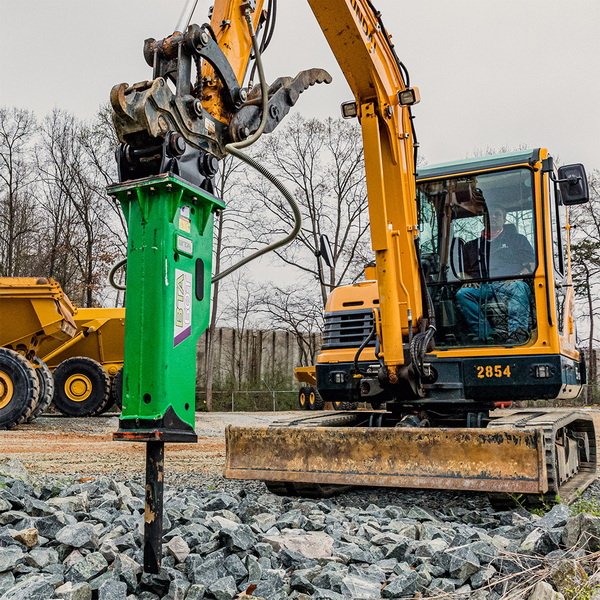
Drop hammer attachments are available for various carrier sizes, from compact skid steers (1,500-2,000 lb operating capacity) to mid-size excavators (15-25 tons). Proper sizing ensures optimal performance without overloading your carrier vehicle. Consult with equipment specialists to match attachment weight and hydraulic requirements to your specific machinery.[2]
3. How does drop hammer maintenance compare to hydraulic breaker upkeep?
Drop hammers require dramatically less maintenance—primarily greasing 2-3 fittings before each work day. Hydraulic breakers need regular gas spring recharging, seal replacements, and specialized hydraulic servicing. Contractors report 80-90% lower maintenance costs with drop hammers over the equipment’s operational lifespan.[7][4][2]
4. Are drop hammers suitable for vertical concrete demolition?
No, drop hammers are designed specifically for horizontal concrete surfaces and require clear vertical drop paths. For vertical walls, overhead structures, or angled demolition, hydraulic breakers provide the multi-directional capability needed. Drop hammers optimize flat slab applications including parking lots, sidewalks, foundations, and industrial floors.[5][4][2]
5. What is the typical return on investment timeline for drop hammer attachments?
Most contractors recover their drop hammer investment within 8-15 demolition projects depending on project size and rental rate alternatives in their market. The combination of lower purchase price ($5,850-$12,000), minimal maintenance costs, and elimination of rental expenses creates favorable ROI. Additionally, ownership provides immediate project response capability that improves bid competitiveness and client relationships.[2]
Citations:
[1] https://www.researchandmarkets.com/reports/6166893/hydraulic-attachments-demolition-market-report
[2] https://www.fortunebusinessinsights.com/concrete-cutting-market-104740
[3] https://www.equipmentworld.com/attachments/article/15289945/22-demolition-attachments-for-construction-equipment
[4] https://www.beilite.com/en/blog/info_itemid_13470.html
[5] https://www.beilite.com/en/Blog/info_itemid_13470.html
[6] https://www.ytligong.com/blog/top-hydraulic-concrete-breakers-for-efficient-demolition/
[7] https://compactequip.com/attachments/the-advantages-of-drop-hammer-attachments-for-efficient-demolition/
[8] https://www.marketresearchfuture.com/reports/concrete-machinery-market-24559
Hot Tags:Drop Hammer Attachment, Excavator Drop Hammer, Hydraulic Drop Hammer, Drop Hammer Working Principle, Drop Hammer Attachment Uses, Excavator Demolition Hammer, Heavy Duty Drop Hammer, Construction Drop Hammer, Drop Hammer Attachment Benefits, Rock Breaking Drop Hammer