
Bobcat T770 vs. Kubota SVL95-2: Which Compact Track Loader Is Better for Your Jobsite?
Content Menu
● Key Specifications at a Glance
● Size, Power, and Performance
● Traction, Flotation, and Ground Disturbance
● Attachment Versatility and Hydraulics
>> Bob-Dock and Operator Convenience
● Controls, Precision, and Operator Experience
● Cab Comfort, Visibility, and Noise
● Maintenance, Serviceability, and Uptime
>> Parts Availability and Support
● Real-World Use Cases and Machine Fit
>> Best Fit for Kubota SVL95-2
● How to Choose the Right Loader for Your Business
>> Step 1: Clarify Your Primary Applications
>> Step 2: Evaluate Your Jobsite Conditions
>> Step 3: Consider Operator Skill and Comfort
>> Step 4: Analyze Lifecycle Cost
>> 1. Which is better overall, the Bobcat T770 or the Kubota SVL95-2?
>> 2. Does the Bobcat T770 really lift more than the Kubota SVL95-2?
>> 3. Which compact track loader is faster?
>> 4. How important is ground pressure when choosing between these two machines?
>> 5. Why does DPF and emissions design matter for compact track loaders?
Overview of Both Loaders
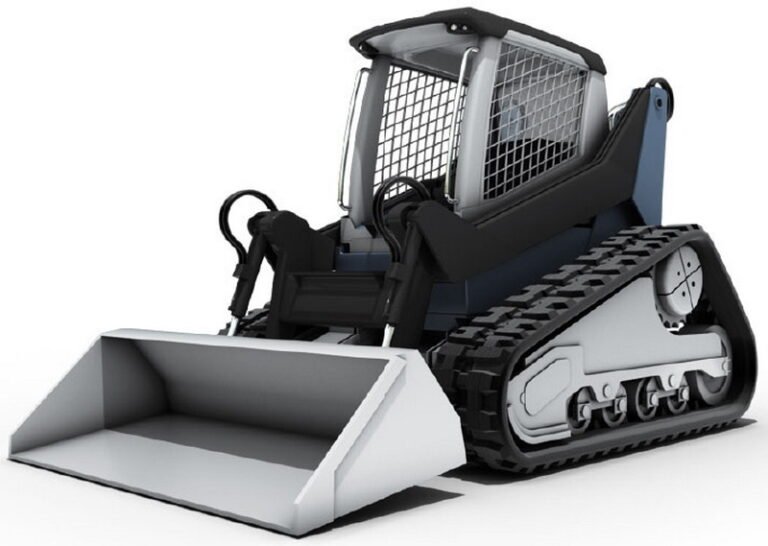
Both the Bobcat T770 and Kubota SVL95-2 are large-frame compact track loaders designed for demanding construction, landscaping, agriculture, and infrastructure work. They share a vertical lift path, making them suitable for loading high-sided trucks, stacking pallets, and handling bulk materials on busy jobsites.
The T770 is positioned as a high-productivity, fast-moving loader with strong lift capacity and advanced attachment options. The SVL95-2 focuses on high horsepower and robust hydraulic performance, appealing to users who push heavy-duty attachments hard all day.
When comparing the Bobcat T770 and Kubota SVL95-2 compact track loaders, most contractors will find the T770 delivers better lifting performance, faster travel speeds, and easier attachment changes. The SVL95-2 stands out for its higher horsepower and strong breakout force. Choosing the right machine ultimately depends on whether you prioritize speed and versatility or raw engine power for your applications.
Key Specifications at a Glance
The table below highlights the most important specs customers typically compare when evaluating the Bobcat T770 vs. Kubota SVL95-2 compact track loaders.
| Feature | Bobcat T770 | Kubota SVL95-2 |
|---|---|---|
| Engine horsepower | 92 hp | 96.4 hp |
| Rated operating capacity | 3,475 lb | 3,200 lb |
| Operating weight | 10,515 lb | 11,574 lb |
| Lift path | Vertical | Vertical |
| Bucket pin height | 131.4 in | 128.5 in |
| Ground pressure (tracks) | 4.2 psi | 4.5 psi |
| Travel speed – low | 6.6 mph | 5.0 mph |
| Travel speed – high | 10.7 mph | 7.3 mph |
For contractors comparing these two compact track loaders, the T770 moves faster and lifts more, while the SVL95-2 delivers slightly higher horsepower and strong traction performance.
Size, Power, and Performance
In daily work, performance is not just about horsepower. It is about how efficiently the loader moves, lifts, and cycles through tasks.
Lifting Capacity and Reach
– T770 ROC: 3,475 lb, despite being lighter in operating weight.
– SVL95-2 ROC: 3,200 lb, with nearly 1,000 lb more operating weight than the T770 in typical configurations.
– The T770’s higher bucket-to-hinge-pin height (around 131.4 in vs. 128.5 in) gives it a slight edge when loading high-sided trucks or hoppers.
Speed and Productivity
– T770 single-speed: about 6.6 mph, significantly faster than the SVL95-2 at 5.0 mph.
– T770 high-speed: up to 10.7 mph vs. about 7.3 mph on the SVL95-2, which can translate into more cycles per hour on large jobsites.
In real-world conditions, the Bobcat T770’s combination of faster ground speed and higher ROC often results in more loads moved per day with less time spent repositioning the machine.
Traction, Flotation, and Ground Disturbance
Ground conditions significantly influence compact track loader selection, especially on soft soil, turf, or wet ground.
The T770 delivers slightly lower ground pressure at 4.2 psi due to its track design and operating weight, which helps minimize rutting and surface disturbance. The SVL95-2’s 4.5 psi ground pressure is still suitable for soft ground but concentrates more load per square inch, which can leave deeper marks in sensitive areas.
For contractors working on landscaping, golf courses, or urban jobsites where surface restoration is costly, the T770’s lower ground pressure can be a notable advantage.
Attachment Versatility and Hydraulics
The value of a compact track loader comes from how many jobs it can do with different attachments.
Attachment Options
Both machines support a wide range of buckets, forks, grapples, augers, trenchers, cold planers, and snow attachments through standard quick-attach couplers. Bobcat’s ecosystem is especially broad, with a deep catalog of manufacturer-matched attachments for construction, agriculture, roadwork, and grounds maintenance.
Bob-Dock and Operator Convenience
The T770 can be equipped with the Bob-Dock attachment mounting system, enabling operators to switch hydraulic attachments in seconds without leaving the cab. On the SVL95-2, changing attachments usually requires stepping out of the cab, managing hydraulic hoses manually, and dealing with environmental conditions, which adds time and fatigue over a long day.
For high-changeover workflows such as road maintenance, utility contracting, or municipal work, the T770’s automated docking can deliver meaningful time savings and safer attachment handling.
Controls, Precision, and Operator Experience
Modern jobsites demand precise grading, backfilling, and finish work, not just raw pushing power.
Control Options
– T770: offers both traditional hand/foot controls and Selectable Joystick Controls (SJC), which allow operators to choose ISO or H-pattern and fine-tune control response.
– SVL95-2: typically relies on hydraulic pilot controls in a single ISO-style pattern, offering less customization for operators who switch between brands or patterns.
Accuracy Features
The T770 is available with advanced features such as speed management, drift compensation, and integrated display settings tailored to attachment performance. These functions help operators maintain smooth grading, especially when working with planers, box blades, or precision buckets.
For mixed-experience crews, the ability to match control schemes to operator preference on the T770 often shortens the learning curve and reduces costly rework.
Cab Comfort, Visibility, and Noise
Operator comfort strongly influences productivity and safety, especially in long multi-shift operations.
Cab Space and Access
– T770: features a wide, curved front door with large side windows and an overhead skylight, enhancing visibility and making entry/exit easier, even with bulky PPE.
– SVL95-2: uses a pull-down style door with a more compact cab feel, which some operators find more restrictive.
Noise and Environment
The T770’s sealed, pressurized cab is designed to reduce dust and noise, creating a quieter working environment and helping operators remain focused over long days. The Kubota cab is functional but can feel noisier and less isolated from external vibration and sound, depending on configuration.
Over time, better cab ergonomics and reduced fatigue can translate into fewer operator mistakes, improved safety, and more consistent productivity for the T770.
Maintenance, Serviceability, and Uptime
Unplanned downtime is one of the costliest aspects of owning a compact track loader.
Routine Service Access
Both machines offer reasonably accessible service points for daily checks and routine maintenance like filter changes and fluid inspections. Bobcat places emphasis on protecting critical components inside the frame and behind a reinforced tailgate, reducing the risk of damage from debris or contact with obstacles.
Parts Availability and Support
Bobcat’s North American parts distribution network helps shorten wait times for replacement components and consumables, which supports higher uptime. Kubota uses more imported components on certain machines, which can be subject to longer lead times depending on region and supply chain conditions.
DPF and Emissions Systems
The T770 is configured to avoid the need for a diesel particulate filter (DPF) system in many markets, eliminating downtime for filter regeneration and replacement. The SVL95-2 typically uses DPF-based emission control, which requires periodic regeneration cycles and eventual component replacement, adding complexity to maintenance planning.
For fleet managers, the T770’s simpler emissions strategy and strong parts logistics can help lower total cost of ownership over the machine’s life.
Real-World Use Cases and Machine Fit
Different industries will weigh the strengths of these compact track loaders differently.
Best Fit for Bobcat T770
– Large commercial construction where fast travel and high lifting cycles drive profitability.
– Municipal, road maintenance, and utility crews frequently swapping between buckets, planers, sweepers, and trenchers.
– Landscaping and site development where lower ground pressure helps protect finished surfaces.
Best Fit for Kubota SVL95-2
– Heavy-duty agricultural and land-clearing work where high horsepower and strong bucket breakout force are primary decision factors.
– Owner-operators already standardized on Kubota equipment and comfortable with its control philosophy and parts sourcing.
For global buyers sourcing from OEM/ODM manufacturers such as Certeg for excavators, skid steer loaders, rollers, forklifts, tractors, and crawler carriers, this comparison also offers a benchmark to evaluate local or customized models against established market leaders.
How to Choose the Right Loader for Your Business
To make a confident decision between the Bobcat T770 and Kubota SVL95-2, focus on matching the machine’s strengths to your most frequent tasks.
Step 1: Clarify Your Primary Applications
1. List your top 5 job types (e.g., concrete prep, grading, snow removal, pallet handling).
2. Note the most demanding attachments you use (planer, mulcher, heavy forks).
3. Identify whether speed between work zones or raw pushing power matters more.
Step 2: Evaluate Your Jobsite Conditions
– Are you regularly on soft soil or turf where low ground disturbance is critical?
– Do you often work on large, spread-out sites where high travel speed saves hours per week?
Step 3: Consider Operator Skill and Comfort
– Do you have mixed-experience crews that benefit from flexible control modes (ISO/H-pattern)?
– Is cab comfort and low noise a priority to reduce fatigue and turnover in high-hour operations?
Step 4: Analyze Lifecycle Cost
– Discuss service intervals, parts availability, and emissions system complexity with your dealer.
– Compare fuel consumption, downtime risks, and residual value projections over 3-5 years.
Take the Next Step
For buyers still evaluating their options, the next step is to get seat time in both machines and compare them against your actual workload.
– Schedule an on-site or dealer-yard demo to test lifting, grading, and travel performance under realistic conditions.
– Request a tailored quote that includes attachment packages, service plans, and financing or leasing options.
– If you need custom power solutions across excavators, skid steers, rollers, forklifts, tractors, or crawler carriers, contact Certeg to configure a matched construction equipment fleet for your global projects.
Ready to move forward? Book a T770 or SVL95-2 demo with your local dealer today. Or reach out to Certeg’s sales team to discuss a complete, power-matched machinery lineup for your upcoming construction and infrastructure jobs.
Contact us to get more information!
Frequently Asked Questions
1. Which is better overall, the Bobcat T770 or the Kubota SVL95-2?
For most contractors prioritizing lift capacity, speed, and attachment versatility, the Bobcat T770 is often the more productive choice. However, if maximum horsepower and strong breakout force are your top priorities, the Kubota SVL95-2 remains very competitive.
2. Does the Bobcat T770 really lift more than the Kubota SVL95-2?
Yes, the T770’s rated operating capacity is about 3,475 lb, compared with roughly 3,200 lb for the SVL95-2, giving Bobcat an advantage of around 275 lb in this category.
3. Which compact track loader is faster?
The T770 typically runs at about 6.6 mph in low range and up to 10.7 mph in high-speed mode, while the SVL95-2 operates around 5.0 mph in low and about 7.3 mph in high. This gives the Bobcat a clear edge for travel-intensive work.
4. How important is ground pressure when choosing between these two machines?
Ground pressure matters when working on soft, wet, or finished surfaces where rutting and damage can increase restoration costs. The T770’s lower 4.2 psi ground pressure provides slightly better flotation than the SVL95-2’s 4.5 psi, which can be valuable in landscaping or turf-sensitive projects.
5. Why does DPF and emissions design matter for compact track loaders?
DPF systems add complexity and require periodic regeneration and eventual replacement, which can increase downtime and maintenance costs over time. The T770’s configuration without a DPF in many markets simplifies emissions maintenance and can be attractive for fleets seeking lower lifecycle complexity.
References
1. – https://www.bobcat.com/na/en/buying-resources/loaders/bobcat-t770-loader-vs-kubota-svl95-2-loader
2. – https://carletonequipment.com/products/bobcat%C2%AE-t770
3. – https://www.kubotausa.com/docs/default-source/brochure-sheets/svl95-2s-brochure.pdf
4. – https://bobcatofatlanta.com/1868/
5. – https://lanoequip.com/news/bobcat-t770-a-game-changer-for-heavy-duty-jobs.html
6. – https://www.kubotausa.com/docs/default-source/brochure-sheets/svl75-2-svl95-2s-track-loaders.pdf
7. – https://www.boomandbucket.com/resources/specs/loaders/kubota/svl95-2s
8. – https://www.bobcatgdn.com/product-page/compact-track-loader-bobcat-t770
9. – https://www.ritchiespecs.com/model/kubota-svl95-2shfc-multi-terrain-loader
10. – https://www.disenparts.com/blog/post/Kubota%20vs%20Bobcat%20Skid%20Steer:%20Which%20Loader%20Reigns%20Supreme
Hot Tags: Kubota Skid Steer Package Deals,Bobcat T770, Kubota SVL95-2, Compact Track Loader Comparison, Bobcat Vs Kubota, Track Loader Specs, Skid Steer Vs Track Loader, Compact Track Loader Performance, Bobcat T770 Specs, Kubota SVL95-2 Specs