

The Ultimate Skid Steer Buyer’s Guide: How Luxury Features Boost Productivity, Safety and Operator Retention
Content Menu
● What Has Really Changed in Modern Skid Steer Loaders?
● Why Operator Comfort Is Now a Core ROI Driver
>> Employee attraction and retention
● Rearview Cameras vs Mirrors: Seeing More, Working Faster
>> How manufacturers implement visibility upgrades
● Pressurized Cabs, HVAC and Dust Control: More Than Comfort
● Side‑Entry Doors and Cab Space: Safety and Ergonomics in Action
● Lights, Controls and Soundproofing: The “Invisible” Performance Features
>> LED lighting and night operations
>> Electronic controls and noise reduction
● How Much Do Luxury Skid Steer Features Really Cost?
● Practical Skid Steer Spec Checklist for Different Job Conditions
● Real‑World Example – Track Loader on a Food‑Plant Expansion
● How We Design Certeg Skid Steers for Global Customers
● Luxury vs Standard Skid Steer Loaders
● Configure Your Next Skid Steer with Confidence
>> 1. Are rearview cameras worth the extra cost on a skid steer loader?
>> 2. What is the main benefit of a pressurized skid steer cab?
>> 3. How much more does a fully loaded “luxury” skid steer usually cost?
>> 4. When should I choose a compact track loader instead of a wheeled skid steer?
>> 5. What cab features matter most for operator retention?
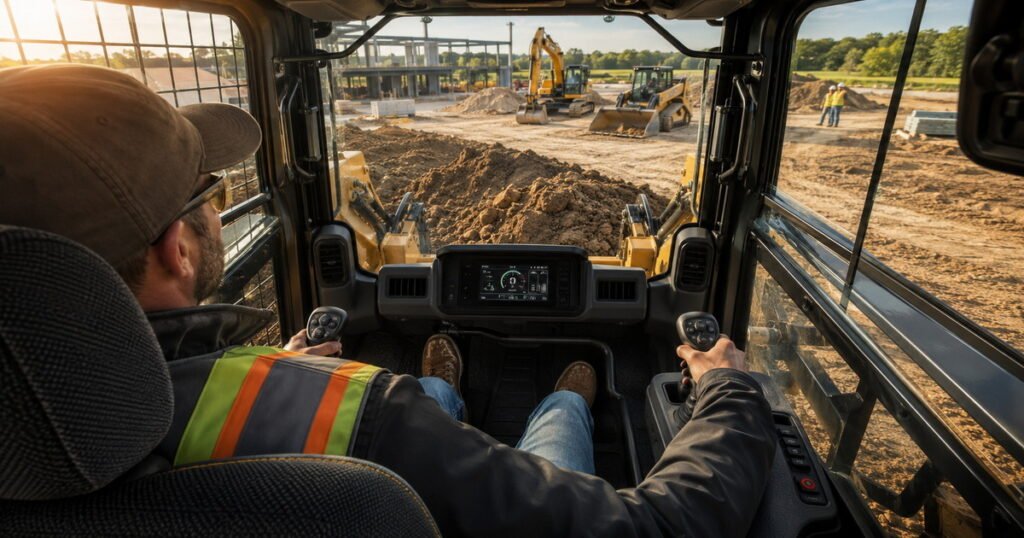
When I first climbed into a modern skid steer loader with a pressurized cab and an always‑on rearview camera, it immediately felt less like a rough construction machine and more like a compact, high‑tech cockpit designed for serious production work. As a manufacturer working with contractors across global jobsites, I have seen how the right combination of cab comfort, visibility and control systems can turn a basic skid steer into a true profit machine for demanding earthmoving and construction environments.
In this guide, I will walk you through how today’s “luxury” options — from rearview cameras and LED work lights to air‑suspension seats and advanced control layouts — directly impact safety, uptime and total cost of ownership on both wheeled and compact track skid steer loaders. I will also share what we focus on at Certeg when designing loaders for different climates, power demands and ground conditions worldwide.
What Has Really Changed in Modern Skid Steer Loaders?
The skid steer has evolved from a rudimentary, three‑wheeled, belt‑driven shop helper into a hydrostatic‑propelled compact workhorse used on construction, landscaping, agriculture and industrial sites globally. Early operators sat on crude open‑air seats; today, they sit in enclosed, sealed cabs with refined controls and electronic dashboards. [utilitycontractormagazine]
Several macro trends are driving this shift:
– Operator expectations are higher. Younger “PlayStation generation” operators grew up with screens, Bluetooth and precise joysticks, not dusty open platforms with hard levers.
– Safety standards have tightened. Companies are more aware of blind spots, backing accidents and long‑term noise and dust exposure.
– Productivity per operator matters more than ever. Skilled operators are scarce; keeping one productive and loyal can be worth far more than a 10–30% loader price premium.
Manufacturers like Caterpillar, JCB, ASV and others have steadily refined cab ergonomics, visibility and environmental control to address these realities, turning “luxury loaders” into the new baseline for serious fleets. [utilitycontractormagazine]
Why Operator Comfort Is Now a Core ROI Driver
Many fleet managers still view comfort options as “nice‑to‑have.” In practice, I have seen the opposite: comfort features are usually high‑ROI investments, especially on machines that run multiple shifts or work in extreme climates.
Productivity and fatigue
Industry specialists point out that a comfortable, well‑supported operator is more likely to stay in the cab, make fewer mistakes and maintain consistent output across a full shift. Heated, air‑suspension seats keep the operator fresh and sharp, particularly when combined with low‑effort joysticks and well‑designed arm bars.
From the field, we consistently hear:
– Fewer micro‑breaks when seats and controls reduce vibration and strain.
– Better grading and material handling accuracy when controls are smooth and predictable.
– Less rework caused by imprecise movements from tired operators.
Employee attraction and retention
Caterpillar specialists explicitly link cab comfort and ease of use to employee retention: once you attract a skilled operator, giving them a modern, comfortable cab becomes a strong reason they stay with your company. In competitive regions, contractors tell us operators will migrate to the contractor who runs newer, better‑equipped loaders.
In other words, spending modestly more on a fully equipped skid steer can reduce your recruiting and training costs — a benefit that often goes unaccounted for in simple price comparisons.
Rearview Cameras vs Mirrors: Seeing More, Working Faster
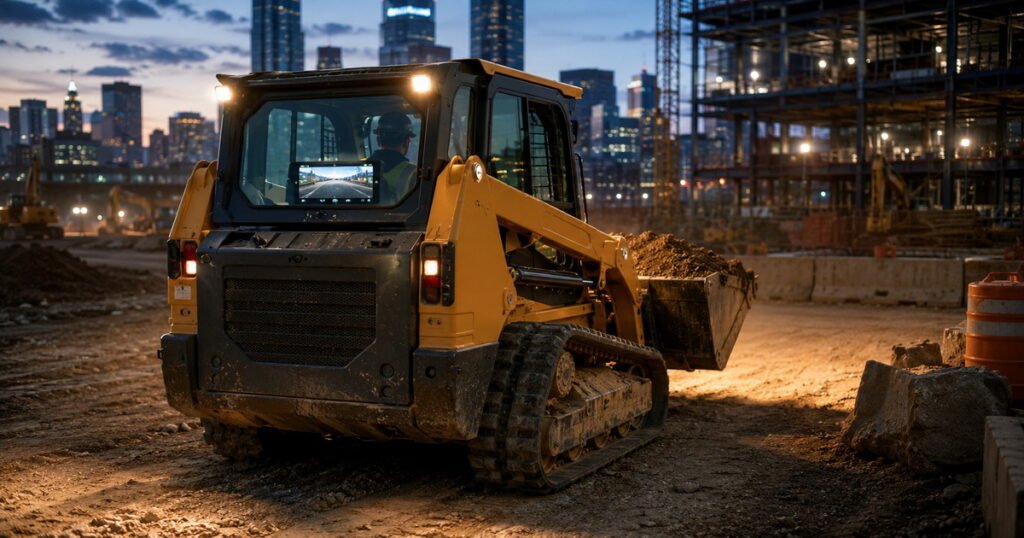
One of the clearest signs of a “luxury loader” is the presence of a rearview camera integrated into the cab. These systems dramatically improve situational awareness, especially in tight sites or when working at night.
How manufacturers implement visibility upgrades
Different brands have taken different approaches:
– JCB traditionally equips skid steers with a factory‑installed rearview mirror, while offering cameras as aftermarket upgrades.
– Caterpillar offers a rearview mirror as standard and an optional camera that is integrated into the in‑cab display monitor for easy reference.
– ASV replaces the rearview mirror entirely with a backup camera that stays on all the time, mounted where the mirror would normally sit, so operators intuitively glance at it just like a mirror.
These configurations support:
– Faster reversing and positioning in congested areas.
– Reduced collision risk with people, obstacles and other machines behind the loader.
– Less neck strain from constant twisting to look over the shoulder.
At Certeg, our design philosophy is similar: we prioritize wide rear visibility through glass, mirrors and optional cameras, especially on compact track loaders that often run on cluttered, uneven sites where a single unseen obstacle can cause track or undercarriage damage.
Pressurized Cabs, HVAC and Dust Control: More Than Comfort
Air conditioning is now standard on many enclosed skid steer cabs, but the critical differentiator is how well the cab is sealed and pressurized. This has direct implications for operator health and long‑term machine uptime.
Why pressurization matters
Manufacturers like ASV and Caterpillar emphasize the importance of an industry‑leading sealed and pressurized cab design to keep cool air in and dust, pollen and exhaust fumes out. Their one‑piece or carefully sealed cab structures are engineered to limit air leakage and infiltration.
Benefits include:
– Lower dust exposure for operators working in demolition, concrete, aggregate or agricultural applications.
– Improved HVAC efficiency, allowing smaller units to maintain comfortable temperatures in hot or cold climates.
– Reduced ingress of fine particles into controls and electronics, potentially improving component longevity.
At Certeg, we mirror this approach on both wheeled and track loaders, deliberately sealing door frames, floor penetrations and service panels to maintain consistent pressure and filtration in harsh environments.
Side‑Entry Doors and Cab Space: Safety and Ergonomics in Action
Cab access is another area where high‑end skid steers have broken from tradition. JCB’s side entry door is one of the most recognizable examples, enabled by its single right‑side boom design.
Safety first, then comfort
Instead of climbing over a front attachment and brackets, operators can enter from the side, significantly reducing awkward, risky movements. JCB has incrementally improved this feature with wider openings and better grab handles inside and outside the cab.
This architecture also:
– Frees up interior space, providing roughly a third more room in larger JCB models and 42% more in smaller units, while keeping outside dimensions similar to competitors.
– Offers generous leg and headroom, addressing a common operator complaint in compact machinery.
Different manufacturers approach space optimization in their own ways. ASV engineers, for example, continually reconfigure internal layouts to maximize operator room while maintaining a compact exterior footprint.
Our own loaders follow the same principle: keep the machine narrow and maneuverable for urban jobs, but carve out extra knee, elbow and headroom wherever structure and hydraulics allow.
Lights, Controls and Soundproofing: The “Invisible” Performance Features
Some of the most valuable features of a modern luxury skid steer are not obvious at first glance, yet they significantly influence daily productivity and fatigue levels.
LED lighting and night operations
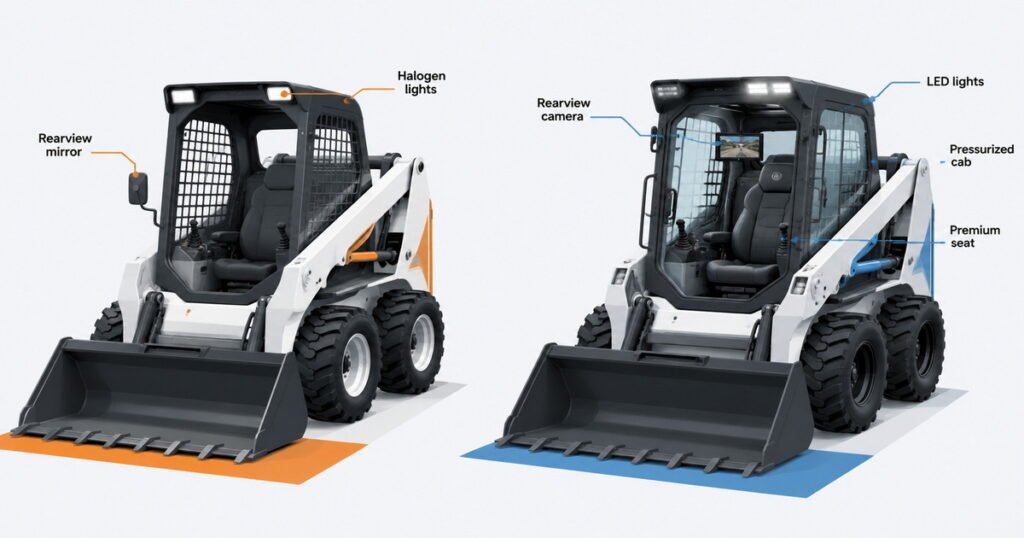
Halogen lights remain standard on many models, but LED work lights are increasingly available as an upgrade. LEDs offer:
– Brighter, whiter light for safer night and early‑morning operations.
– Lower power draw and longer service life compared to halogens.
– Better illumination of attachment edges and load areas when grading or loading trucks.
Manufacturers design these loaders assuming they will be operated at night, particularly on infrastructure and utility projects where crews run second shifts.
Electronic controls and noise reduction
Refined joystick and electronic foot throttle controls help smooth out acceleration, deceleration and directional changes, reducing jolting across rough ground. Combined with additional soundproofing inside the cab, these improvements lower operator fatigue and improve fine‑control tasks like finish grading or pallet handling.
Key advantages include:
– More predictable machine response, especially for new or cross‑trained operators.
– Lower overall noise levels, helping meet site safety requirements and reduce long‑term hearing risk.
– Improved precision when operating high‑flow attachments that demand nuanced control.
How Much Do Luxury Skid Steer Features Really Cost?
Manufacturers are understandably cautious about publishing hard price deltas for fully optioned loaders, as configurations vary by region, dealer and package. However, ASV representatives estimate that a loaded skid steer with premium options can cost roughly 10–30% more than a base model.
When you factor in:
– Longer daily operating windows (thanks to reduced fatigue).
– Fewer backing accidents and less rework.
– Better operator retention and easier recruiting.
…that additional capex can be recovered surprisingly quickly on high‑utilization machines.
From our experience at Certeg, customers who standardize on fully featured cabs for their core fleet typically report higher utilization and lower complaints, especially on long‑term infrastructure and industrial projects.
Practical Skid Steer Spec Checklist for Different Job Conditions
To make this guide more actionable, here is a concise checklist we use with international customers when specifying wheeled vs track loaders and cab options for different work environments.
1. Ground conditions
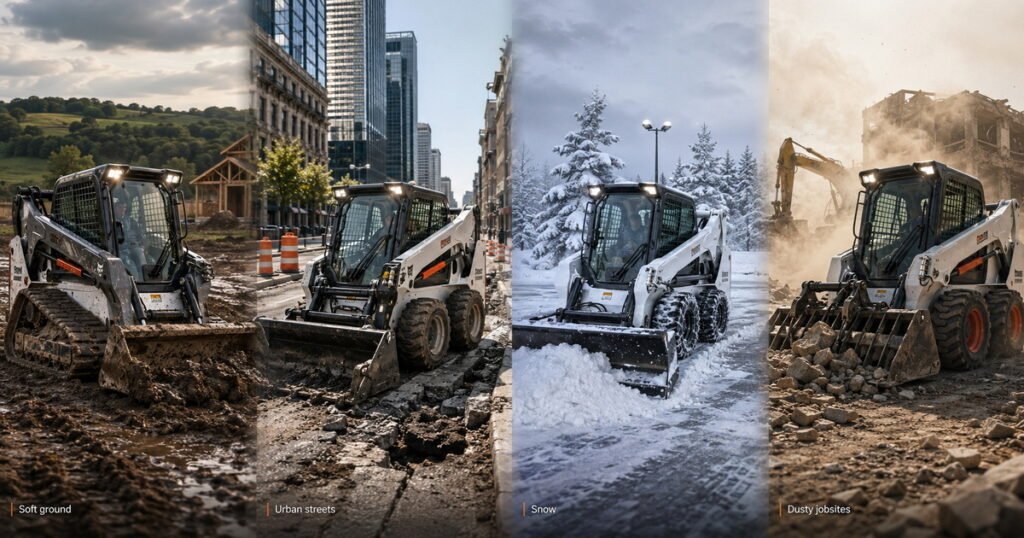
– Soft, muddy, sandy or snowy terrain: Prioritize compact track loaders with aggressive tread patterns and strong undercarriage protection.
– Hard, paved or mixed urban surfaces: Wheeled skid steer loaders provide faster travel, lower track maintenance and better road manners.
2. Climate and environment
– Hot, dusty regions (quarries, demolition, dry agriculture)
– Enclosed, pressurized cab with efficient HVAC and high‑quality filtration.
– Rearview camera and LED lights to support extended hours and reduced dust visibility.
– Cold climates (northern construction, snow removal)
– Heated, air‑suspension seat and defrosting HVAC.
– Sealed cab to minimize drafts and frost buildup on windows.
3. Operator profile
– Mixed‑experience crews
– Simple, clearly labeled control layouts.
– Always‑on backup camera or large mirror for intuitive use.
– Highly skilled “power users”
– Customizable control modes and response settings where available.
– Extra legroom and premium seats for long shifts.
By mapping your typical job conditions and crew profile to this checklist, you can quickly decide whether a high‑spec “luxury” configuration will create enough output and safety gains to justify the cost.
Real‑World Example – Track Loader on a Food‑Plant Expansion
A good illustration of these features in action is the Gehl RT165 compact track loader at a cheese production facility expansion in Wisconsin. Built on a proven skid loader chassis, the RT165 offers multiple control options, track widths and a low operating weight of about 8,020 lb, while an automatic track tensioning system ensures correct tension every time the machine starts.
On this project:
– The track system improved flotation and stability on variable subgrade inside and around the expansion area.
– Automatic tensioning reduced maintenance touch points and the risk of track‑related downtime.
This is a useful reference point when you evaluate similar track loaders from Certeg or other manufacturers: look for intelligent undercarriage design, service access, and features that maintain correct tension and alignment with minimal operator input.
How We Design Certeg Skid Steers for Global Customers
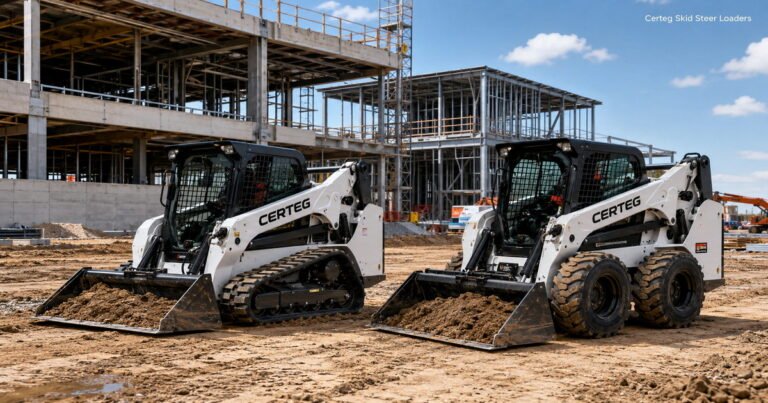
As an OEM serving international markets, we build both track and wheel skid steer loaders to withstand a wide range of climates, regulations and job profiles. Our engineering priorities are aligned with the industry trends discussed above, but tailored for global contractors and distributors.
Key design focuses include:
– Configurable power and hydraulics for attachments ranging from buckets and forks to cold planers, sweepers and trenchers.
– Cab modules with scalable options: from robust, open ROPS platforms to fully enclosed, pressurized cabs with rearview cameras, LED lighting and advanced joysticks.
– Durable chassis and undercarriage engineered for both heavy construction cycles and rental fleets.
When we advise fleet managers, we often recommend starting with a clear definition of primary work (earthmoving vs material handling vs attachment‑heavy tasks) and then layering cab comfort and safety options on top. This approach creates a skid steer that feels like it was built for your team, not just for a generic spec sheet.
Luxury vs Standard Skid Steer Loaders
Below is a quick comparison of standard versus luxury‑equipped skid steer loaders to help structure your internal decision‑making.
| Feature category | Standard skid steer configuration | Luxury skid steer configuration |
|---|---|---|
| Cab environment | Basic enclosed or open cab, limited sealing, manual seat | Pressurized, sealed cab with HVAC, heated air‑suspension seat, extra soundproofing |
| Visibility | Rearview mirror only, halogen work lights | Integrated rearview camera, optional always‑on display, LED work lights |
| Controls | Mechanical levers or basic joysticks, minimal customization | Refined electronic joysticks, adjustable arm bars, multiple control presets utilitycontractormagazine |
| Access and space | Front entry over attachment, compact interior | Optional side entry, expanded leg and headroom, improved grab handles |
| Safety and fatigue | Higher operator fatigue, more neck‑turning for reversing | Reduced strain, better situational awareness, longer productive shifts |
| Cost impact | Lowest initial purchase price | Approximately 10–30% higher purchase price, improved lifecycle ROI |
Configure Your Next Skid Steer with Confidence
If you are planning your next fleet purchase or looking to replace older skid steers, now is the right moment to rethink what “luxury” really means in your context. A well‑equipped skid steer loader can improve operator safety, retention and productivity every hour it is on the jobsite — gains that compound over years of operation. [utilitycontractormagazine]
Reach out to the Certeg team to discuss your typical materials, ground conditions and climate, and we will help you configure a wheel or track skid steer loader with the right balance of power, comfort and control for your global projects.
Frequently Asked Questions
1. Are rearview cameras worth the extra cost on a skid steer loader?
Yes. Rearview cameras significantly improve situational awareness, reduce the need for constant neck‑twisting and can lower the risk of backing accidents, especially on tight jobsites or at night.
2. What is the main benefit of a pressurized skid steer cab?
A properly sealed and pressurized cab keeps cool or warm air inside while minimizing the entry of dust, fumes and noise, which helps protect both operators and machine components over time.
3. How much more does a fully loaded “luxury” skid steer usually cost?
Industry sources suggest that a fully optioned skid steer loader with premium comfort and safety features may cost around 10–30% more than a base machine, depending on brand and options.
4. When should I choose a compact track loader instead of a wheeled skid steer?
Choose a compact track loader when you frequently work on soft, muddy, sandy or snowy ground, or when you need maximum flotation and traction, while wheeled skid steers are better for hard, paved or mixed urban surfaces. [utilitycontractormagazine]
5. What cab features matter most for operator retention?
Heated, air‑suspension seats, refined joystick controls, effective HVAC and good visibility (via mirrors and cameras) all contribute to lower fatigue and higher operator satisfaction, which in turn supports retention. [utilitycontractormagazine]
References
1. Caterpillar – 236D/242D/246D/262D Skid Steer Loaders product literature (sealed and pressurized cab and visibility features).
<https://s7d2.scene7.com/is/content/Caterpillar/C10161176> [s7d2.scene7]
2. Utility Contractor Magazine – “Skid Steer Showcase.”
<https://utilitycontractormagazine.com/skid-steer-showcase-2/> [utilitycontractormagazine]
3. Gehl – Product information on RT165 compact track loader and Baker Cheese Expansion Project case mention (via Compact Equipment article section).
<https://compactequip.com/skid-steers/luxury-loaders-rearview-cameras-pressurized-cabs-building-ultimate-skid-steer/>
4. Deere – “320G Skid Steer” product page (general spec context for modern skid steer loaders).
<https://www.deere.com/en/loaders/skid-steers/320g-skid-steer/> [deere]
Hot Tags: Skid Steer Loader, Manufacturers, Customized, Custom, Suppliers, Buy, Cheap, Quality, Advanced, Durable, in Stock, Made in China, Price, Quotation