
The 2026 Guide to Skid Steer and Track Loaders: Key Trends, Lessons from 2021, and How to Choose the Right Machine
Content Menu
● Why Skid Steer and Track Loaders Still Matter in 2026
● Skid Steer vs Track Loader: How the Core Designs Differ
>> Core Mechanical Differences
>> Application and Surface Considerations
● Lessons from 2021: The Stories That Still Shape 2026 Purchases
>> Operator Comfort Became a Productivity Feature
>> High‑Flow Hydraulics and Specialized Attachments
● Vertical vs Radial Lift: What Really Matters in the Field
● Market Outlook: Why Demand Is Still Growing
● How to Select the Right Skid Steer or Track Loader in 2026
>> Step 1 – Define Primary Applications
>> Step 2 – Match Platform and Undercarriage
>> Step 3 – Size to Transport and Jobsite Access
>> Step 4 – Evaluate Hydraulics for Your Attachments
>> Step 5 – Prioritize Operator Comfort and Technology
● Wheels vs Tracks and Key Specs: At-a-Glance Comparison
● Emerging Trends – Electric, Telematics, and Chinese OEMs
>> Electric and Low‑Emission Machines
>> Telematics and Data-Driven Fleet Management
>> Chinese Manufacturers and Global Buyers
● Practical Buying Checklist for Contractors and Fleet Managers
● CTA: Talk to Certeg About a Loader Built for Your Jobsite
● FAQs About Skid Steer and Track Loaders
>> Q1. What is the biggest mistake buyers make when choosing between skid steers and CTLs?
>> Q2. How important are high‑flow hydraulics for most users?
>> Q3. Do vertical‑lift machines always cost more than radial‑lift models?
>> Q4. Are electric skid steer loaders ready for mainstream use?
>> Q5. How do I compare different global manufacturers fairly?
Skid steer loaders and compact track loaders (CTLs) have evolved from simple compact workhorses into highly specialized, technology-rich machines that can define the productivity and profitability of a jobsite. Drawing on years of field experience, 2021’s milestone product stories, and the latest 2026 market data, this guide walks you through what really matters when you select and operate these machines today. [imarcgroup]
Why Skid Steer and Track Loaders Still Matter in 2026
In 2026, skid steers and CTLs remain core machines on modern jobsites because they combine compact size, high hydraulic power, and unmatched attachment versatility. While 2021 highlighted new models, comfort upgrades, and smarter hydraulic systems, the past few years have pushed the segment toward more specialized roles, higher power, and better integration with digital fleet management. [sanyglobal]
From a manufacturer and operator perspective, a few themes stand out:
– Skid steers dominate on hard, prepared surfaces where speed and maneuverability matter most. [compactequip]
– Compact track loaders lead in soft ground, uneven terrain, and all-weather performance. [compactequip]
– The number of machine sizes and configurations has exploded, making application-focused selection more critical than ever. [thebusinessresearchcompany]
For OEMs like Certeg, which build both wheeled skid steers and track loaders, the real value to global buyers now lies in tailoring power, hydraulics, and undercarriage design to specific duty cycles and job conditions rather than selling a “one-size-fits-all” machine. [imarcgroup]
Skid Steer vs Track Loader: How the Core Designs Differ
Understanding the fundamental differences between skid steer loaders and compact track loaders is the starting point for any informed purchase decision. [sanyglobal]
Core Mechanical Differences
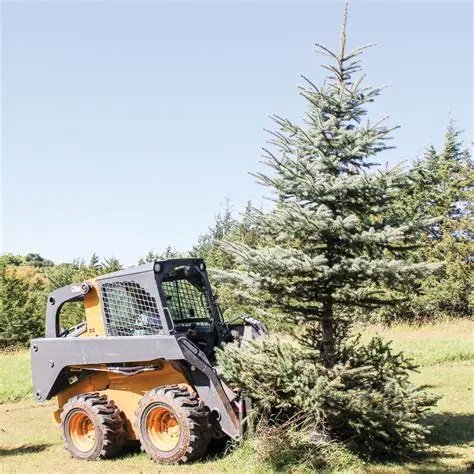
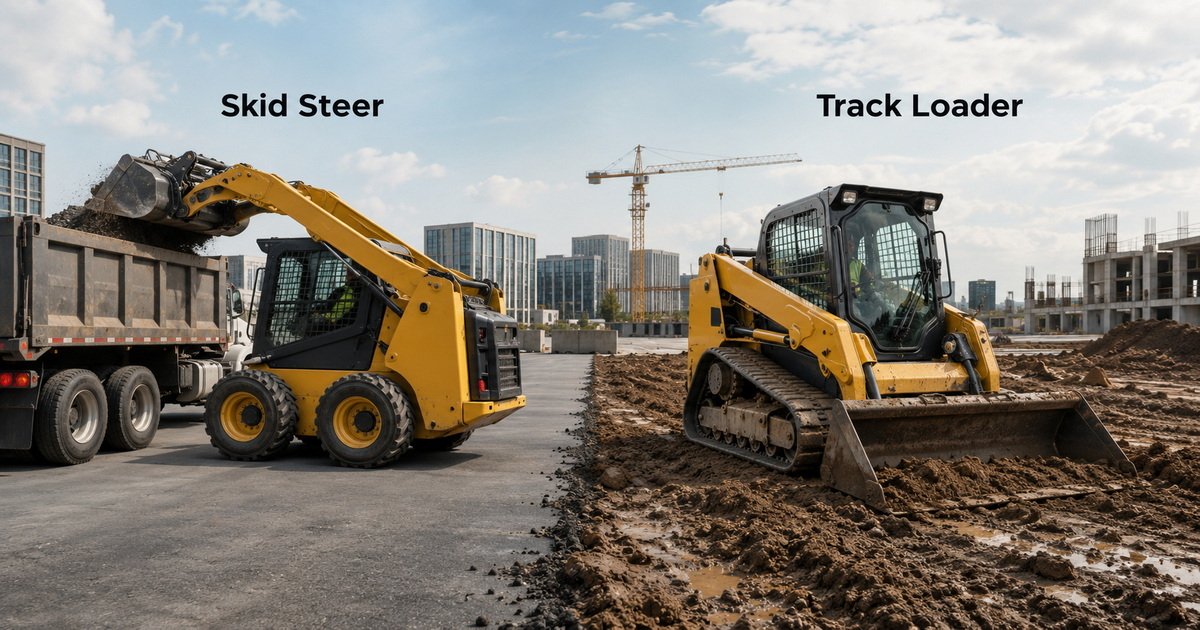
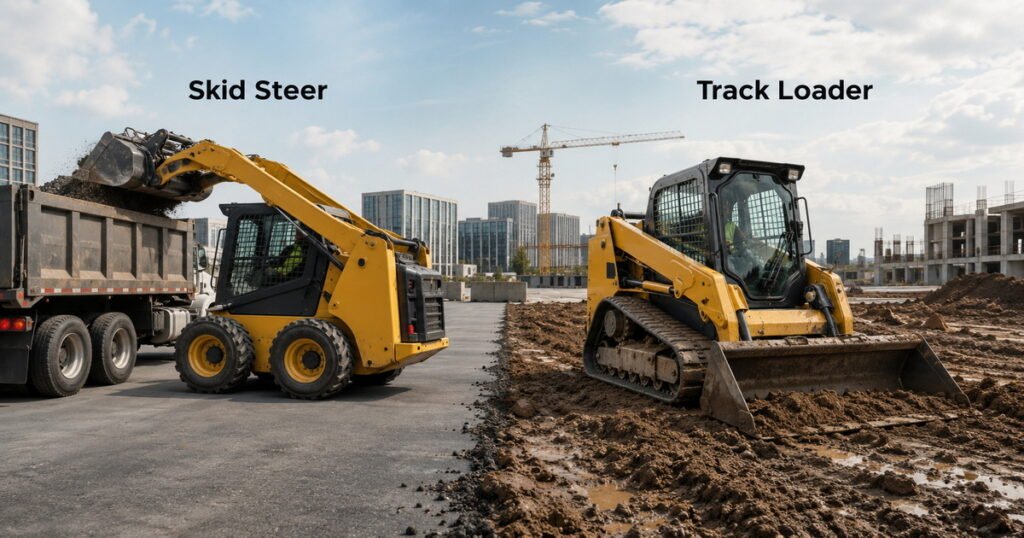
– Skid steer loaders (wheeled) use four tires and skid steering, turning by varying wheel speed on each side. [sanyglobal]
– Compact track loaders (tracked) use a rubber (or sometimes steel) track undercarriage that spreads the machine weight over a larger area. [compactequip]
Both platforms share key traits:
– Compact size for tight jobsites and confined urban work. [sanyglobal]
– Rapid attachment changes for “one machine, many jobs” flexibility. [sanyglobal]
– Powerful auxiliary hydraulics that can support demanding attachments such as cold planers, mulchers, and heavy-duty brush cutters. [compactequip]
Application and Surface Considerations
From real-world experience, the quickest way to choose between wheels and tracks is to start with the surface and duty cycle. [compactequip]
– Choose skid steers when:
– You work mostly on concrete, asphalt, or well-compacted gravel.
– You prioritize travel speed, lower undercarriage cost, and fast cycle times.
– You have frequent loading, material handling, or warehouse-style operations.
– Choose track loaders when:
– You regularly face mud, soft soils, slopes, or rough, undeveloped terrain.
– Ground pressure and traction are critical to productivity and safety.
– You need year-round performance in variable weather.
A good rule of thumb: if your operators frequently complain about getting stuck or spinning tires, you may be trying to make a wheeled machine do a tracked machine’s job. [sanyglobal]
Lessons from 2021: The Stories That Still Shape 2026 Purchases
The 2021 round‑up of major skid steer and track loader stories showcased how quickly this category was evolving in terms of comfort, hydraulics, and application focus. While specific models have since been updated, several long-term trends from those stories still guide buyer decisions in 2026. [thebusinessresearchcompany]
Operator Comfort Became a Productivity Feature
By 2021, manufacturers were already treating comfort as a direct productivity driver rather than a luxury. Key upgrades included: [compactequip]
– Pressurized, climate‑controlled cabs that cut dust and noise exposure. [compactequip]
– Adjustable seats and improved visibility to reduce fatigue over long shifts. [compactequip]
– Backup cameras and ergonomic controls that shorten the learning curve for new operators. [compactequip]
These trends have only accelerated. In 2026, buyers routinely look at cab design and operator interface as seriously as engine horsepower. [thebusinessresearchcompany]
High‑Flow Hydraulics and Specialized Attachments
The 2021 coverage also highlighted just how important hydraulic performance had become. High‑flow systems, which originated in the 1980s to power larger niche attachments, are now mainstream options on many skid steers and CTLs. [compactequip]
Key takeaways that still hold true today:
– Flow rates can range from roughly 16 to 50 gpm depending on model and configuration. [compactequip]
– For demanding attachments, flow, pressure, and cooling matter more than headline engine power. [compactequip]
– Buyers should evaluate hydraulic capability based on their top 3–5 attachments, not just on spec sheet maximums. [sanyglobal]
For a manufacturer like Certeg, this means designing loaders as attachment platforms, ensuring the engine, hydraulic pump, and cooling system are balanced for sustained high-load operation rather than short bursts. [imarcgroup]
Vertical vs Radial Lift: What Really Matters in the Field
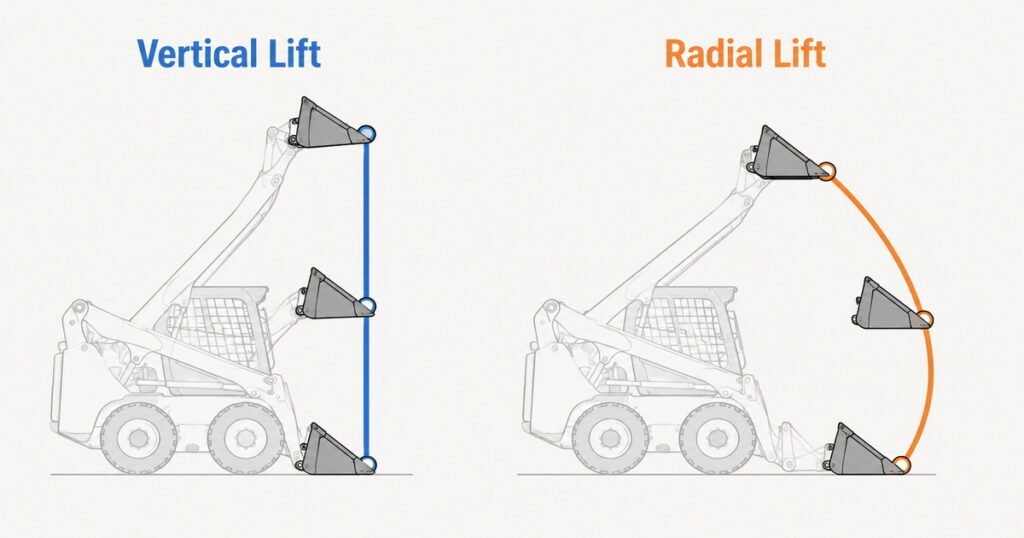
One of the subtle but important decisions highlighted in earlier coverage is whether to choose a vertical‑lift or radial‑lift machine. [compactequip]
Vertical-Lift Machines
Vertical‑lift skid steers and CTLs maintain the bucket closer to the machine as it rises and offer a higher, more upright lift path. [compactequip]
Best for:
– Loading trucks and hoppers.
– Forklift-like material handling.
– Applications where maximum lift height and reach at full height are critical. [compactequip]
Radial-Lift Machines
Radial‑lift designs follow a more arched path, with strong breakout forces near mid‑range heights. [compactequip]
Best for:
– Digging, grading, and earthmoving.
– Ground‑engaging attachments like augers and trenchers.
– Operators who need strong mid‑range breakout force more than top‑end height.
In practice, most fleets eventually standardize on one lift pattern for parts commonality and operator familiarity, but mixed fleets can make sense when you combine material handling and heavy earthmoving on the same jobs. [compactequip]
Market Outlook: Why Demand Is Still Growing
Despite economic cycles and regional fluctuations, global demand for skid steer loaders remains on a modest upward trajectory. [imarcgroup]
Market Size and Growth
– The global skid steer loader market reached around USD 2.5–2.6 billion by the mid‑2020s. [imarcgroup]
– Forecasts suggest it will continue to grow through 2030 and beyond, at a low‑single‑digit to mid‑single‑digit CAGR depending on region. [thebusinessresearchcompany]
Key growth drivers include:
– Urban infill construction and tight‑site projects that favor compact equipment.
– Infrastructure maintenance, roadwork, and municipal applications.
– Expanding use in landscaping, agriculture, and snow management. [thebusinessresearchcompany]
For global manufacturers and exporters, this steady growth supports long-term investment in new platforms, powertrains, and electric or hybrid drivetrains in select segments. [imarcgroup]
How to Select the Right Skid Steer or Track Loader in 2026
From an industry expert’s perspective, the biggest selection mistakes usually happen before any spec sheets are compared. The process works best when it starts with application, then moves to size, hydraulics, and options. [sanyglobal]
Step 1 – Define Primary Applications
List the top three tasks the machine will perform at least 70% of the time. For example: [compactequip]
1. Asphalt milling on urban streets.
2. Pallet handling in a precast yard.
3. Finish grading and landscaping.
Once you have this list, you can match machine platform, lift path, and attachments much more precisely.
Step 2 – Match Platform and Undercarriage
– If most work is on paved yards, warehouses, or road surfaces, prioritize a wheeled skid steer for lower owning and operating cost. [sanyglobal]
– If you expect frequent off‑road work, slopes, and soft soils, start from a compact track loader short list. [compactequip]
Remember that tracks can lower ground pressure dramatically, which can be the difference between a productive day and constant recovery operations on muddy or sensitive sites. [compactequip]
Step 3 – Size to Transport and Jobsite Access
Instead of buying “as big as possible,” size the machine to:
– Transport limits (trailer capacity, local regulations, and towing equipment).
– Gate and doorway constraints on your most restrictive jobs.
– Overhead clearance in older industrial facilities or parking structures.
In many real‑world fleets, the most profitable machines are not the biggest or most powerful but the ones that can actually reach the work on every job. [sanyglobal]
Step 4 – Evaluate Hydraulics for Your Attachments
For each planned attachment, check:
– Required flow (standard vs high‑flow).
– Required pressure and whether continuous duty is expected.
– Cooling capacity and any manufacturer‑recommended limitations.
If you plan to run high‑demand tools like cold planers, forestry mulchers, or heavy brush cutters, spec high‑flow hydraulics with an appropriately sized cooling package from day one rather than trying to retrofit later. [compactequip]
Step 5 – Prioritize Operator Comfort and Technology
Modern machines offer:
– EH joysticks with adjustable response profiles. [compactequip]
– Automated boom and drive functions that standardize performance across operators. [compactequip]
– Camera systems and telematics connectivity for safety and fleet tracking. [thebusinessresearchcompany]
From an ROI standpoint, these systems often pay for themselves in reduced fatigue, fewer mistakes, and better scheduling and utilization data.
Wheels vs Tracks and Key Specs: At-a-Glance Comparison
| Factor | Skid Steer Loader (Wheeled) | Compact Track Loader (Tracked) |
|---|---|---|
| Primary surfaces | Hard, paved, compacted soil compactequip | Soft ground, slopes, rough terrain compactequip |
| Ground pressure | Higher, more soil disturbance compactequip | Lower, better flotation on soft soils compactequip |
| Undercarriage cost | Generally lower to own and maintain compactequip | Higher acquisition and maintenance cost compactequip |
| Travel speed | Typically faster on hard surfaces compactequip | Slower, particularly on pavement compactequip |
| Ideal applications | Material handling, yard work, roadwork on pavement compactequip | Earthmoving, grading, landscaping, wet conditions compactequip |
| Lift path options | Vertical or radial available compactequip | Vertical or radial available compactequip |
| Attachment compatibility | Broad, including high‑flow tools compactequip | Same, with advantage in traction for aggressive tools compactequip |
| Typical buyers | Rental yards, urban contractors, warehouses compactequip | Sitework contractors, landscapers, utilities, forestry compactequip |
Emerging Trends – Electric, Telematics, and Chinese OEMs
Since 2021, new trends have started to reshape purchasing decisions, especially for international buyers and fleet managers. [blog.rbauction]
Electric and Low‑Emission Machines
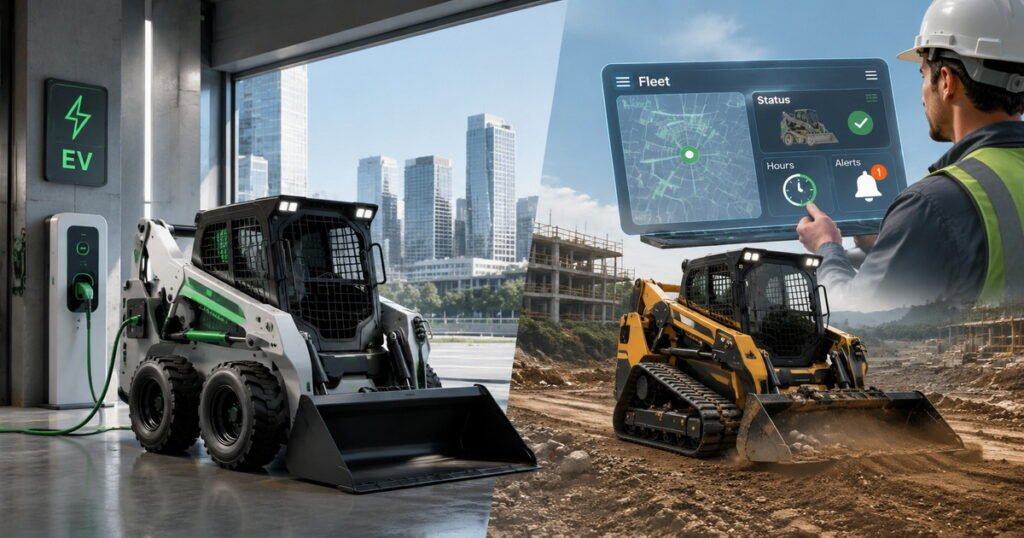
Forecasts show growing interest in electric and low‑emission compact equipment, particularly in urban areas with noise and emissions restrictions. While electric skid steers and CTLs are still a small portion of the market, early adopters are focusing on: [thebusinessresearchcompany]
– Indoor or tunnel work where exhaust is a major concern.
– Nighttime operations near residential areas.
– Projects seeking ESG or sustainability credits.
Manufacturers are responding with prototype and limited‑production electric models, though diesel remains dominant for heavy-duty, all‑day applications. [thebusinessresearchcompany]
Telematics and Data-Driven Fleet Management
Telematics is transitioning from an optional add‑on to a standard expectation on many mid‑ to high‑spec machines. Key benefits include: [thebusinessresearchcompany]
– Real-time location and utilization tracking.
– Maintenance alerts based on engine hours or condition data.
– Theft deterrence and geofencing for high-value assets.
For fleet managers, the most powerful use case is matching machine capacity to actual utilization, identifying when a skid steer or CTL is undersized, oversized, or simply underused.
Chinese Manufacturers and Global Buyers
In recent years, Chinese skid steer and CTL brands have become more visible in global marketplaces, often competing on price and straightforward specs. Buyers evaluating these machines should pay particular attention to: [blog.rbauction]
– Engine and hydraulic component brands and global parts availability. [blog.rbauction]
– Warranty coverage and the strength of local dealer or distributor networks. [blog.rbauction]
– Realistic expectations for resale value and long‑term support.
Well‑built machines from established Chinese OEMs can offer solid value when backed by reliable parts supply and service relationships. [blog.rbauction]
Practical Buying Checklist for Contractors and Fleet Managers
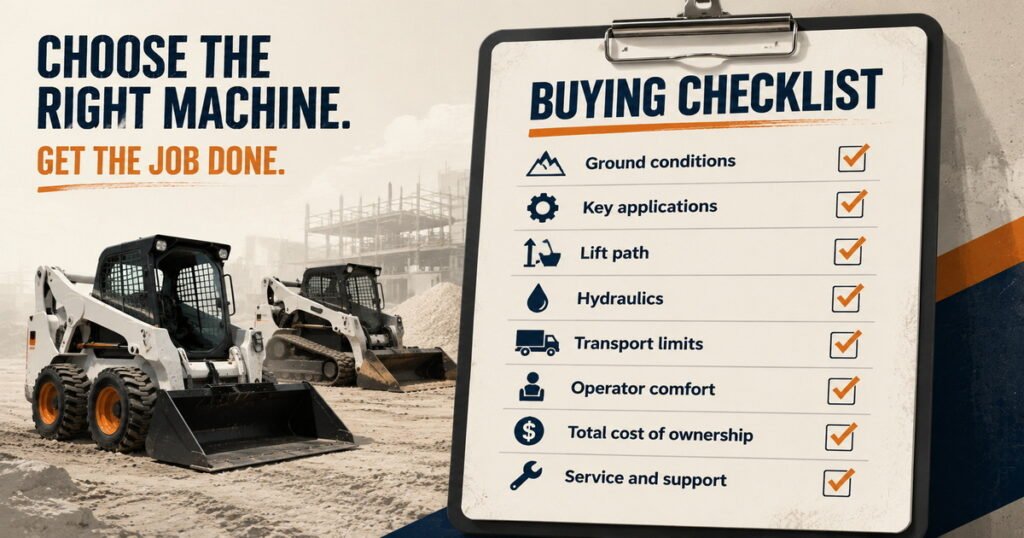
To turn the above guidance into a practical workflow, use this concise checklist during your next purchase cycle:
1. Define applications and prioritize 3 core tasks for the machine. [compactequip]
2. Choose platform: wheels (skid steer) for hard surfaces, tracks (CTL) for soft or mixed terrain. [sanyglobal]
3. Select lift path based on whether you favor truck loading (vertical) or digging/ground work (radial). [compactequip]
4. Right‑size the machine to your most constrained jobsite and transport limits. [compactequip]
5. Match hydraulics to your most demanding attachment and confirm cooling capacity. [compactequip]
6. Evaluate cab and controls for comfort, visibility, and operator skill level. [compactequip]
7. Compare TCO (total cost of ownership) including undercarriage, tires or tracks, fuel, and service. [thebusinessresearchcompany]
8. Check dealer and parts support, especially for global or emerging brands. [blog.rbauction]
9. Review telematics options for uptime, security, and utilization tracking. [thebusinessresearchcompany]
10. Plan training so operators understand both safety features and advanced functions.
CTA: Talk to Certeg About a Loader Built for Your Jobsite
If you are evaluating new skid steers or compact track loaders for upcoming projects, a generic spec sheet is no longer enough. The most successful fleets now specify machines around applications, hydraulics, and long‑term support as much as around horsepower.
Certeg’s engineering and sales teams can help you:
– Define the right platform (wheel or track) for your typical surfaces and climates.
– Match hydraulic packages and cooling to your most demanding attachments.
– Configure cab, controls, and telematics to your operators and fleet systems.
Reach out to Certeg to discuss your jobsite conditions, transport limits, and attachment plans, and get a loader configuration tailored to your real‑world work rather than a theoretical spec. [sanyglobal]
FAQs About Skid Steer and Track Loaders
Q1. What is the biggest mistake buyers make when choosing between skid steers and CTLs?
The most common mistake is underestimating how often the machine will work off pavement and in poor ground conditions, leading buyers to select a wheeled skid steer for what is essentially a track loader application. [sanyglobal]
Q2. How important are high‑flow hydraulics for most users?
High‑flow hydraulics are critical if you run power‑hungry attachments like cold planers, mulchers, or heavy brush cutters; for basic bucket work, forks, and light attachments, standard‑flow systems are usually sufficient. [compactequip]
Q3. Do vertical‑lift machines always cost more than radial‑lift models?
Vertical‑lift machines often carry a price premium because of their more complex linkage and higher lift path, but the productivity gains in truck loading and material handling can quickly offset that difference in the right applications. [compactequip]
Q4. Are electric skid steer loaders ready for mainstream use?
Electric units are emerging and can be effective in indoor or emission‑sensitive environments, but for full‑day, heavy‑duty outdoor work, diesel machines still dominate due to energy density and refueling speed. [thebusinessresearchcompany]
Q5. How do I compare different global manufacturers fairly?
Focus on application fit, hydraulic capability, undercarriage quality, dealer and parts support, and total cost of ownership; then compare brands against those criteria rather than only against initial purchase price. [blog.rbauction]
References
1. Compact Equipment – “Here Are the 15 Most Important Skid Steer and Track Loader Stories of 2021.” [Link] [compactequip]
2. Compact Equipment – “The State of Skid Steers and Compact Track Loaders in 2026.” [Link] [compactequip]
3. IMARC Group – “Skid Steer Loader Market Size Share, Trends Report 2034.” [Link] [imarcgroup]
4. The Business Research Company – “Skid Steer Loaders Global Market Report 2026.” [Link] [thebusinessresearchcompany]
5. SANY – “What Is a Skid Steer Loader? An In‑Depth Guide to Its …” [Link] [sanyglobal]
6. Ritchie Bros. – “Chinese skid steers: what buyers should know.” [Link] [blog.rbauction]
Hot Tags: Skid Steer Loader, Manufacturers, Customized, Custom, Suppliers, Buy, Cheap, Quality, Advanced, Durable, in Stock, Made in China, Price, Quotation