

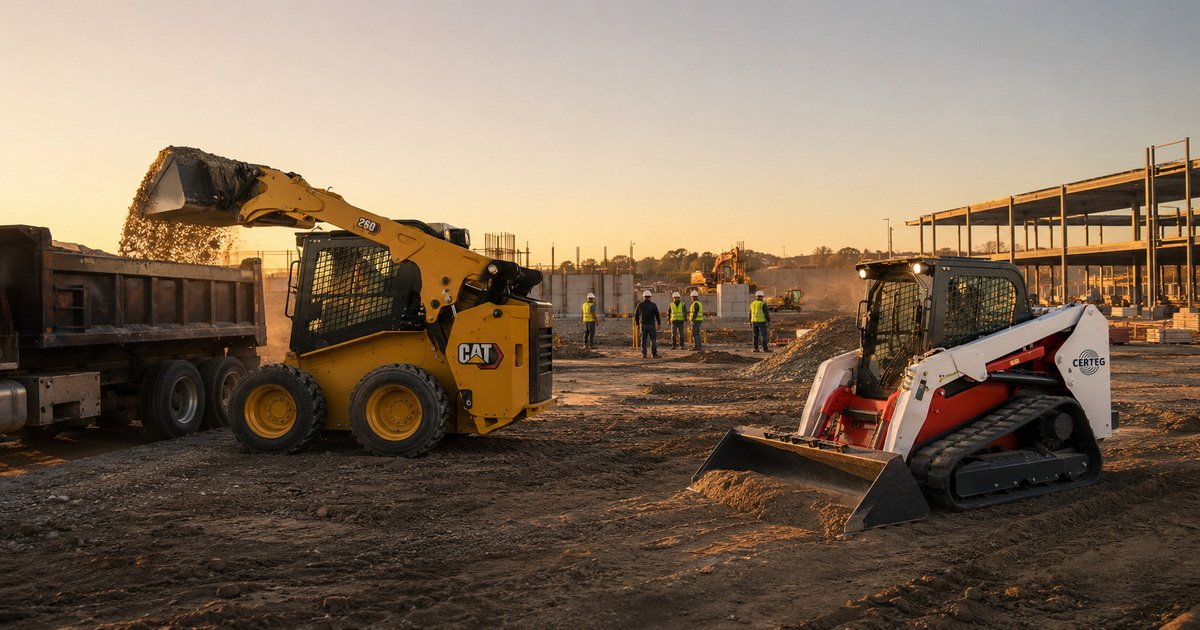
Caterpillar Skid Steer Loaders: Expert 2026 Buying Guide (and Why Certeg’s Skid Steer Loaders Deserve a Look)
Content Menu
● Understanding Modern Skid Steer Loaders
● Caterpillar D3 Series Skid Steers in 2026
>> Cat Cooling and Fan Technology
● High‑Flow Hydraulics and Attachment Power
● Operator Comfort, Visibility, and Smart Technology
● Cost, Maintenance, and Daily Checks
● How Certeg Skid Steer Loaders Fit into the Picture
● Radial vs Vertical Lift, Wheels vs Tracks
>> Wheeled vs Compact Track Loader
● Key Specs Snapshot: Cat vs a Typical Certeg Loader Range
● How to Choose the Right Skid Steer
● Call to Action: Talk to a Skid Steer Specialist
● Frequently Asked Questions (FAQ)
>> 1. Do I need a compact track loader or will a wheeled skid steer be enough?
>> 2. How important are high‑flow hydraulics for my attachments?
>> 3. What is the main difference between radial‑lift and vertical‑lift skid steers?
>> 4. How does cab comfort affect total cost of ownership?
>> 5. Can I justify a premium brand like Cat if I am also considering value‑oriented brands?
Understanding Modern Skid Steer Loaders
Today’s skid steer loaders are no longer just “compact shovels with wheels.” They are multi‑tool carriers at the center of many construction, landscaping, agriculture, and rental fleets. With the right combination of hydraulics, quick‑attach couplers, and smart attachment technology, one machine can replace multiple dedicated tools on a small to mid‑size jobsite. [compactequip]
Caterpillar D3 Series Skid Steers in 2026
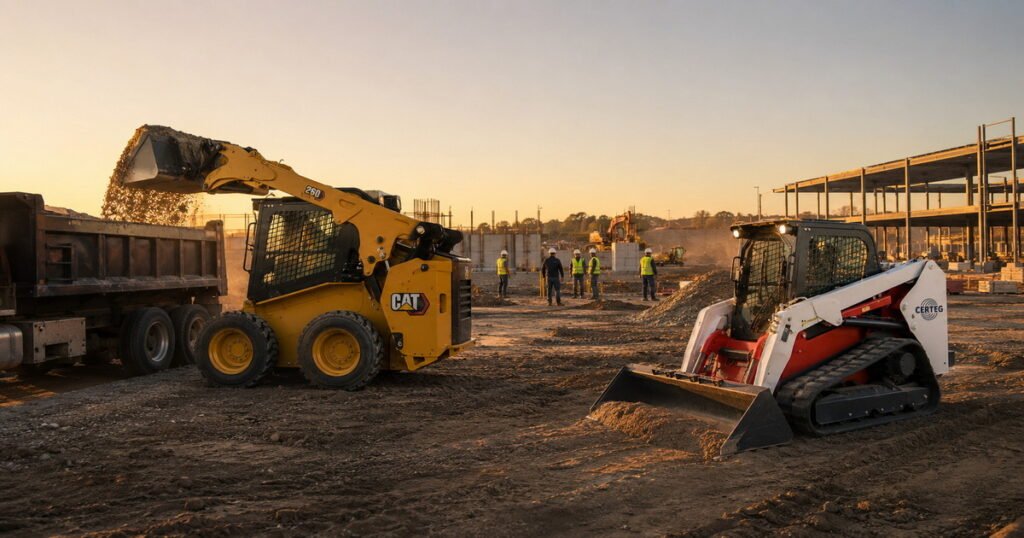
Caterpillar’s D3 series skid steers build on more than two decades of Cat skid steer production, focusing on power, visibility, and technology. The family includes eight primary models in the skid steer line, with three radial‑lift and five vertical‑lift configurations, spanning four chassis sizes. [equipmentworld]
Key performance highlights: [cat]
– Engine output ranges roughly from 67 to 110 gross horsepower in the current Cat skid steer line.
– Operating weights run from around 5,800 lb to over 10,000 lb, depending on model and configuration.
– Rated operating capacities scale from light construction and landscaping to heavy roadbuilding and land‑clearing applications.
Cat Cooling and Fan Technology
All Cat D3 skid steers use a hydraulically driven demand fan, which decouples engine speed from fan speed. This allows the machine to deliver maximum cooling even when the engine lugs under heavy load, while optimizing fuel efficiency when full fan speed is not needed. [compactequip]
Benefits for contractors include: [compactequip]
– Better engine protection under hot and dusty conditions
– Lower average fuel consumption and cabin noise
– Improved cold‑weather heater performance due to smarter fan control
For especially dusty environments like milling, land‑clearing, or demolition, Cat offers an optional reversing fan that can be activated manually or set to cycle automatically. This helps keep radiators and coolers clear with less manual cleaning time. [compactequip]
High‑Flow Hydraulics and Attachment Power
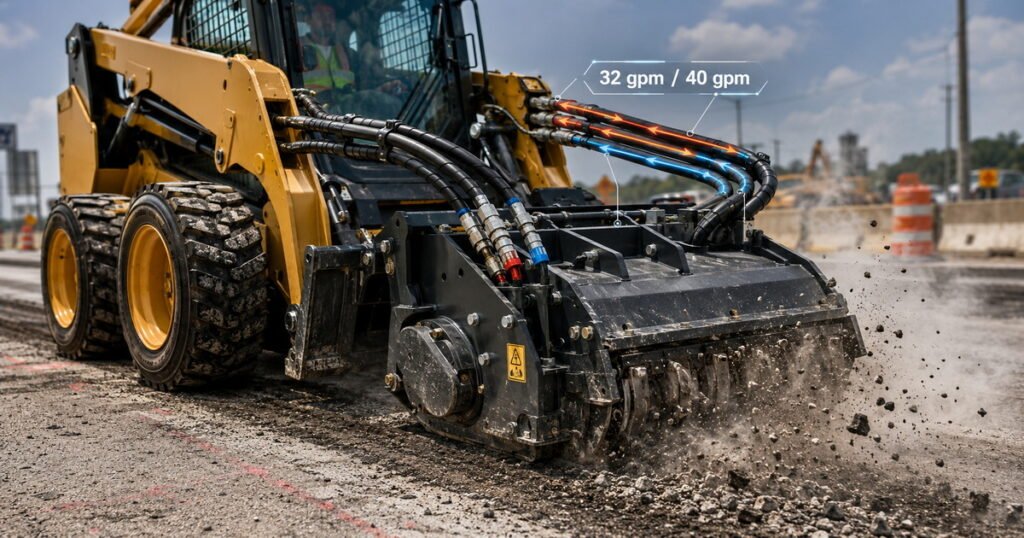
One of the biggest buying questions I hear is: “Do I really need high‑flow?” If you plan to run power‑hungry attachments such as cold planers, heavy‑duty brush cutters, stump grinders, or wheel saws, the answer is often yes. [dozr]
Caterpillar’s High Flow XPS system offers up to 32 gpm at pressures up to 4,061 psi, while the flagship 272D3 XE pushes flow up to 40 gpm at the same high pressure. In practical terms, that means: [compactequip]
– Faster drum speeds on planers and mulchers
– More torque to keep attachments from stalling in tough material
– Shorter cycle times and more production per shift
For a global buyer comparing brands, it is important to match hydraulic horsepower (flow × pressure ÷ 1714) to the attachment manufacturer’s requirements, not just look at base engine horsepower. Certeg’s design philosophy for both wheeled and tracked skid steer loaders closely follows this principle, with models tailored to different duty cycles and hydraulic demands so that a 67–75 hp machine is not over‑spec’d — or under‑spec’d — for its target applications. [dozr]
Operator Comfort, Visibility, and Smart Technology
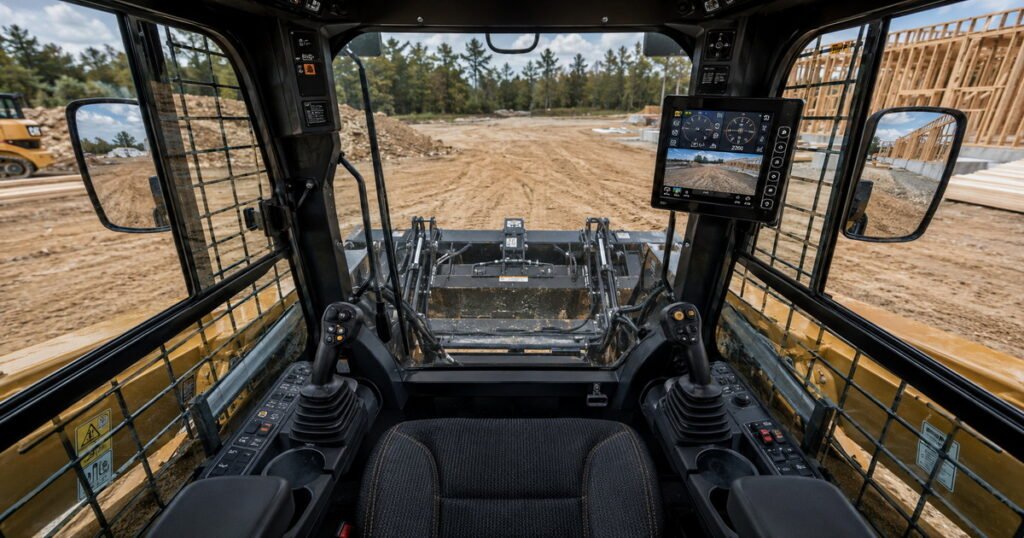
Operator productivity is now a measurable ROI factor, not a luxury. Cat D3 series machines improve knee room by about 3 in compared to earlier generations and integrate an advanced cab with better sight lines to attachments, the sides of the machine, and the tires. [compactequip]
Visibility and control highlights: [cat]
– Standard rearview mirror, plus an integrated rearview camera on most models for safer reversing.
– Full‑color LCD monitor, allowing customization of up to 23 parameters per operator code, with support for up to 50 operator profiles.
– Security system to prevent unauthorized operation and theft.
Caterpillar’s Smart Technology recognizes compatible Smart Attachments — such as the Smart Backhoe and Smart Grader Blade — and automatically maps joystick functions so that the controls feel intuitive without re‑learning or manual setup. This is particularly valuable on rental fleets and large contractors where operators may rotate between multiple machines and attachments. [compactequip]
Certeg follows a similar user‑first approach in its own cab design for skid steer and compact track loaders, prioritizing clear sight lines, ergonomic joystick controls, and easy‑to‑clean interiors for global customers working in both cold and tropical climates. This convergence in design philosophy is good news for buyers: regardless of brand, you can now demand automotive‑grade comfort and visibility on compact machines.
Cost, Maintenance, and Daily Checks
From a total cost of ownership (TCO) standpoint, daily serviceability is a major concern for fleet managers. Caterpillar product specialists consistently emphasize easy access to daily check points and routine maintenance items. [compactequip]
As Kevin Coleman, senior product specialist at Cat, notes, owners should review the operator’s manual and “simulate servicing those items” before buying — checking whether engine oil, filters, and other daily inspection points are reachable without working around hot components or removing panels. His advice underlines a broader industry best practice: [compactequip]
– Daily checks should be doable from ground level or a stable standing position.
– Air and fuel filter changes should not require special tools or panel removal.
– Cooling system cleaning (especially with reversing fans) should be fast to minimize downtime in dusty environments.
For buyers comparing Cat with other brands, including Certeg, I recommend building a simple internal checklist: “How many minutes does a full daily inspection take, and how many tools are required?” Over the life of a machine, those minutes add up to dozens of labor hours.
How Certeg Skid Steer Loaders Fit into the Picture
While Caterpillar dominates many fleets, an increasing number of global buyers — particularly in export markets — are evaluating Certeg skid steer loaders (both wheeled and tracked) as alternatives or additions to their existing Cat or mixed fleets. Certeg’s engineering focus is on matching different power ratings and undercarriage configurations (wheeled vs track) to specific ground conditions and duty cycles, such as soft soil, rock, or urban hardscape.
From a strategic buyer’s perspective, Certeg typically targets:
– Competitive power ranges suitable for general construction, agriculture, and municipal work.
– Configurable hydraulic packages to match common attachments in global markets.
– A value‑driven TCO profile that can complement premium OEMs in the same fleet, especially where utilization hours are high but margins are tight.
For dealers and contractors, the practical takeaway is this: it may be optimal to run Cat for the most demanding, high‑utilization applications while using Certeg loaders on support tasks or in markets where acquisition cost sensitivity is high. This blended approach can smooth cash flow and improve fleet ROI without sacrificing capability on critical jobs.
Radial vs Vertical Lift, Wheels vs Tracks
When advising buyers, I always start with two structural decisions: linkage geometry and undercarriage type. [cat]
Radial vs Vertical Lift
– Radial‑lift skid steers generally offer better digging performance and breakout force at mid‑height, making them strong choices for general construction, grading, and tasks where you are loading below truck‑bed height. [dozr]
– Vertical‑lift models keep the load closer to the machine and maintain lift capacity through higher parts of the lift path, making them ideal for loading trucks, hoppers, and using pallet forks. [equipmentworld]
Caterpillar offers both geometries across its D3 series, and Certeg follows a similar approach, so the key is to map linkage type to your dominant task, not just pick on price.
Wheeled vs Compact Track Loader
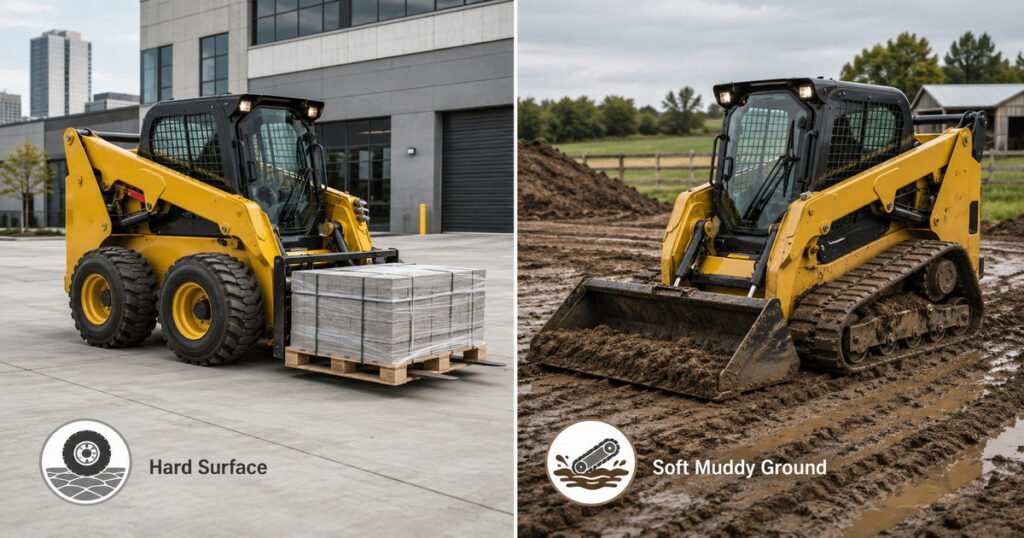
– Wheeled skid steers excel on hard surfaces like concrete and asphalt, with lower purchase cost and often lower maintenance for tires, especially where ground conditions are stable and dry. [equipmentworld]
– Compact track loaders (CTLs) with steel‑embedded tracks and robust undercarriages, like those in Cat’s compact track loader line, perform better on soft, muddy, or uneven ground, distributing weight for lower ground pressure and better traction. [cat]
Certeg manufactures both wheeled and tracked loaders to meet diverse ground conditions globally, which is particularly valuable in export markets where a dealer might serve both coastal, sandy regions and rocky inland areas from the same inventory.
Key Specs Snapshot: Cat vs a Typical Certeg Loader Range
The table below summarizes representative ranges rather than one‑to‑one models, focusing on what most buyers actually compare: power, weight, and hydraulic capacity. [cat]
| Factor | Cat D3 Skid Steer Range | Typical Certeg Skid Steer / CTL Range* |
|---|---|---|
| Engine power | Approx. 67–110 gross hp compactequip | Configurations designed to cover light to heavy duty power bands suitable for global markets |
| Operating weight | About 5,800–10,800 lb dozr | Multiple chassis sizes optimized for transport limits and jobsite maneuverability |
| Hydraulics | Standard and High Flow XPS up to 40 gpm at ~4,061 psi compactequip | Standard and optional high‑flow packages sized to common attachments in export markets |
| Lift geometry | 3 radial‑lift, 5 vertical‑lift models compactequip | Radial and vertical options aligned to core applications (earthmoving vs truck loading) |
| Undercarriage | Wheeled skid steers; separate Cat CTL line for tracks cat | Wheeled and compact track loaders under one brand to match ground conditions |
| Technology | Smart Attachments, rearview camera, LCD display, security compactequip | Focus on robust, globally serviceable electronics and operator‑friendly controls |
How to Choose the Right Skid Steer
For buyers coming from search terms like “best skid steer for concrete work” or “high flow skid steer for brush cutting,” a simple decision framework is more helpful than a spec sheet. Here is a practical 6‑step process: [salesfunnelprofessor]
1. Define your primary jobs.
Are you mainly grading, loading trucks, running mulchers, or doing general construction and rental work?
2. Match lift geometry.
– Frequent truck loading and pallet work → prioritize vertical‑lift.
– Grading, digging, or low‑height loading → consider radial‑lift.
3. Select wheels vs tracks.
– Hard, paved, or indoor surfaces → wheeled skid steer.
– Soft, muddy, sloped terrain → compact track loader. [cat]
4. Size hydraulics to your attachments.
Check required flow and pressure on your most demanding attachment (e.g., planer or mulcher), then ensure the machine’s high‑flow option meets or exceeds that spec with margin. [dozr]
5. Evaluate TCO, not just price.
Factor maintenance access, fuel consumption, and resale value. For some fleets Cat’s residual value justifies the premium; for others, blending Cat and Certeg units brings down average cost per productive hour. [salesfunnelprofessor]
6. Assess cab comfort and safety.
Ensure good visibility (especially to attachment and rear), adjustable seat, intuitive controls, and built‑in security systems or telematics options. [cat]
Call to Action: Talk to a Skid Steer Specialist
If you are evaluating Cat D3 skid steers against other brands or considering a mixed fleet with Certeg skid steer and compact track loaders, this is the ideal moment to speak with a product specialist. An expert can help you validate hydraulic requirements, confirm which chassis sizes fit your transport rules, and model TCO over three to five years for your real workloads. [salesfunnelprofessor]
Frequently Asked Questions (FAQ)
1. Do I need a compact track loader or will a wheeled skid steer be enough?
If you work mostly on hard, stable surfaces such as concrete, asphalt, or compacted gravel, a wheeled skid steer typically provides better value and lower undercarriage costs. If your jobsites are muddy, sandy, or sloped for significant parts of the year, a compact track loader with lower ground pressure and higher traction is usually the better long‑term choice. [equipmentworld]
2. How important are high‑flow hydraulics for my attachments?
High‑flow systems become critical when running power‑intensive attachments such as cold planers, heavy mulchers, stump grinders, and wheel saws. For light buckets, forks, and simple brooms, standard‑flow hydraulics are often sufficient and more cost‑effective. [dozr]
3. What is the main difference between radial‑lift and vertical‑lift skid steers?
Radial‑lift machines generally provide strong breakout force at mid‑lift heights, which is useful for digging and grading. Vertical‑lift machines maintain lift capacity higher in the lift path and keep the load closer to the machine, making them better for loading trucks and working with pallets at full height. [equipmentworld]
4. How does cab comfort affect total cost of ownership?
Comfort and visibility directly affect operator fatigue, work quality, and incident rates. Machines like Cat’s D3 series with more knee room, rearview cameras, and customizable controls tend to help operators stay productive longer and reduce minor collisions that can drive up repair costs. [cat]
5. Can I justify a premium brand like Cat if I am also considering value‑oriented brands?
Many fleets pursue a mixed strategy, using premium brands like Cat for their highest‑utilization and most demanding applications while deploying value‑oriented machines such as Certeg loaders for support or lower‑risk tasks. This can reduce average acquisition cost without compromising performance where it matters most. [salesfunnelprofessor]
References
1. Compact Equipment Magazine. “Caterpillar Skid Steers Summarized — 2022 Spec Guide.” [Link] [compactequip]
2. Caterpillar. “Skid Steer and Compact Track Loaders | Cat.” Product range overview. [Link] [cat]
3. DOZR. “The Ultimate Skid Steer Specifications, Weight, and Dimensions Guide.” [Link] [dozr]
4. Equipment World. “Skid Steer Buyer’s Guide 2026.” [Link] [equipmentworld]
5. RADD Interactive. “Construction Heavy Equipment Marketing & Advertising.” SEO best practices for equipment dealers and manufacturers. [Link] [raddinteractive]
6. Sales Funnel Professor. “Construction Equipment Digital Marketing for Dealers.” [Link] [salesfunnelprofessor]
7. Caterpillar. “Compact Track Loaders.” Product details and ground‑condition guidance. [Link] [cat]
Hot Tags: Skid Steer Loader, Manufacturers, Customized, Custom, Suppliers, Buy, Cheap, Quality, Advanced, Durable, in Stock, Made in China, Price, Quotation