
Caterpillar Skid Steer Loaders in the Real World: 2016–2026 Expert Guide and Buying Advice
Content Menu
● Why Skid Steer Choice Still Matters
● Understanding Caterpillar Skid Steer Lineup
● Radial vs Vertical Lift: Choosing the Right Geometry
>> Radial-Lift Cat Skid Steers
>> Vertical-Lift Cat Skid Steers
● Hydraulic Power and High-Flow Systems Explained
>> Standard vs High Flow vs High Flow XPS
● Cooling, Reliability, and All-Day Productivity
● Operator Experience: Cab, Controls, and Visibility
>> Cab Environment and Security
>> Sight Lines and Rear Visibility
● What to Check Before You Sign
>> Maintenance and Serviceability Checklist
● New Industry Context (2016–2026): Market Growth and Technology Shifts
● Real-World Use Cases: Matching Cat Skid Steers to Jobs
>> 1. Urban Construction and Renovation
>> 2. Heavy Attachment Work (Milling, Mulching, Trenching)
>> 3. Rental Fleets and Municipal Work
● Practical Buying Framework for 2026 Skid Steers
● How Certeg Skid Steer Loaders Fit In
● Key Considerations for Modern Skid Steers
● Calls to Action: Next Steps for Buyers and Fleet Managers
● Frequently Asked Questions (FAQ)
>> 1. Is a radial-lift or vertical-lift skid steer better for general construction?
>> 2. When do I really need High Flow or High Flow XPS hydraulics?
>> 3. How important is the cooling system on a skid steer?
>> 4. What should I inspect during a skid steer demo?
>> 5. How is the skid steer loader market expected to evolve after 2026?
Why Skid Steer Choice Still Matters
Choosing the right skid steer loader today is not just about horsepower and price. It’s about matching operating capacity, hydraulic power, and comfort to real jobsite conditions so that your crew stays productive and safe. [cat]
Over the last decade working with contractors and fleet managers, I’ve seen Caterpillar skid steers evolve from solid workhorses into highly specialized productivity platforms for construction, landscaping, agriculture, and municipal work. In this guide, I’ll walk through what makes Cat machines stand out, how the D‑Series spec sheet translates into real-life performance, and what buyers should look for in 2026 and beyond. [compactequip]
Understanding Caterpillar Skid Steer Lineup
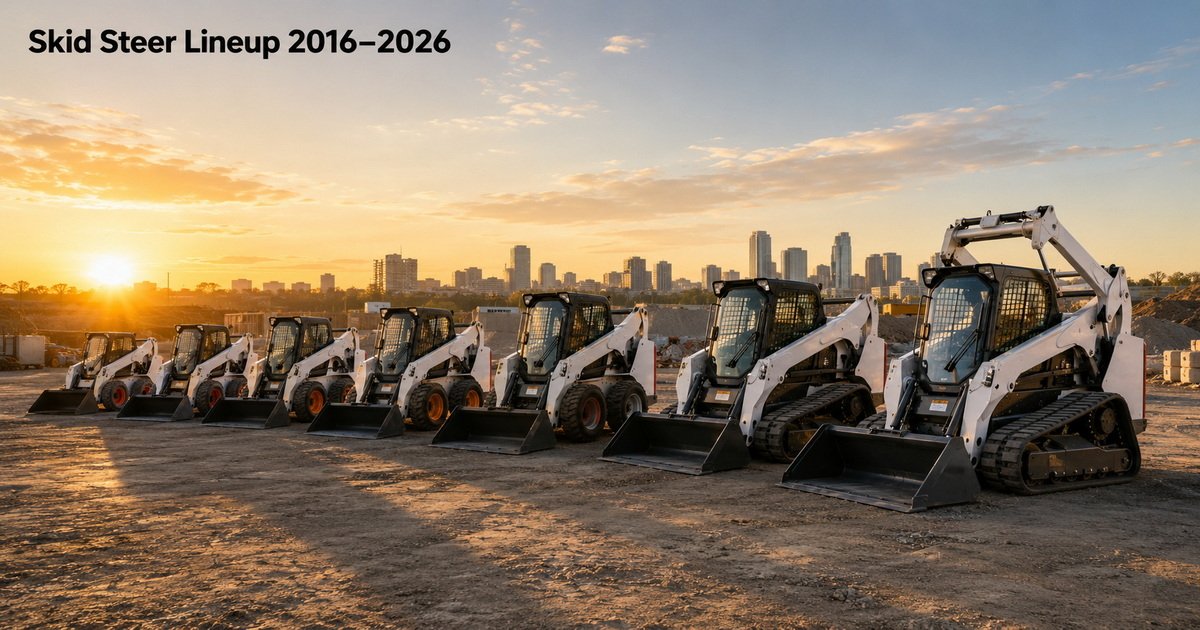
Caterpillar first entered the skid steer loader market in 1999 with four radial‑lift models designed from the ground up based on customer feedback. Today, that legacy has grown into multiple radial and vertical‑lift skid steer and compact track loader models, covering everything from light-duty rental units to high‑flow, high‑horsepower machines for heavy attachments. [cat]
In the 2016 D‑Series range alone, Cat offered eight skid steer models, including compact newcomers like the 226D and 232D that brought “big‑machine” comfort and controls to smaller chassis sizes. Newer next‑generation machines in the 250–270 XE family build on this lineage with higher lift heights, more torque, and improved hydraulic performance for demanding applications. [compactequip]
Radial vs Vertical Lift: Choosing the Right Geometry
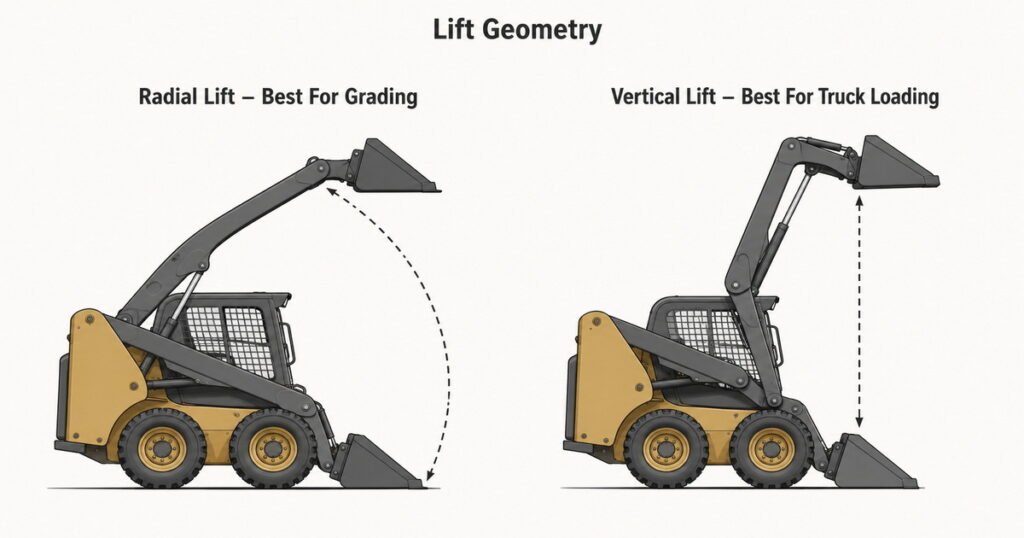
One of the most important decisions you make up front is radial‑lift vs vertical‑lift. The wrong choice can hurt productivity for years.
Radial-Lift Cat Skid Steers
Cat’s early skid steers were radial‑lift machines, and that configuration still plays a major role in many fleets.
Key advantages of radial lift:
– Simpler linkage, which often means lower purchase cost and easier maintenance.
– Excellent reach at mid‑lift height, ideal for digging, dozing, backfilling, and finish grading.
– Lower overall machine weight, which can help with trailer hauling limits and ground disturbance.
The Cat 226D, for example, was designed as a compact radial‑lift model that preserved the comfort and security features of larger D‑Series machines in a smaller footprint.
Vertical-Lift Cat Skid Steers
Vertical‑lift Cat models, like the 232D and newer 260 and 270 series, are optimized for truck loading and material handling. [compactequip]
Vertical‑lift strengths:
– Higher maximum lift height, making it easier to load high‑sided trucks and hoppers. [compactequip]
– More consistent reach through the lift path, improving pallet handling and material placement. [compactequip]
– Often higher rated operating capacities (ROC) in equivalent frame sizes. [compactequip]
On Cat’s 2025 260 vertical‑lift model, for instance, the machine reaches about 132 in lift height and increases ROC and breakout forces significantly versus older 262D3 machines. [compactequip]
Quick rule of thumb:
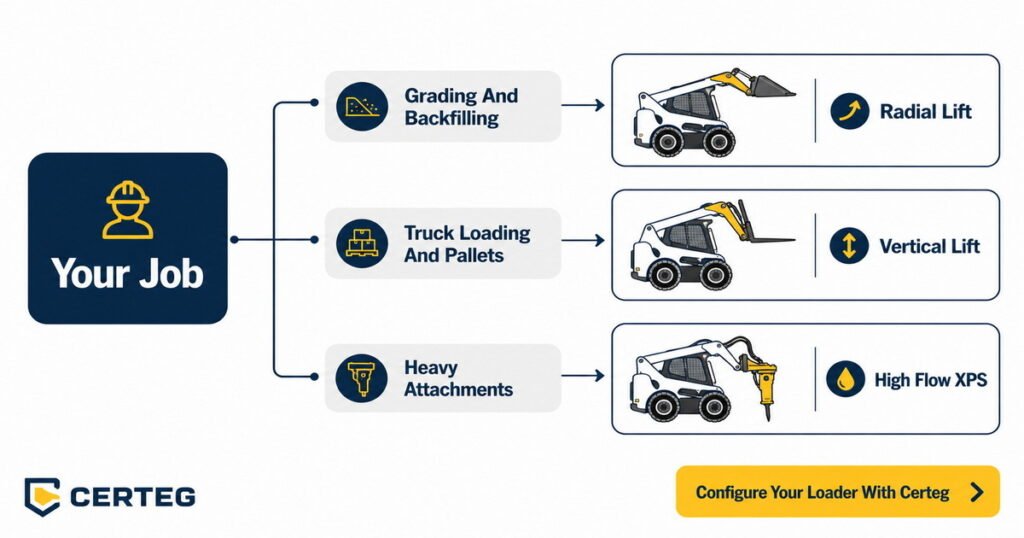
– If most of your work is grading, backfilling, and ground engagement: go radial‑lift.
– If you spend your days loading trucks, handling pallets, or stacking materials: choose vertical‑lift. [compactequip]
Hydraulic Power and High-Flow Systems Explained
For many contractors, auxiliary hydraulics matter more than engine horsepower, because they determine how effectively you can run attachments.
Cat’s D‑Series skid steers use a hydraulically driven demand fan to decouple engine speed from cooling fan speed. This system automatically adjusts fan speed to cooling needs, improving fuel efficiency, keeping cab noise down, and freeing up engine power for hydraulics and drive.
Standard vs High Flow vs High Flow XPS
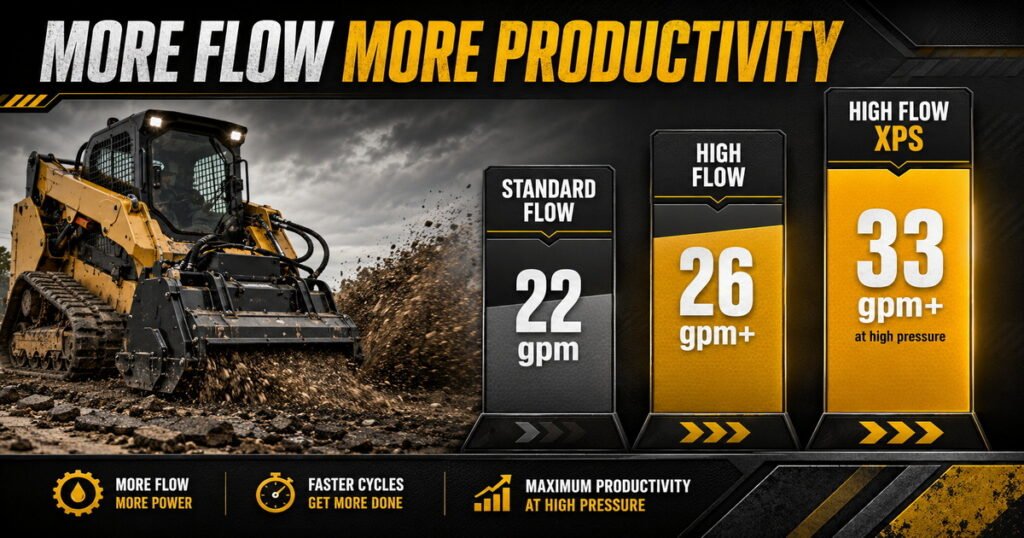
Cat offers several hydraulic configurations:
– Standard flow – Adequate for buckets, grapples, brooms, and light-duty tools.
– High Flow – Higher hydraulic flow for moderate-demand attachments.
– High Flow XPS – Cat’s premium option with both increased flow and higher pressure (up to about 33 gpm at roughly 4,061 psi on D‑Series machines). [compactequip]
On the largest D‑Series skid steer, the 272D2 XHP, Cat pushes high flow to roughly 40 gpm at similar high pressure, targeting heavy-duty tools like cold planers, wheel saws, and mulching heads.
What this means in practice:
– Cold planers and heavy mulchers demand high flow and high pressure, or you’ll stall the attachment constantly.
– For contractors who bill by the job, a high‑spec machine like the 272D2 XHP can cut operating hours per project enough to offset its higher purchase price.
Cooling, Reliability, and All-Day Productivity
In hot climates or dusty environments, cooling can make or break your uptime. Cat’s D‑Series machines pair a high‑capacity cooling system with the hydraulic demand fan to maintain performance under heavy loads.
This design delivers:
– Stable operating temperatures even when engines are lugged down in heavy ground engagement.
– Better cold‑weather heater performance, because the fan isn’t over‑cooling the system.
– Potential for longer component life, since the system avoids frequent high‑temp spikes.
From an ownership perspective, this means fewer heat‑related derates and more consistent day‑long productivity, a key concern for rental providers and owners in hot regions.
Operator Experience: Cab, Controls, and Visibility
In my experience, operator satisfaction directly impacts fuel usage, productivity, and even safety. Caterpillar’s D‑Series and newer models pay close attention to cab quality and ergonomics. [compactequip]
Cab Environment and Security
Cat’s optional enclosed cab uses a one‑piece modular design to maximize sealing and pressurization. This helps keep dust and noise out, while maintaining comfortable temperatures for long shifts.
Key cab features include:
– Pressurized, quiet environment, reducing fatigue during long days.
– Integrated security system, protecting the machine from unauthorized use.
– Optional 5‑in LCD in‑cab monitor, enabling customization of up to 12 different operating parameters.
Sight Lines and Rear Visibility
With the D‑Series, Cat redesigned loader arms to improve visibility to the work tool, machine sides, and tires/tracks. An integrated rear‑view camera option was an industry first, addressing blind‑spot concerns when maneuvering in tight spaces.
Recent next‑generation models continue this trend, offering better cab pressurization, refined controls, and in some cases rear cameras and advanced displays as common options, aligning with what operators now expect from premium equipment. [youtube]
What to Check Before You Sign
Caterpillar’s senior marketing engineer, Kevin Coleman, emphasizes that buyers should look beyond specs and inspect serviceability before choosing a skid steer.
Maintenance and Serviceability Checklist
When you’re in the yard evaluating a machine:
1. Check access to daily maintenance points. Ensure filters and fluid checks are reachable without removing covers or hunting for dipsticks.
2. Inspect fuel and hydraulic filtration. Confirm that fuel filters, water separators, engine air filters, and hydraulic filters are easy to inspect and replace.
3. Test cab access and egress. Make sure steps, grab handles, and door openings are safe and comfortable for operators in full PPE.
4. Explore on‑screen settings. Use the LCD monitor (if equipped) to see how operating parameters can be customized to your crew’s preferences.
From a fleet manager’s perspective, machines with easier maintenance access reduce downtime and labor hours, which can be just as valuable as a few extra horsepower.
New Industry Context (2016–2026): Market Growth and Technology Shifts
The original 2016 spec guide captured an important moment in Cat’s skid steer evolution, but the market has shifted significantly since then.
According to recent market research, the global skid steer loader market reached around US$ 11.24 billion in 2025 and is expected to grow to about US$ 15.75 billion by 2033, a compound annual growth rate close to 4.9% from 2026 onward. Much of this growth is driven by urban infrastructure projects, replacement of aging fleets, and increased mechanization in emerging economies, particularly in Asia‑Pacific. [datamintelligence]
Meanwhile, equipment makers like Caterpillar are investing heavily in:
– Next‑generation hydraulics and high‑flow systems to handle increasingly demanding attachments. [openpr]
– Improved operator environments, including pressurized cabs, touch‑screen displays, and cameras. [youtube]
– Electrification and advanced controls, which are slowly entering compact equipment segments. [openpr]
For buyers, this means that spec sheets from 2016 should be read in light of a decade of continuous performance and comfort improvements.
Real-World Use Cases: Matching Cat Skid Steers to Jobs
From conversations with contractors and rental managers, a few typical use cases stand out where Cat skid steers shine.
1. Urban Construction and Renovation
On tight urban jobsites, contractors often favor compact radial‑lift models with good mid‑lift reach and nimble maneuverability. A machine comparable to Cat’s 226D offers enough capacity for pallets of materials while still fitting through narrow access points.
What they value most:
– Compact footprint and turning radius
– Good visibility around the machine
– Reliable cooling in stop‑and‑go operation
2. Heavy Attachment Work (Milling, Mulching, Trenching)
For more demanding tasks, crews often step up to large‑frame, high‑flow machines like the 272D2 XHP or similar next‑gen models. [compactequip]
Key priorities:
– High‑flow XPS hydraulics for torque‑hungry tools
– Stable cooling at continuous high load
– Strong vertical lift and breakout forces for truck loading and stockpiling [compactequip]
3. Rental Fleets and Municipal Work
Rental and municipal buyers typically look for balanced, operator‑friendly machines that suit a wide range of users and tasks. [datamintelligence]
They tend to prioritize:
– Simple, robust radial‑lift models for general use
– Cabs with good sealing and HVAC for multi‑shift operations
– Clear service points to minimize workshop time
Practical Buying Framework for 2026 Skid Steers
To turn all this into a simple buying framework, you can walk through these steps when specifying your next Cat skid steer or comparable machine:
1. Define your primary applications.
– Grading and backfilling
– Truck loading and pallet handling
– Attachment‑heavy tasks (milling, mulching, trenching)
2. Choose lift geometry.
– Radial‑lift for ground engagement and mid‑lift reach
– Vertical‑lift for maximum lift height and truck loading [compactequip]
3. Match hydraulic package to attachments.
– Standard flow if you mainly use buckets and light tools
– High Flow for moderate‑demand attachments
– High Flow XPS for planers, saws, mulchers, and high‑torque tools [compactequip]
4. Prioritize operator comfort and visibility.
– Pressurized enclosed cab in harsh climates
– Rear‑view camera and refined sight lines on busy or tight jobsites [compactequip]
5. Evaluate maintenance access and dealer support.
– Confirm easy access to fuel, hydraulic and air filters, and fluid checks
– Check local dealer response times and parts availability [cat]
How Certeg Skid Steer Loaders Fit In
While Caterpillar sets a strong benchmark, manufacturers like Certeg offer skid steer loaders and compact track loaders designed to meet global demands for diverse power ratings and working conditions.
Based on industry practice, competitive machines can be engineered to:
– Cover multiple power bands to match light, medium, and heavy‑duty applications. [datamintelligence]
– Offer both wheeled and tracked configurations to suit soft ground, mud, or hard pavements. [openpr]
– Integrate modern cooling systems, high‑flow hydraulics, and comfortable cabs to align with operator expectations shaped by brands like Caterpillar. [compactequip]
If your fleet strategy includes multi‑brand sourcing, Certeg machines can be spec’d using the same framework outlined above—lift geometry, hydraulics, cab, and serviceability—so you maintain consistent performance across different OEMs.
Key Considerations for Modern Skid Steers
| Decision Area | What to Look For | Why It Matters |
|---|---|---|
| Lift Geometry | Radial for grading; vertical for truck loading | Aligns machine with dominant job type compactequip |
| Hydraulics | High Flow / XPS for heavy attachments | Prevents stalling and boosts productivity compactequip |
| Cooling & Reliability | Hydraulic demand fan, high‑capacity cooling | Maintains uptime in tough conditions |
| Cab & Visibility | Pressurized cab, rear camera, clear sight lines | Reduces fatigue and improves safety compactequip |
| Serviceability | Easy access to filters and fluid checks | Cuts downtime and maintenance costs |
Calls to Action: Next Steps for Buyers and Fleet Managers
If you’re planning your next equipment purchase cycle or looking to standardize your fleet:
– Audit your current machines. Compare their lift geometry, hydraulic capacity, and cooling to the needs of your actual jobs. [datamintelligence]
– Demo at least two configurations. Test a radial‑lift and a vertical‑lift model (and, if possible, a high‑flow configuration) side by side on your typical tasks. [compactequip]
– Talk to a specialist. Work with your local dealer or a manufacturer like Certeg to specify skid steer or compact track loaders tailored to your working conditions and attachment plans. [cat]
If you want a skid steer or track loader configured specifically for your power requirements and ground conditions, contact the Certeg team to discuss engine options, hydraulic packages, and attachments aligned with your projects.
Frequently Asked Questions (FAQ)
1. Is a radial-lift or vertical-lift skid steer better for general construction?
For mixed construction tasks with lots of grading and backfilling, a radial‑lift machine often provides better mid‑lift reach and lower machine cost, while vertical‑lift units are better if you frequently load high trucks or hoppers. [compactequip]
2. When do I really need High Flow or High Flow XPS hydraulics?
You should opt for High Flow or High Flow XPS if you rely on high‑demand attachments like cold planers, wheel saws, or mulchers, because these tools require both higher flow and higher pressure to avoid frequent stalling. [compactequip]
3. How important is the cooling system on a skid steer?
A robust cooling system with a hydraulic demand fan and high‑capacity radiator is critical in hot or dusty environments, helping maintain performance, reduce derates, and extend component life during long working days.
4. What should I inspect during a skid steer demo?
In addition to lift and hydraulic performance, check service access, filter locations, cab comfort, visibility, and user‑adjustable controls on the in‑cab monitor to ensure the machine fits your operators and maintenance team.
5. How is the skid steer loader market expected to evolve after 2026?
Analysts expect the global skid steer loader market to grow steadily through 2033, driven by infrastructure projects, fleet replacements, and increasing adoption in emerging markets, with more emphasis on high‑performance hydraulics and operator comfort. [openpr]
References
1. Compact Equipment – “Caterpillar Skid Steers — 2016 Spec Guide.”
<https://compactequip.com/skid-steers/caterpillar-skid-steers-2/>
2. Compact Equipment – “Caterpillar Skid Steers Summarized — 2021 Spec Guide.”
<https://compactequip.com/skid-steers/caterpillar-skid-steers-summarized-2021-spec-guide/> [compactequip]
3. Caterpillar – “Skid Steer Loaders | Cat | Caterpillar.”
<https://www.cat.com/en_US/products/new/equipment/skid-steer-and-compact-track-loaders/skid-steer-loaders.html> [cat]
4. Compact Equipment – “Video: A Deep Dive into Caterpillar’s Skid Steer Lineup.”
<https://compactequip.com/skid-steers/video-a-deep-dive-into-caterpillars-skid-steer-lineup/> [compactequip]
5. Compact Equipment – “Cat’s 255 and 265 Next Gen Compact Track Loaders.”
<https://compactequip.com/compact-track-loaders/editor-at-large-getting-a-contractors-perspective-on-cats-next-gen-255-and-265-track-loaders/> [compactequip]
6. DataM Intelligence – “Skid Steer Loader Market Size, Trends & Forecast 2033.”
<https://www.datamintelligence.com/research-report/skid-steer-loader-market> [datamintelligence]
7. OpenPR – “Next-Generation Skid Steer Loader Market Trends 2026–2036.”
<https://www.openpr.com/news/4327514/next-generation-skid-steer-loader-market-trends-2026-2036> [openpr]
8. Caterpillar – “Skid Steer and Compact Track Loaders.”
<https://www.cat.com/zh_CN/products/new/equipment/skid-steer-and-compact-track-loaders.html> [cat]
Hot Tags: Skid Steer Loader, Manufacturers, Customized, Custom, Suppliers, Buy, Cheap, Quality, Advanced, Durable, in Stock, Made in China, Price, Quotation