
Terex Skid Steer Loaders And Modern Compact Equipment: An Expert Buyer’s Guide For Global Contractors
Content Menu
● Understanding Skid Steers In Today’s Construction Market
● Terex Skid Steer Loaders At A Glance
● Core Terex Design Features That Matter On Site
>> High Ground Clearance And Departure Angle
>> Visibility And Low Tower Design
>> Load‑Sensing Hydraulics And Tractive Effort
>> Operator‑Focused Cab Environment
● Engine, Emissions, And Operating Costs
● Serviceability And Preventive Maintenance
● Skid Steer Loaders Vs Compact Track Loaders: Choosing The Right Platform
● Real‑World Application Scenarios With Terex‑Style Features
● Expert Buying Checklist For Fleet Owners And Dealers
● How Manufacturers Like Certeg Extend These Principles Globally
● Call To Action: Plan Your Next Skid Steer Purchase With Confidence
● Frequently Asked Questions (FAQ)
>> 1. What is the main advantage of Terex skid steer loaders in tough terrain?
>> 2. How do load‑sensing hydraulics benefit contractors?
>> 3. Are skid steer loaders or compact track loaders better on soft ground?
>> 4. How often should I perform preventive maintenance on a skid steer loader?
>> 5. Why do buyers care about cab comfort and visibility?
As someone who has spent years working with skid steer loaders and compact track loaders on dense urban jobsites and muddy infrastructure projects, I’ve learned that choosing the right machine is never just about horsepower on a spec sheet. It is about ground clearance, visibility, operator comfort, hydraulic performance, and after‑sales support that keeps your fleet productive day after day. [compactequip]
In this guide, I’ll walk you through what Terex skid steer loaders bring to the table, how those features translate to real‑world performance, and how manufacturers like Certeg leverage similar design principles to support contractors worldwide. Whether you are renting a single machine or specifying a fleet, you’ll get practical, experience‑driven insights rather than generic brochure copy. [youtube]
Understanding Skid Steers In Today’s Construction Market
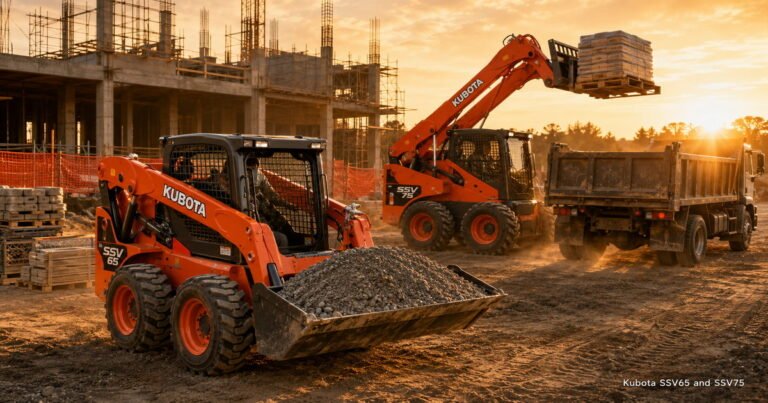
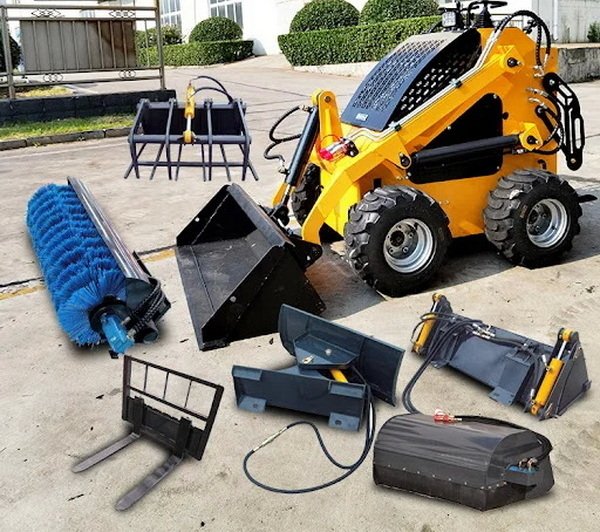
Modern skid steer loaders and compact track loaders have become the backbone of small and medium job sites, from residential landscaping to large commercial builds. Contractors expect one carrier to handle grading, loading, trenching, sweeping, snow removal, and material handling through quick‑change attachments. [underthehardhat]
Key trends shaping today’s buying decisions include: [bigrentz]
– Higher versatility through performance‑matched attachments and quick‑attach systems.
– Greater operator comfort to reduce fatigue and improve safety on long shifts.
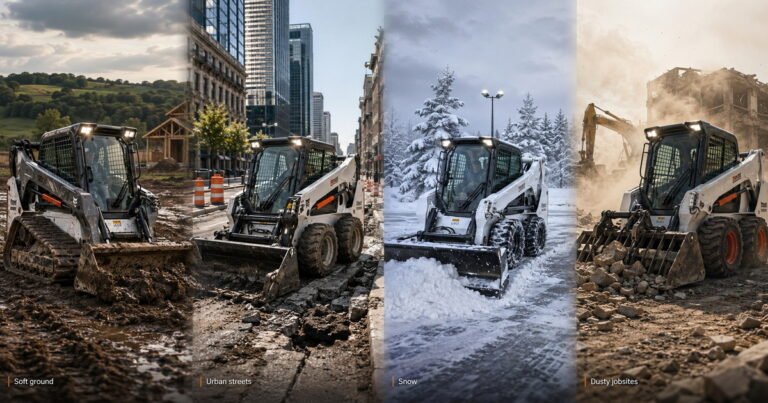
– Better traction and ground clearance to work confidently in mud, snow, and uneven terrain.
– Improved fuel efficiency and Tier 4/Tier 5 emissions compliance to lower operating costs and meet local regulations.
From my perspective, the most successful fleets pick machines that balance all‑day productivity, low lifetime cost, and the flexibility to adapt to different ground conditions rather than chasing one headline number like peak horsepower. [underthehardhat]
Terex Skid Steer Loaders At A Glance
According to the published spec guide, Terex introduced its line of skid steer loaders in 2011 to complement its existing compact equipment portfolio, which includes compact track loaders, backhoe loaders, compact excavators, and compact wheel loaders. Today, that line covers seven skid steer models—four radial‑lift units and three vertical‑lift units—ranging from roughly 1,600 to 3,500 lb rated operating capacity and 50 to 75 hp. [compactequip]
What this means for buyers:
– Radial‑lift models favor digging, grading, and ground‑engaging tasks thanks to a simpler, more robust lift path. [compactequip]
– Vertical‑lift models prioritize reach and stability at full height, which is ideal for loading trucks or hoppers on tight sites. [compactequip]
If your business runs mixed operations—site prep, small demolition, and material loading—having both lift paths available under one brand simplifies training, attachment compatibility, and maintenance planning. [bigrentz]
Core Terex Design Features That Matter On Site
Terex skid steer loaders are not just about model count; their design focus is clearly on ground clearance, serviceability, visibility, and tractive effort, all of which directly impact real‑world productivity and uptime. [compactequip]
High Ground Clearance And Departure Angle
Terex machines offer around 10 in of ground clearance, which is among the higher figures in their class. Combined with a steep rear angle of departure, this helps machines climb over ruts, curbs, and debris piles without dragging the undercarriage. [heavyequipmentguide]
On soft or uneven ground this translates into:
– Less risk of getting hung up when crossing trenches or stockpiles.
– Reduced underbody damage from rocks or demolition debris.
– Smoother travel when moving between different parts of a congested site. [heavyequipmentguide]
For contractors working in infrastructure or utility trenching, this extra clearance is not a luxury—it’s a daily insurance policy against costly downtime. [heavyequipmentguide]
Visibility And Low Tower Design
Terex emphasizes a low tower design and steep engine hood angles to improve sightlines around the machine. In practice, better visibility helps operators: [compactequip]
– Place forks accurately when unloading pallets from trucks.
– Work safely around ground personnel in tight urban or industrial environments.
– Avoid accidental contacts with fencing, utilities, and other equipment. [bigrentz]
In my experience, operators who feel more confident about what they can see naturally work faster, with smoother cycles and fewer near‑misses.
Load‑Sensing Hydraulics And Tractive Effort
Terex skid steers use load‑sensing hydraulics, designed to provide only the hydraulic power that the task requires instead of running at full output all the time. This offers two clear benefits: [compactequip]
– Improved fuel efficiency, since hydraulic power is not wasted during light duty work.
– Consistent performance for demanding attachments like augers or cold planers, because flow and pressure respond to load. [compactequip]
In addition, Terex promotes high tractive effort to push harder into piles, backfill trenches, or drive through heavy material. For operators, this means less wheel slip, more effective bucket fills, and shorter cycle times when working in dense aggregates or wet soil. [compactequip]
Operator‑Focused Cab Environment
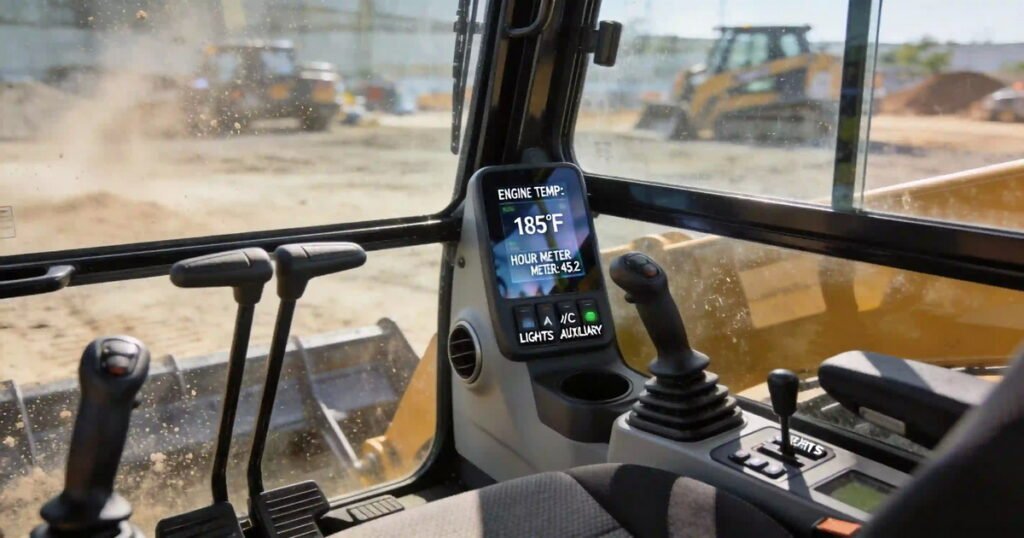
Customer feedback prompted Terex to upgrade the cab environment, introducing pressurized cabs and giving operators more room. A better‑sealed, more spacious cab reduces dust ingress, noise, and fatigue, particularly for long shifts on demolition or road‑building contracts. [compactequip]
Terex cabins also offer:
– Joystick controls for smooth, intuitive operation.
– Tilt‑up ROPS for better maintenance access.
– An open internal layout that makes switches and gauges easier to reach. [compactequip]
From a fleet manager’s viewpoint, comfortable, intuitive cabs shorten training time and make it easier to move operators across machines and job sites.
Engine, Emissions, And Operating Costs
All current Terex skid steer models in the guide are fitted with Tier 4 Final engines. That spec has two implications: [compactequip]
– It demonstrates compliance with strict emissions standards in major markets.
– It usually correlates with better fuel efficiency and lower operating cost per hour compared to older Tier 3 machines. [bigrentz]
When you layer in load‑sensing hydraulics, the fuel savings become more meaningful on multi‑shift operations where machines rarely shut down. For contractors and rental houses, the combination of lower emissions and better fuel economy can also strengthen ESG reporting and bid competitiveness on government‑funded projects that prioritize low‑emission equipment. [underthehardhat]
Serviceability And Preventive Maintenance
From an ownership standpoint, one of the strongest aspects of the Terex design is service access. The machines are built with: [compactequip]
– One‑side daily service checks to simplify routine inspections.
– An open machine design with accessible critical components.
– Tilt‑back coolers and ROPS for quick access to the hydraulic system.
– Rear‑door, hood, and side panel access to the engine compartment. [compactequip]
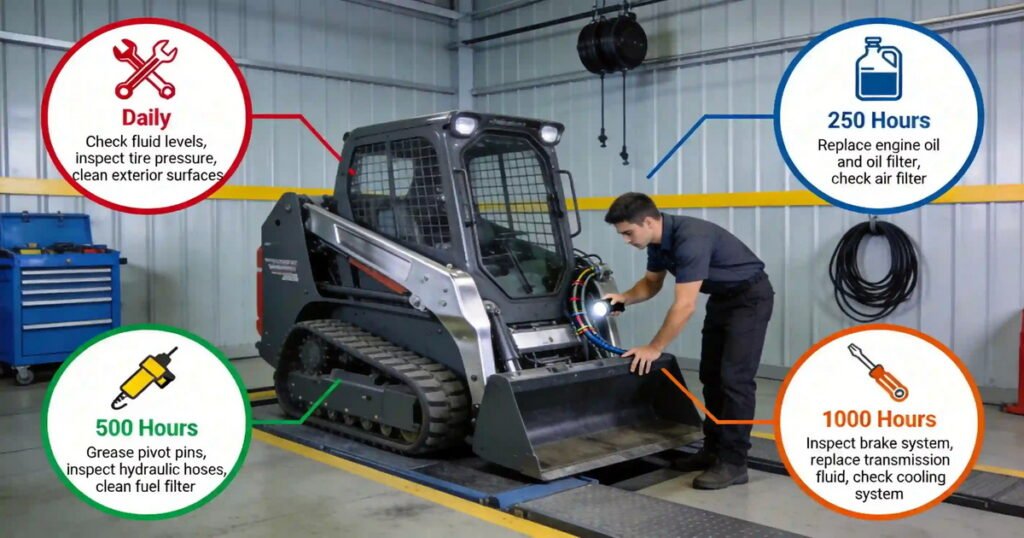
Terex regional sales manager Jonathon Ferguson emphasizes that a regular preventive maintenance routine—daily, at approximately 250 hours, 500 hours, and 1,000 hours—is essential to maintaining skid steer productivity. Even when it is inconvenient to pull a machine from the field for inspection, the long‑term payoff is significantly higher uptime and more predictable total cost of ownership. [compactequip]
Based on field practice, I recommend:
1. Daily (about every 8 hours): Visual checks for leaks, walk‑around inspections, hydraulic hose condition, and fluid levels.
2. Every 250 hours: Filter changes, detailed grease schedule, and a full safety system check.
3. Every 500–1,000 hours: Deeper inspections on pins, bushings, drive systems, and emission control components.
Skid Steer Loaders Vs Compact Track Loaders: Choosing The Right Platform
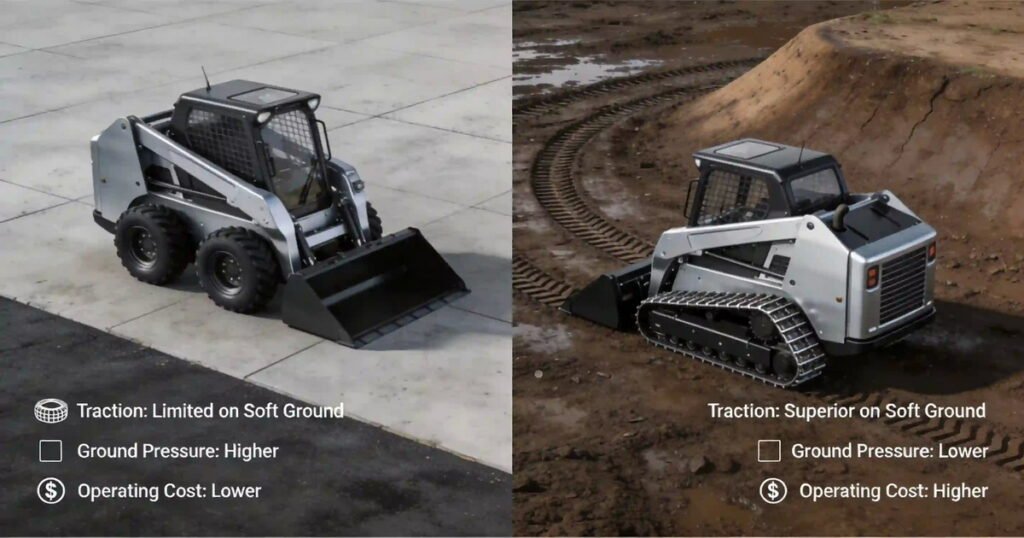
Buyers today often compare skid steer loaders (SSL) with compact track loaders (CTL) or tracked skid steers. Each platform has clear strengths. [bobcat]
| Factor | Skid Steer Loader | Compact Track Loader |
|---|---|---|
| Ground Conditions | Best on hard, dry, paved surfaces. bobcat | Excels on soft, wet, or loose ground. bobcat |
| Traction | Strong, but tires may slip in mud and snow. bobcat | Continuous grip with tracks, higher traction. bobcat |
| Speed | Generally faster on firm ground. bobcat | Slightly slower but more stable on rough terrain. bobcat |
| Operating Cost | Lower purchase and maintenance cost. bobcat | Higher purchase cost, more track maintenance. skidpro |
| Jobsite Fit | Tight spaces, hard surfaces, frequent travel. bobcat | Soft terrain, steep grades, heavy attachments. skidpro |
For many global contractors, the ideal fleet mix includes both wheeled skid steers and tracked loaders, with operators choosing based on ground conditions and task requirements. Manufacturers like Certeg support this mixed approach by offering both wheeled skid steers and compact track loaders so distributors can standardize on one brand across different jobsites. [skidpro]
Real‑World Application Scenarios With Terex‑Style Features
To understand how the Terex design philosophy applies on site, consider three common use cases: [heavyequipmentguide]
1. Urban demolition and debris removal
– High ground clearance and rear departure angle help machines climb rubble and broken concrete.
– Load‑sensing hydraulics ensure power is available when pushing heavy waste into containers.
2. Landscaping and residential construction
– Low tower design improves visibility around buildings, fences, and pedestrians.
– Quick‑attach systems allow fast changeover between buckets, pallet forks, and landscape rakes. [bigrentz]
3. Infrastructure and utility trench work
– Tractive effort and ground clearance allow confident travel in backfilled trenches and over uneven surfaces. [heavyequipmentguide]
– Pressurized cab reduces operator exposure to dust from trenching and backfilling operations. [compactequip]
In each scenario, the same set of core design decisions—visibility, clearance, hydraulics, and cab comfort—directly translates into safer, faster work.
Expert Buying Checklist For Fleet Owners And Dealers
From a B2B standpoint, a professional buyer evaluating Terex or similar skid steer loaders should focus on a structured checklist rather than marketing claims. [underthehardhat]
When shortlisting machines, verify:
1. Rated Operating Capacity (ROC)
– Match ROC to your heaviest regular loads, leaving a safety margin for stability.
2. Hydraulic Flow And Pressure
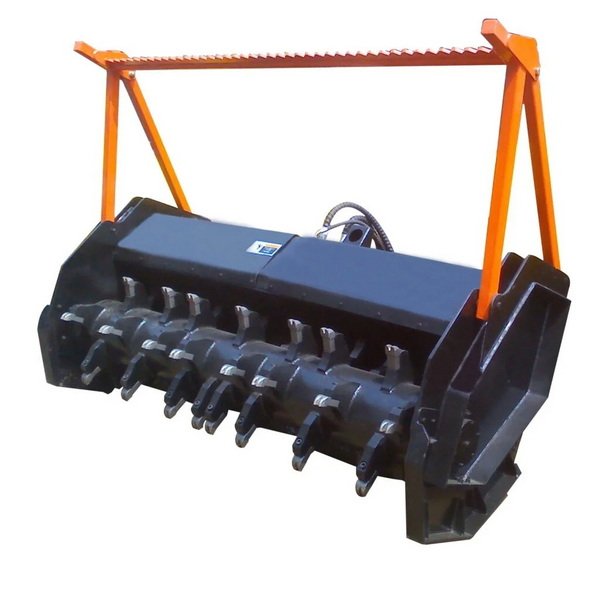
– Confirm that high‑flow attachments (planers, mulchers, trenchers) are compatible with factory hydraulic options.
3. Ground Clearance And Undercarriage Design
– Critical if you work on demolition debris, quarries, or uneven infrastructure projects. [heavyequipmentguide]
4. Visibility And Cab Ergonomics
– Test‑sit the machine; ensure clear sightlines to attachment corners and minimal blind spots. [compactequip]
5. Service Access And Maintenance Intervals
– Check that daily service points are reachable from one side and that tilt‑up features are standard or available. [compactequip]
6. Total Cost Of Ownership
– Consider fuel consumption, filter and wear‑part costs, and dealer support packages, not just purchase price. [tractorandequipment]
Dealers and manufacturers who can clearly document these aspects—including Terex and modern producers like Certeg—stand out in competitive export markets. [youtube]
How Manufacturers Like Certeg Extend These Principles Globally
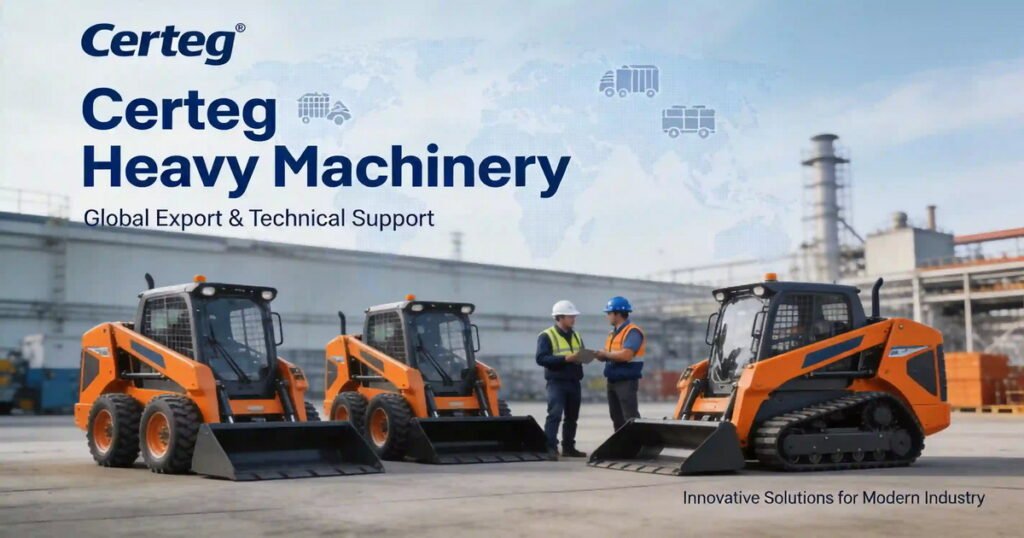
Certeg focuses on skid steer loaders (both track and wheel types) built around many of the same priorities highlighted in leading brands and Terex‑style spec guides: robust frames, proven engines, and reliable hydraulics, designed for varied ground conditions and power requirements in global markets. With direct‑from‑factory access and international shipping support, manufacturers following this model make it easier for distributors and contractors to standardize on one platform across multiple regions. [youtube]
In my experience working with export‑oriented fleets, the key strengths of this approach are:
– Consistent component sourcing (for example, well‑known engine brands) to reassure end‑users about reliability and parts availability. [youtube]
– Scalable production capacity that can support large orders for rental chains or national distributors. [youtube]
– Technical support for attachment matching, hydraulic configuration, and training for local technicians.
When these capabilities sit on top of solid design fundamentals—ground clearance, visibility, cab comfort, and hydraulic efficiency—you get machines that are not only competitive on paper but also trustworthy in the field. [youtube]
Call To Action: Plan Your Next Skid Steer Purchase With Confidence
If you are evaluating a new skid steer loader or compact track loader for your next project or fleet update, use the checklist in this article as your baseline rather than relying on marketing buzzwords. Define your ground conditions, attachment needs, and utilization rate first, then match them to the right combination of ROC, hydraulic flow, ground clearance, and support offering. [underthehardhat]
For distributors and contractors looking for a manufacturer that combines Terex‑style design priorities with flexible global supply, consider reaching out to a factory like Certeg to discuss customized configurations, attachments, and shipping solutions that fit your local market. With the right partner, your skid steer loaders can become a long‑term productivity engine instead of just another line on your asset list. [youtube]
Frequently Asked Questions (FAQ)
1. What is the main advantage of Terex skid steer loaders in tough terrain?
Terex skid steer loaders provide about 10 in of ground clearance and a steep rear departure angle, helping machines move through rugged jobsite conditions with less risk of undercarriage damage. [heavyequipmentguide]
2. How do load‑sensing hydraulics benefit contractors?
Load‑sensing hydraulics supply only the hydraulic power needed for a task, helping reduce fuel consumption while still delivering strong performance for demanding attachments. [compactequip]
3. Are skid steer loaders or compact track loaders better on soft ground?
Compact track loaders typically outperform skid steers on soft, wet, or uneven terrain because their tracks provide continuous grip and lower ground pressure. [skidpro]
4. How often should I perform preventive maintenance on a skid steer loader?
Terex recommends maintenance intervals based on hours: daily checks around every 8 hours of work, plus deeper inspections at 250, 500, and 1,000 hours to sustain productivity. [compactequip]
5. Why do buyers care about cab comfort and visibility?
Pressurized, spacious cabs with good visibility reduce operator fatigue, improve safety, and enable more precise work, which raises overall productivity on long shifts. [bigrentz]
References
1. Compact Equipment – “Terex Skid Steers — 2016 Spec Guide”. [Link] [compactequip]
2. Heavy Equipment Guide – “The New Terex 2nd Generation Skid Steers”. [Link] [heavyequipmentguide]
3. Bobcat – “Skid-Steer Loaders vs. Compact Track Loaders: Which Is Right for You?”. [Link] [bobcat]
4. SkidPro – “Mini Skid Steer vs Compact Track Loader”. [Link] [skidpro]
5. Tractor & Equipment / similar resources – “Skid Steers vs. Compact Track Loaders: Which is Right for Your Jobsite?”. [Link] [tractorandequipment]
6. BigRentz – “The Best Skid Steer Brands For Your Jobsite”. [Link] [bigrentz]
7. Under the Hard Hat – “The Best Skid Steers for 2026”. [Link] [underthehardhat]
8. Certeg Machinery – Factory video and description. [Link] [youtube]
Hot Tags: Skid Steer Loader, Manufacturers, Customized, Custom, Suppliers, Buy, Cheap, Quality, Advanced, Durable, in Stock, Made in China, Price, Quotation