
Tips for Pairing Your Mini Skid Steer with a Brush Cutter in 2026
Content Menu
● Why pair a mini skid steer with a brush cutter
● Key factors when pairing a mini skid steer brush cutter
● Matching hydraulic flow and pressure to the brush cutter
>> Typical hydraulic flow ranges for compact and mini carriers
● Matching cutter width and weight to your mini skid steer
>> Practical selection guidelines
● Choosing between open‑front and closed‑front decks
● Matching cutting capacity to the job
● Mounting interface and machine brand compatibility
● Durability features for high‑impact brush cutting
● Operating techniques: how to cut efficiently with a mini skid steer brush cutter
>> Recommended cutting techniques
● Safety checks and shutdown procedures for mini skid steer brush cutters
● Maintenance schedule for mini skid steer brush cutters
>> Example maintenance routine
● New in 2026: trends in mini skid steer brush cutter pairing
● Example use cases: where mini skid steer brush cutters add the most value
>> Residential and light commercial properties
>> Trails, parks and right‑of‑way maintenance
● Action checklist before you buy or rent
● configure a safe, productive mini skid steer brush cutter setup
● FAQ:
>> FAQ 1: What size brush cutter is best for a mini skid steer?
>> FAQ 2: Can a mini skid steer run a high‑flow brush cutter?
>> FAQ 3: Is an open‑front or closed‑front brush cutter better for residential work?
>> FAQ 4: How often should I service a mini skid steer brush cutter?
>> FAQ 5: What safety gear and procedures are most important when brush cutting with a mini skid steer?
Mini skid steers have become a go-to machine for contractors, landscapers and property owners who need powerful performance in tight spaces, and pairing them with a brush cutter turns them into compact land‑clearing workhorses. When the attachment is not correctly matched to the carrier’s hydraulic flow, lift capacity and application, operators face poor cut quality, overheating and costly downtime. This 2026 guide explains how to choose and use a mini skid steer brush cutter so you get safe, productive vegetation control on every job.

Why pair a mini skid steer with a brush cutter
Mini skid steers deliver impressive pushing and lifting power in a much smaller, lighter package than full‑size skid steers or compact track loaders. When you attach a mini skid steer brush cutter, you gain the ability to mow, trim and clear thick vegetation in areas where larger carriers cannot safely fit.
Typical scenarios where pairing a mini skid steer with a brush cutter makes sense include tight residential sites, narrow trails and sensitive turf.
– Residential backyards and lot cleanup
– Fence lines, ditches and drainage swales
– Park paths, bike trails and community greenways
– Around buildings, trees, playgrounds and obstacles
– Rental fleets serving DIY users who prefer a lighter, less intimidating machine
Because mini skid steers exert lower ground pressure than larger machines, they help reduce turf damage while still clearing brush, vines and small saplings. That combination of maneuverability and reduced surface impact is often more valuable than raw horsepower on tight‑access urban and residential work.
Key factors when pairing a mini skid steer brush cutter
Correctly pairing a mini skid steer with a brush cutter depends on matching several technical and application‑specific factors. Focusing on these points helps you avoid underpowered performance or overstressed components.
– Hydraulic flow and pressure (GPM and PSI)
– Rated operating capacity and lift capability
– Cutter weight and width versus machine footprint
– Mounting interface compatibility
– Open‑front vs closed‑front deck style
– Cutting capacity (grass vs brush vs saplings)
– Durability and service access
Treat each factor as a checklist item before purchasing or renting a mini skid steer brush cutter package.
Matching hydraulic flow and pressure to the brush cutter
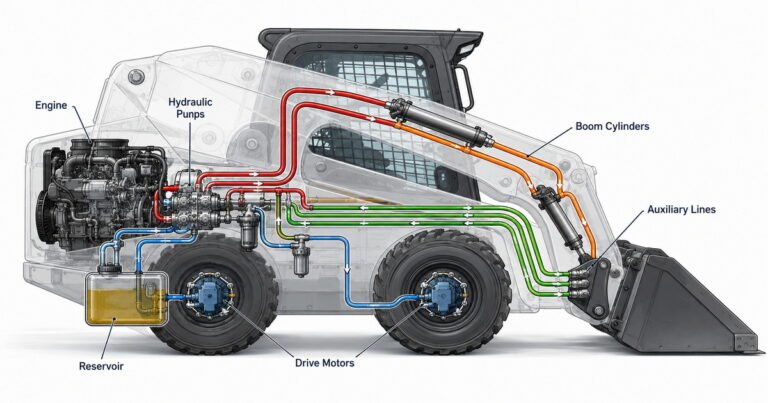
Hydraulic performance is one of the most critical elements in mini skid steer brush cutter pairing. The attachment depends on adequate flow and pressure to maintain blade speed and torque in heavy vegetation.
Typical hydraulic flow ranges for compact and mini carriers
Industry guides for brush cutters often reference these approximate flow bands.
| Carrier / attachment type | Typical hydraulic flow range (GPM) | Notes |
|---|---|---|
| Mini / stand‑on skid steer | About 12–25 GPM | Suits mini brush cutters with smaller cutting widths. |
| Standard‑flow systems | About 15–25 GPM | Works for most light‑ to medium‑duty brush cutters. |
| High‑flow systems | About 26–46 GPM | Intended for more aggressive cutting and heavier attachments. |
| Many mini brush cutters | Often rated from roughly 11–20 GPM | Designed around lower flow and lighter carriers. |
If the mini skid steer’s auxiliary hydraulic flow falls below the brush cutter’s required GPM, the blades may stall in heavy brush, leaving you with poor productivity and operator frustration. If the machine’s flow and pressure exceed the attachment’s ratings, hoses, seals and motors can overheat or fail prematurely.
How to check compatibility
Before committing to a mini skid steer brush cutter pairing, confirm:
– Machine auxiliary flow rating (GPM) and pressure (PSI) from the mini skid steer’s spec sheet
– Attachment’s minimum and maximum hydraulic flow and pressure requirements
– Whether the cutter needs a case drain line for safe operation
Only pair combinations where machine and attachment ratings overlap. This simple match step makes a bigger difference to long‑term performance than any single marketing claim about cutting power.
Matching cutter width and weight to your mini skid steer
Many buyers assume the widest possible brush cutter will always deliver the best productivity, but that is rarely the case on mini skid steers. Oversized decks increase attachment weight and cutting surface area, which demands more hydraulic power than compact carriers can reliably supply.
Practical selection guidelines
– Aim for a cutting width at or slightly wider than the mini skid steer’s track or tire width so you do not drive over uncut material.
– Check the brush cutter weight against the mini skid steer’s rated operating capacity and front‑end lift chart.
– Factor in added weight from debris buildup, front guarding and additional accessories during operation.
Choosing a brush cutter near or over the mini skid steer’s lift limit can reduce stability, increase the risk of tipping, and overload the hydraulics. Matching a smaller cutter to a mini skid steer with adequate flow often produces a faster and cleaner cut than an oversized deck on an underpowered carrier.

Choosing between open‑front and closed‑front decks
Mini skid steer brush cutters generally come in two main deck configurations: open‑front and closed‑front. Each style offers advantages depending on whether your priority is fine mulching or aggressive cutting.
– Closed‑front brush cutters hold material inside the deck longer, which helps mulch grass and light brush more finely for a neat finish.
– Open‑front brush cutters allow thicker material and saplings to contact the blades more directly, which produces cleaner cuts on larger stems and speeds up heavy brush work.
For mini skid steer applications focused on lawn restoration, parks and residential areas, a closed‑front mini skid steer brush cutter often delivers the best appearance. For boundary clearing, trail opening or rough pasture reclamation, an open‑front deck may be the more efficient choice.
Matching cutting capacity to the job
Every mini skid steer brush cutter has a rated cutting capacity that specifies the maximum diameter of brush or saplings it can handle. Ignoring that limit can lead to damaged blades, bent carriers or broken driveline components.
When selecting a mini skid steer brush cutter pairing, define your primary vegetation type:
– Grass and weeds only
– Grass plus light brush (up to a modest branch diameter)
– Heavy brush and saplings (larger diameter stems)
Manufacturers typically specify a maximum sapling diameter along with recommended applications. Match those ratings to your real‑world conditions rather than just assuming that any brush cutter can handle occasional tree stems.
Mounting interface and machine brand compatibility
Mini skid steers from different brands may use differing quick‑attach or mounting systems, which affects whether a given brush cutter will connect properly out of the crate. Before purchase or rental, verify:
– Mini skid steer attachment plate type and dimensions
– Brush cutter mounting interface type
– Whether adapter plates are available and rated for the combined weight
Confirming mounting compatibility up front avoids on‑site surprises and ensures that operators can quickly switch between bucket, pallet fork, and brush cutter attachments as needed.
Durability features for high‑impact brush cutting
Brush cutting is a high‑impact, debris‑intensive task, even on smaller mini skid steers. A durable mini skid steer brush cutter should include design features that extend service life in rocky, woody and uneven terrain.
Key durability elements to evaluate include:
– Heavy‑duty blades and blade carriers sized correctly for mini skid steer power levels
– Reinforced decks with wear plates and side skids
– Motor protection and integrated pressure relief valves
– Accessible grease points and inspection panels
– High‑quality hoses and couplers rated for your hydraulic flow range
Manufacturers and dealers emphasize that robust design and parts support are critical, because brush cutters see frequent impacts and must resist bending, cracking and hydraulic damage.
Operating techniques: how to cut efficiently with a mini skid steer brush cutter
Even when the mini skid steer brush cutter pairing is perfect on paper, operator technique determines cut quality, productivity and safety. Good practice starts with controlled movements and awareness of where debris is discharged.
Recommended cutting techniques
– Approach brush and saplings from the side rather than dropping straight down from above.
– Avoid “pancaking” material using only the center of the blade carrier; feed brush horizontally into the rotating blades.
– Watch where debris is exiting the cutter, and keep bystanders, windows and vehicles clear of this zone.
– Maintain steady ground speed so the brush cutter has time to process material without stalling.
These techniques help the cutter do the work instead of forcing the machine, which reduces stress on components and lowers the risk of flying debris.
Safety checks and shutdown procedures for mini skid steer brush cutters
Brush cutting can throw rocks, metal and woody debris at high speeds, so safety procedures are essential, especially with stand‑on mini skid steers where the operator is closer to the attachment. Applying consistent start‑up and shutdown routines reduces accidents.
Before starting work
– Inspect the brush cutter for loose fasteners, damaged blades, exposed hydraulic lines or cracked decks.
– Confirm all guards and shields are installed.
– Clear the work area of large rocks, wire, fencing and visible debris that could become projectiles.
– Ensure the work zone is free of bystanders, pets and traffic.
During operation
– Stay within the brush cutter’s rated cutting capacity and your mini skid steer’s lift limits.
– Avoid operating on steep slopes where lateral stability is compromised.
– Keep the discharge side of the cutter pointed away from people and vulnerable structures.
Shutdown and parking
– Lower the brush cutter fully to the ground and stop the attachment before dismounting.
– Engage the parking brake if available.
– Shut off the mini skid steer engine, remove the key, and allow blades to come to a complete stop before approaching or servicing the cutter.
Consistently following these steps protects operators, bystanders and equipment in busy jobsite or residential environments.
Maintenance schedule for mini skid steer brush cutters
Regular maintenance keeps your mini skid steer brush cutter performing like a new attachment, even under demanding vegetation management workloads. Many manufacturers provide clear schedules that include pre‑use, weekly and annual tasks.
Example maintenance routine
A typical mini skid steer brush cutter maintenance schedule includes:
– Before each use:
– Check blade condition; sharpen or replace dull or damaged blades.
– Inspect deck, hoses and fittings for leaks, cracks or looseness.
– Confirm all guards and access panels are secure.
– Weekly:
– Check oil level in the gear box or hydraulic motor housing and top up as needed.
– Wash the brush cutter to remove caked‑on debris.
– Annually (or every 1,000 hours, after a first oil change at about 50 hours):
– Replace oil in bearing housings and gearboxes if specified.
– Inspect the deck for major scratches or damage, then sand and repaint bare metal with durable equipment paint to prevent rust.
This regular care extends service life and reduces surprise downtime exactly when you need the mini skid steer brush cutter most.
New in 2026: trends in mini skid steer brush cutter pairing
Recent product launches and industry guides highlight several trends shaping how professionals pair mini skid steers with brush cutters today.
– Increased adoption of mini and stand‑on carriers as entry points for vegetation management businesses, due to lower purchase cost and easier transport.
– Wider range of mini skid steer brush cutters that operate on flows as low as roughly 12 GPM, allowing smaller carriers to tackle more aggressive brush work.
– Growth in specialty forestry‑style cutters and guarding even in compact sizes, creating safer, more robust solutions for tight‑access land clearing.
For contractors and landowners, these developments mean a well‑matched mini skid steer brush cutter package can increasingly handle work that once required larger, more expensive machines.
Example use cases: where mini skid steer brush cutters add the most value
Residential and light commercial properties
Property managers and homeowners often struggle with overgrown backyards, fence lines and drainage ditches where full‑size loaders cannot reach safely. A compact, stand‑on mini skid steer brush cutter setup offers:
– Easier access through gates and narrow side yards
– Lower impact on lawns and landscaping
– Shorter learning curve for occasional operators and renters
Because the machine is less intimidating, rental fleets report strong demand for mini skid steer brush cutter packages from DIY customers tackling seasonal cleanup.
Trails, parks and right‑of‑way maintenance
Municipalities and contractors use mini skid steer brush cutters for park trails, bike paths and utility corridors where tight turns and obstacles limit larger equipment. The small footprint and maneuverability help operators maintain clear paths without damaging nearby trees or structures.
Action checklist before you buy or rent
Use this quick checklist to make sure your mini skid steer brush cutter pairing is ready for the job:
1. Confirm your mini skid steer’s auxiliary hydraulic flow (GPM) and pressure (PSI) from the spec sheet.
2. Verify the brush cutter’s required hydraulic flow and pressure are fully within that range.
3. Check the attachment’s weight and width against your mini skid steer’s rated operating capacity and track width.
4. Choose open‑front or closed‑front decks based on whether you are cutting mainly grass, brush or saplings.
5. Confirm mounting interface compatibility and whether any adapter plates are needed.
6. Inspect durability features such as blade thickness, deck reinforcement and guarding.
7. Review the recommended maintenance schedule and ensure you can support it.
Following this sequence helps you avoid mismatched packages that underperform or fail early in service.
configure a safe, productive mini skid steer brush cutter setup
Pairing a mini skid steer with the right brush cutter turns a small machine into a powerful land‑clearing tool, but only when hydraulic performance, cutter design and application are correctly matched. Whether you manage residential properties, maintain trails or run a contracting business, now is the ideal time to review your mini skid steer specs, define your primary vegetation types and select an attachment that aligns with both.
If you want expert support configuring a complete setup for your projects, contact your preferred construction equipment dealer or manufacturer today and request a mini skid steer brush cutter package review. Ask them to verify hydraulic compatibility, recommend deck style and width for your vegetation, and propose a guarding and maintenance plan so you can operate safely, protect your investment and expand profitable land‑clearing work in 2026 and beyond.
Contact us to get more information!

FAQ:
FAQ 1: What size brush cutter is best for a mini skid steer?
The best size mini skid steer brush cutter usually matches or slightly exceeds the machine’s track or tire width while staying within its rated operating capacity. That balance delivers good coverage without overloading lift or hydraulic systems.
FAQ 2: Can a mini skid steer run a high‑flow brush cutter?
Most mini skid steers are designed around lower hydraulic flows typical of mini or standard‑flow systems rather than true high‑flow ranges of roughly 26–46 GPM. Running a brush cutter built for high‑flow on a low‑flow machine results in poor performance and potential attachment or hydraulic damage.
FAQ 3: Is an open‑front or closed‑front brush cutter better for residential work?
For residential jobs focused on lawns and light brush, a closed‑front mini skid steer brush cutter often produces a finer mulch and cleaner finish. Open‑front cutters are more suitable where aggressive cutting of thicker brush and saplings is the primary goal.
FAQ 4: How often should I service a mini skid steer brush cutter?
You should perform basic inspections and blade checks before each use, complete hydraulic fluid and gearbox checks weekly, and change specified oils annually or at recommended hour intervals. Sticking to this routine helps prevent downtime and extends attachment life.
FAQ 5: What safety gear and procedures are most important when brush cutting with a mini skid steer?
Operators should wear appropriate personal protective equipment such as eye and hearing protection and follow procedures that keep bystanders clear of the discharge area. They must always lower the cutter, stop the attachment, shut off the engine and remove the key before approaching or servicing the attachment.
References:
- https://compactequip.com/attachments/tips-for-pairing-your-mini-skid-steer-with-a-brush-cutter/
- https://compactequip.com/attachments/brush-learn-match-high-powered-brush-cutter-skid-steer-track-loader/
- https://www.bluediamondattachments.com/attachments/skid-steers/brush-cutters
- https://www.skidsteers.com/blog/which-skid-steer-attachments-require-high-flow/
- https://www.skidsteersolutions.com/inside-the-cab-skid-steer-solutions/the-best-attachments-for-mini-skid-steers/
- https://www.virnigmfg.com/the-ultimate-guide-to-skid-steer-brush-cutters/
Hot Tags: Mini Skid Steer Brush Cutter, Mini Skid Steer Attachments, Brush Cutter Attachment, Mini Skid Steer Mower, Skid Steer Brush Cutter, Land Clearing Attachments, Vegetation Management Equipment, Mini Skid Steer Applications, Skid Steer Cutting Attachments, Compact Equipment Attachments