
Bobcat T76 vs Cat 289D3 Compact Track Loader: 2026 Head-to-Head Comparison
Content Menu
● Compact Track Loader Overview
>> What Is a Compact Track Loader
>> Why These Two Models Are Often Compared
● Size, Weight, and Jobsite Fit
>> Key Dimensions and Specifications
>> Practical Impact on Different Job Types
● Lifting Performance and Cycle Productivity
>> Travel Speed and Jobsite Efficiency
● Controls, Precision, and Operator Interface
>> Joystick Controls and Customization
● Visibility, Lighting, and Cab Comfort
>> Sightlines and Field of View
>> Lighting and Work in Low-Visibility Conditions
>> Cab Environment and Ergonomics
● Ride Quality and Undercarriage Design
>> Suspension and Ride Control
>> Track Design and Ground Contact
● Maintenance, Serviceability, and Downtime
>> Daily and Periodic Service Access
>> Emissions Systems and Long-Term Reliability
● Attachments, Hydraulics, and Versatility
● Total Cost of Ownership and ROI
>> Purchase Price and Resale Value
>> Operating and Maintenance Costs
● Tax Planning and Equipment Investment Strategy
>> Section 179 and Bonus Depreciation
● Where Certeg Compact Track Loaders Fit In
>> Certeg’s Role in the Construction Equipment Market
>> When a Certeg CTL Is a Strategic Choice
● Quick Decision Guide: Bobcat T76 vs Cat 289D3
>> Consider a Certeg Compact Track Loader If
● Recommended Visuals for This Article
● FAQs About Bobcat T76, Cat 289D3, and Compact Track Loaders
>> 1. What is the main difference in operating capacity between the Bobcat T76 and Cat 289D3?
>> 2. How does the ride quality of the Bobcat T76 compare to the Cat 289D3?
>> 3. Why does the Bobcat T76 tend to have lower maintenance costs than the Cat 289D3?
>> 4. Which compact track loader is better for tight urban construction sites?
>> 5. How can contractors use tax incentives when purchasing a compact track loader?
If you are choosing between a Bobcat T76 and a Cat 289D3 compact track loader for construction, landscaping, or utility work, the decision will directly impact productivity, operator comfort, and total cost of ownership. Both machines are 74 hp vertical-lift compact track loaders, but they are tuned for slightly different job types and worksite conditions.
This in-depth comparison is written from a fleet-buyer and contractor perspective, and covers specifications, performance, ergonomics, maintenance, cost of ownership, and how an alternative manufacturer like Certeg can fit into your equipment strategy.
Compact Track Loader Overview
What Is a Compact Track Loader
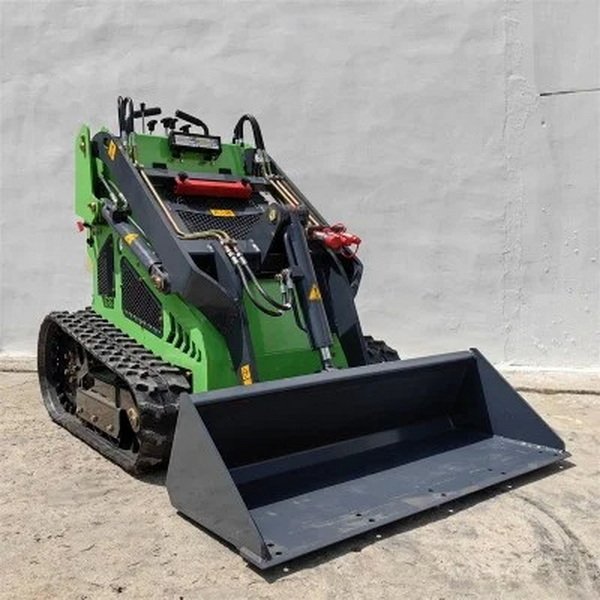
A compact track loader (CTL) is a tracked machine that combines skid steer agility with improved flotation and traction. It is ideal for soft ground, muddy job sites, and applications that require low ground disturbance.
Common use cases include:
– Residential and commercial landscaping
– Urban construction and tight-site work
– Roadwork, utility and pipeline projects
– Agriculture, barns, and material handling
Both the Bobcat T76 and Cat 289D3 sit in the mid-size CTL category, offering enough power and lift capacity for most general contractors, landscapers, and rental fleets.
Why These Two Models Are Often Compared
The Bobcat T76 and Cat 289D3 typically appear on the same shortlist because:
– They share similar horsepower around 74 hp.
– Their rated operating capacities are almost identical, around 2,900 lb.
– They target the same price band and buyer profile.
However, they differ significantly in:
– Overall size and footprint
– Ride quality and undercarriage technology
– Travel speed and productivity
– Emissions system and long-term maintenance
– Operator visibility and control customization
Understanding these differences is critical before committing to a purchase or lease.
Size, Weight, and Jobsite Fit
Key Dimensions and Specifications
Here is a high-level look at typical specifications for each model:
| Specification | Bobcat T76 | Cat 289D3 |
|---|---|---|
| Operating weight | 10,250 lb | 10,668 lb |
| Rated operating capacity (35%) | 2,900 lb | 2,890 lb |
| Gross horsepower | 74 hp | 74.3 hp |
| Length with bucket | Approx. 146 in | Approx. 146.2 in |
| Width with standard tracks | Around 78 in | Around 78 in |
| Height to top of cab | Around 83 in | Around 83.2 in |
The Cat 289D3 is marginally heavier and slightly larger, while the Bobcat T76 provides a more compact and agile package without sacrificing rated operating capacity.
Practical Impact on Different Job Types
Bobcat T76:
– Better for tight residential sites, narrow alleys, and small access points.
– Lighter weight can reduce damage on finished surfaces and turf.
– More maneuverable in congested urban environments.
Cat 289D3:
– Extra mass improves stability for heavy digging and pushing.
– Can feel more planted when working on slopes or soft ground.
– Slightly heavier footprint can be beneficial in rough or uneven terrain.
If your work is heavily weighted toward residential, landscaping, and urban infill jobs, the Bobcat T76’s compactness is a notable advantage. For harsher, more rugged environments where pushing power and stability are critical, the Cat 289D3 can be more appealing.
Lifting Performance and Cycle Productivity
Lift Capacity and Reach
Both machines feature vertical lift arms designed to keep the load close to the machine and maximize reach at full height. Rated operating capacity is almost identical, but hinge-pin height differs slightly.
Typical performance characteristics:
– Bobcat T76:
– Rated operating capacity: 2,900 lb at 35 percent of tipping load.
– Higher hinge-pin height (around 128.3 in).
– Cat 289D3:
– Rated operating capacity: 2,890 lb at 35 percent of tipping load.
– Hinge-pin height around 125.1 in.
In practice, the Bobcat T76 can dump a bit higher and farther into taller trucks or hoppers, which helps when loading high-sided dump bodies or stockpiling against tall retaining structures.
Travel Speed and Jobsite Efficiency
Travel speed has a direct effect on how much ground you can cover per hour, especially on larger sites.
– Bobcat T76:
– Working speed around 6.8 mph.
– 2-speed travel speed up to about 9.2 mph.
– Cat 289D3:
– Low speed about 4.5 mph.
– High speed about 8.3 mph.
Where this matters:
– Large sites with long hauls between stockpile and dump points.
– Projects with tight schedules and repetitive loading-hauling cycles.
– Multi-structure developments where the machine frequently relocates.
The higher travel speed of the T76 can reduce cycle times, especially on sprawling or multi-phase job sites.
Controls, Precision, and Operator Interface
Joystick Controls and Customization
Bobcat T76:
– Selectable joystick control patterns (for example, ISO and H-pattern), which helps operators adapt quickly.
– Features such as speed management, drive response adjustment, and steering drift compensation.
– Drive lift and tilt compensation can stabilize bucket movements when traveling.
Cat 289D3:
– Ergonomic joysticks and electronically controlled hydrostatic drive.
– Solid and predictable feel, but typically less fine-grained customization out of the box.
From an operator’s perspective, the T76 tends to feel more tunable and refined for precision tasks such as fine grading, trench backfilling, or loading in tight spaces.
Attachment Leveling Modes
Both machines offer attachment leveling to help keep tools and payloads stable when raising or lowering the lift arms. The Bobcat T76 goes further with a selectable mode that allows leveling:
– On the way up only, or
– Both on the way up and on the way down.
This added control can be useful when:
– Grading with a bucket or dozer blade.
– Carrying palletized loads where lowering over uneven terrain needs a different behavior than lifting.

Visibility, Lighting, and Cab Comfort
Sightlines and Field of View
Bobcat T76:
– Newer lift arm design with slim cast-steel arms to improve forward and side visibility.
– Optional clear-side enclosure for enhanced peripheral and rear views.
– Designed to give a better view of the cutting edge, attachment, and tracks.
Cat 289D3:
– Robust cab with protective structures and mesh guarding.
– Visibility is adequate, but mesh and frame posts can slightly restrict certain angles, especially in low light or bad weather.
Clear sightlines improve safety, accuracy when working close to structures, and productivity when operating with forks, grapples, and specialty attachments.
Lighting and Work in Low-Visibility Conditions
Bobcat T76:
– Standard LED work lights.
– LEDs provide better brightness, longer life, and lower power draw.
Cat 289D3:
– Typically equipped with standard halogen front lights in many configurations.
– Halogens are functional but less bright and efficient than LEDs.
If you frequently work at night, early morning, or indoors with poor lighting, factory LED lights on the T76 are a significant advantage.
Cab Environment and Ergonomics
Both models:
– Offer sealed and pressurized cabs that reduce dust, noise, and fumes.
– Include optional air conditioning and heating for year-round use.
– Provide Bluetooth and connectivity options for calls and music.
The Cat cab is often described as slightly more spacious, which can be an advantage for tall or larger operators. The Bobcat’s internal layout focuses heavily on ergonomics, with controls and displays positioned for quick access and minimal hand movement.
Ride Quality and Undercarriage Design
Suspension and Ride Control
Bobcat T76:
– Equipped with a patented 5-link torsion suspension undercarriage.
– Automatic ride control that works across a broad speed range.
– Reduces fore-and-aft rocking when carrying heavy buckets or traveling over rough ground.
Cat 289D3:
– Speed-sensitive ride control that engages only above certain speeds.
– Good ride quality when traveling faster, but can feel stiffer at low crawl speeds with a full bucket.
On rough or uneven job sites, operators often feel noticeably less fatigue after a full day in the T76 due to its more advanced suspension system.
Track Design and Ground Contact
Both machines:
– Use rubber tracks that provide strong traction on soft ground.
– Are designed for low ground pressure to minimize rutting.
The heavier Cat 289D3 may provide slightly better traction when pushing into dense material or climbing slopes, while the Bobcat’s suspension helps keep the machine planted and comfortable at speed.
Maintenance, Serviceability, and Downtime
Daily and Periodic Service Access
The Bobcat T76 and Cat 289D3 both provide:
– Rear engine access doors for fluid checks and filter changes.
– Side or top access points for certain service items.
Bobcat T76:
– Cab tilts to provide generous access to hydraulic components and hoses.
– Simplifies deeper diagnostics and repairs.
Cat 289D3:
– Well-organized service points, especially for routine preventive maintenance.
– Backed by a large global dealer network for parts and service.
For contractors who handle much of their own service, the tilting cab of the T76 can save labor hours and make in-house maintenance more convenient.
Emissions Systems and Long-Term Reliability
A major difference lies in how each machine handles emissions compliance.
Cat 289D3:
– Uses a diesel particulate filter (DPF).
– DPF systems require periodic regeneration to burn off soot, adding complexity and potential downtime.
– Over time, maintenance of sensors, filters, and aftertreatment components can increase costs.
Bobcat T76:
– Uses a non-DPF engine configuration.
– Eliminates the need for regeneration cycles and associated interruptions.
– Tends to reduce long-term emissions-related repair risk.
For high-hour fleets and rental operations, avoiding DPF-related downtime can be a significant cost and productivity advantage.
Attachments, Hydraulics, and Versatility
Attachment Compatibility
Both loaders:
– Use quick-attach coupler systems that make it easy to change attachments from inside the cab.
– Support a wide range of buckets, augers, forks, trenchers, grapples, sweepers, and specialized tools.
Hydraulic considerations:
– Each model can be ordered with different hydraulic packages, including standard-flow and high-flow options.
– High-flow hydraulics are crucial for demanding attachments like cold planers, large mulchers, and heavy trenchers.
When choosing between the T76 and 289D3, check your most commonly used attachments and ensure the selected machine’s hydraulic output matches or exceeds their requirements.
Total Cost of Ownership and ROI
Purchase Price and Resale Value
Pricing for new Bobcat T76 and Cat 289D3 units typically falls in a similar band, with configurations, options, and regional factors influencing final cost. Cat machines often retain strong resale value thanks to global brand recognition, while Bobcat earns a reputation for high utilization and low long-term maintenance.
Key factors that influence total cost:
– Initial purchase price or lease rate.
– Fuel consumption relative to workload.
– Maintenance and repairs over 3–5 years.
– Downtime due to emissions systems, undercarriage wear, or service complexity.
– Residual value at resale or trade-in.
Operating and Maintenance Costs
Operating cost categories to consider:
– Engine and emissions system service.
– Undercarriage wear and track replacement.
– Hydraulic system maintenance.
– Cab, electrical, and lighting components.
Because the Bobcat T76 avoids a DPF system, long-term emissions-related costs are generally lower, and downtime for regeneration is minimized. The 5-link torsion suspension can also help reduce shock loads on the undercarriage, potentially extending component life.
The Cat 289D3 may incur additional costs related to DPF and exhaust aftertreatment over several thousand hours of operation, depending on duty cycle and maintenance practices.
Tax Planning and Equipment Investment Strategy
Section 179 and Bonus Depreciation
In many markets, compact track loaders qualify for accelerated depreciation or tax incentives when purchased for business use. For example, under Section 179 in the United States, businesses can often:
– Deduct a large portion, or even the full purchase price, of eligible equipment in the year it is placed in service.
– Combine Section 179 with bonus depreciation for additional tax advantages.
General best practices:
– Confirm current-year limits, qualification rules, and phase-outs with a tax professional.
– Plan equipment purchases and delivery dates to align with your fiscal year.
– Consider bundling attachments and accessories into a single financed transaction for simplified deduction tracking.
Smart use of tax incentives can significantly reduce the effective cost of either a Bobcat T76 or a Cat 289D3.
Where Certeg Compact Track Loaders Fit In
Certeg’s Role in the Construction Equipment Market
Certeg manufactures a broad portfolio of construction machinery, including:
– Excavators
– Skid steer loaders
– Compact track loaders
– Road rollers
– Forklifts
– Tractors
– Crawler transporters
For buyers comparing Bobcat and Cat, Certeg offers a third path: compact track loaders that emphasize robust construction, value-oriented pricing, and practical features tailored for global contractors.
Typical advantages of Certeg compact track loaders:
– Competitive lifting performance matched to real-world job demands.
– Reliable diesel engines with simplified emissions approaches.
– Strong steel undercarriage and durable components for extended life.
– Cab designs that focus on operator ergonomics and visibility.
– Compatibility with widely used attachment interfaces.
When a Certeg CTL Is a Strategic Choice
A Certeg compact track loader becomes an attractive option when:
– You need a balanced mix of performance and cost efficiency.
– Total cost of ownership and uptime are more important than brand name.
– You operate in emerging markets or export-oriented projects.
– You want a unified supplier for multiple categories of equipment, including excavators, skid steers, forklifts, and tractors.
By integrating Certeg loaders into your fleet, you can standardize parts, simplify service training, and negotiate better terms across multiple machine categories.
Quick Decision Guide: Bobcat T76 vs Cat 289D3
Choose the Bobcat T76 If
– You work frequently on tight and confined urban sites.
– Faster travel speed will directly improve your daily cycle times.
– You want advanced suspension and ride comfort for long shifts.
– Reduced emissions complexity and maintenance are a priority.
– Operators demand high precision and customizable control response.
– Night work and visibility are common on your projects.
Choose the Cat 289D3 If
– Stability and traction under heavy push loads are critical.
– You value a slightly larger cab experience.
– You already own Cat machines and rely on the Cat dealer network.
– Brand perception and resale value carry strong weight in your decision.
– You are willing to manage DPF systems in exchange for Cat’s overall ecosystem.
Consider a Certeg Compact Track Loader If
– You want a cost-effective, high-ROI alternative with strong core specs.
– You are building or expanding a mixed fleet of excavators, loaders, and transporters.
– You need flexible manufacturing and customization for export markets.
– Total lifecycle value and simplified service are more important than premium badge pricing.
Recommended Visuals for This Article
To improve engagement and user experience, consider adding:
– A comparison table graphic showing T76 vs 289D3 key specs side by side.
– A diagram or photo illustrating the Bobcat 5-link torsion suspension concept.
– A cab interior photo for each model to highlight visibility and ergonomics.
– A bar chart of estimated 5-year maintenance and downtime costs by model.
– Short video clips of each machine working on similar tasks, plus a Certeg CTL in comparable conditions.
Clear Call to Action
If you are evaluating compact track loaders for your fleet, now is the time to compare performance, lifecycle cost, and support side by side. Contact Certeg’s sales team to request a tailored spec sheet, TCO calculation, and quotation for a Certeg compact track loader that matches or exceeds your current Bobcat T76 or Cat 289D3 requirements, and schedule a demo to experience the difference on your own job site.
Contact us to get more information!

FAQs About Bobcat T76, Cat 289D3, and Compact Track Loaders
1. What is the main difference in operating capacity between the Bobcat T76 and Cat 289D3?
Both machines have nearly identical rated operating capacities, around 2,900 lb at 35 percent of tipping load. In practical terms, they can lift and carry very similar payloads, and the difference in ROC is not usually a deciding factor. More important distinctions are travel speed, hinge-pin height, ride comfort, and emissions systems.
2. How does the ride quality of the Bobcat T76 compare to the Cat 289D3?
The Bobcat T76 uses a 5-link torsion suspension undercarriage and automatic ride control that works across a wide speed range, significantly reducing pitching and bouncing. The Cat 289D3 uses a speed-sensitive ride control system that engages mainly at higher travel speeds. As a result, operators generally experience smoother, less fatiguing operation with the T76 on rough terrain.
3. Why does the Bobcat T76 tend to have lower maintenance costs than the Cat 289D3?
The T76 is equipped with a non-DPF diesel engine, which avoids the complexity and upkeep of diesel particulate filters. The Cat 289D3’s DPF requires periodic regeneration, monitoring, and eventual servicing or replacement of components. Over thousands of operating hours, this emissions difference can translate into lower maintenance costs and less unplanned downtime for the T76.
4. Which compact track loader is better for tight urban construction sites?
The Bobcat T76 is generally better suited for tight urban construction sites due to its slightly more compact footprint, lighter operating weight, and higher travel speed. These characteristics improve maneuverability in narrow spaces and help reduce cycle times when working around structures, fences, and traffic.
5. How can contractors use tax incentives when purchasing a compact track loader?
In many regions, including through programs like Section 179 and bonus depreciation in the United States, contractors can deduct a significant portion of the purchase price of qualifying equipment in the year it is placed in service. To benefit, the loader must be used primarily for business, be placed in service within the tax year, and meet the program’s value limits. Contractors should consult a tax advisor to structure purchases, financing, and delivery dates to optimize deductions when buying machines such as the Bobcat T76, Cat 289D3, or a Certeg compact track loader.
References:
1. https://www.bobcat.com/na/en/buying-resources/loaders/bobcat-t76-loader-vs-cat-289d-loader
2. https://www.mustangcat.com/cat-289d3-vs-bobcat-t76/
3. https://www.petersoncat.com/products/new/compact-track-loaders/289d3
4. https://wtrrentals.com/wp-content/uploads/2023/03/T76-Compact-Track-Loader-Specs.pdf
5. https://whitestarmachinery.com/knowledge-center/competitive-comparison-bobcat-t76-vs-cat-289d3-compact-track-loader/
Hot Tags: Bobcat Vs Cat Skid Steer, Cat Vs Bobcat Skid Steer, Cat Skid Steer Vs Bobcat, Cat 289D3 Specs, Bobcat Vs Cat Track Loader, Compact Track Loader Performance, Bobcat T76 Review, Cat 289D3 Review, Best Compact Track Loader, Track Loader Buying Guide