
Compact & Mini Excavators: The Ultimate Guide for Contractors and Equipment Buyers (2026)
Content Menu
● What Is a Compact Excavator?
● Key Components and How They Work
>> House (Upper Structure and Cab)
>> Undercarriage (Tracks and Running Gear)
>> Workgroup (Boom, Arm, and Attachments)
>> Backfill Blade (Dozer Blade)
● Boom Configurations and Their Benefits
>> Swing Boom
>> Knuckle Boom (Articulating Boom)
>> Fixed Boom
● Arm Options: Standard, Long, and Extendable
>> Standard Arm
>> Long Arm
● Tail Swing Options for Confined Sites
● Market Trends and Technology in 2026
>> Electrification and Low‑Emission Models
>> Telematics, Safety, and Smart Features
● Practical Use Cases and Recommended Setups
>> Landscaping and Site Preparation
>> Utilities and Underground Work
>> Tight Urban and Residential Construction
● Operation and Maintenance Best Practices
>> Safe and Efficient Operation
● How to Choose the Right Compact Excavator
● Suggested Visual Enhancements
● Take the Next Step With Your Compact Excavator Purchase
● Frequently Asked Questions (FAQ)
>> 1. What size compact excavator do I need?
>> 2. How is a compact excavator different from a skid‑steer loader?
>> 3. Are electric compact excavators worth the investment?
>> 4. What attachments can I use with a compact excavator?
>> 5. How can I extend the life of my compact excavator?
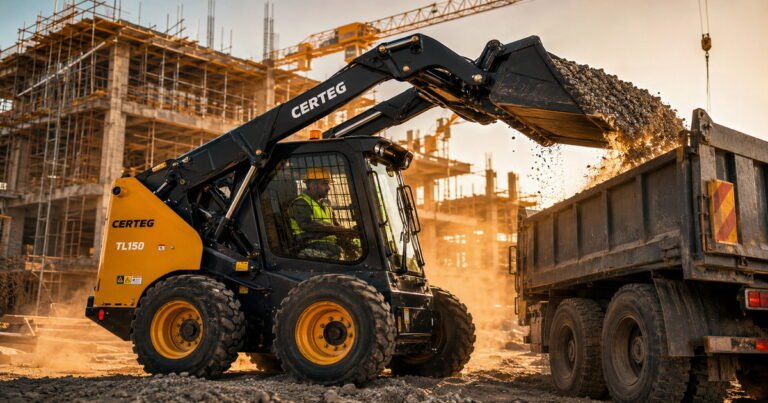
Compact excavators, also known as mini excavators, have become essential machines for contractors, landscapers, and utility crews who need powerful digging performance in tight spaces with minimal surface damage. These compact machines combine advanced hydraulics, versatile configurations, and a wide range of attachments to deliver high productivity on residential, urban, and infrastructure projects worldwide.[1][2][3]
What Is a Compact Excavator?
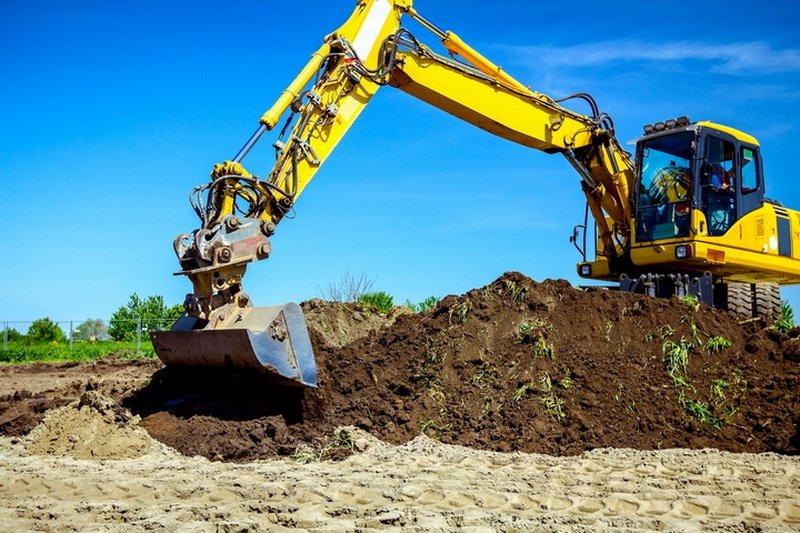
A compact excavator is a small hydraulic excavator with an operating weight of 10 metric tons or less designed for trenching, digging, grading, and material handling in confined or sensitive job sites. Thanks to their low ground pressure tracks and compact dimensions, they can work effectively on lawns, driveways, and narrow lots where larger machines cannot safely maneuver.[2][1]
Typical applications include residential building sites, utility installation, landscaping, small commercial projects, and light demolition. Because of their maneuverability and precise control, compact excavators reduce manual labor, shorten project timelines, and improve overall job site efficiency.[3][1][2]
Key Components and How They Work
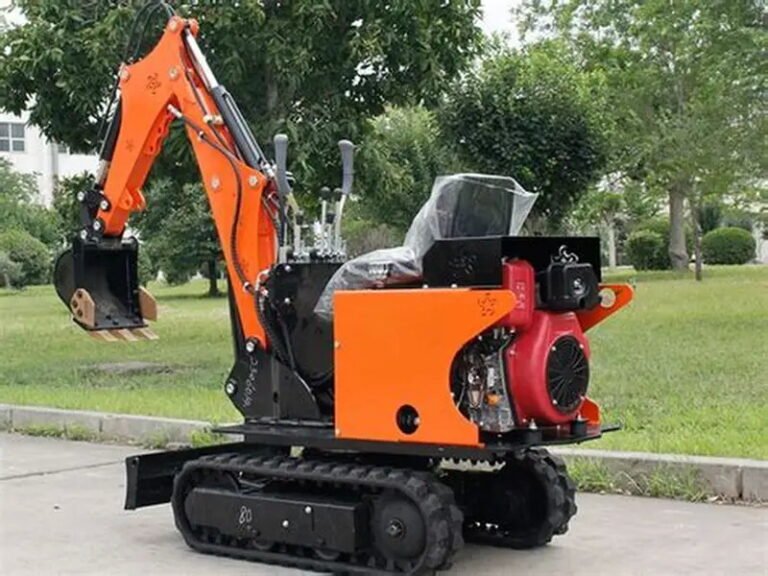
Understanding the main components of a compact excavator helps you evaluate machine performance, comfort, and suitability for different tasks. The four primary systems are the house, undercarriage, workgroup, and backfill blade.[1]
House (Upper Structure and Cab)
The house is the upper structure that rotates 360 degrees on a swing bearing mounted on the undercarriage. It typically contains:[1]
– Operator cab or canopy with seat, joysticks, and displays
– Engine compartment with diesel or electric power unit
– Hydraulic pumps, valves, and distribution components
– Electrical system and control modules
Many modern machines position the operator slightly offset from the boom to provide better visibility to the trench and surrounding work area. Enclosed cabs often feature heat, air conditioning, and suspension seats to keep operators comfortable during long shifts, which directly supports higher productivity.[2][1]
Undercarriage (Tracks and Running Gear)
The undercarriage provides traction, stability, and support for the entire machine. Its main elements include:[1]
– Rubber or steel tracks
– Drive sprockets, rollers, and idlers
– Track frames and, on some models, a retractable undercarriage
Rubber tracks are common on compact excavators because they offer low ground pressure and allow the machine to cross lawns and paved surfaces without excessive rutting or damage. In muddy, wet, or sandy conditions, track flotation and traction keep the machine moving where wheeled equipment might bog down.[2][1]
Many smaller models use an H‑shaped retractable undercarriage that can be narrowed to pass through gates or tight access points, then expanded again to increase stability before digging. Fixed undercarriages, typically a bit wider than the house, provide consistent stability and are common on larger compact excavators.[4][1]
Workgroup (Boom, Arm, and Attachments)
The workgroup includes the boom, arm (also called the dipper), bucket, and any other attachment mounted at the front of the machine. A hydraulic swing frame connects the workgroup to the house and allows it to pivot left or right independently of the upper structure.[1]
This design enables offset digging alongside the tracks, which is extremely valuable when working next to buildings, foundations, guardrails, or property lines. Auxiliary hydraulic lines routed along the boom and arm power attachments such as breakers, augers, grapples, and compactors, turning a compact excavator into a truly multi‑purpose tool carrier.[5][2][1]
Backfill Blade (Dozer Blade)
The backfill blade is a hydraulically controlled blade attached to the front of the undercarriage, and it performs several roles:[1]
– Grading and leveling subgrades or topsoil
– Backfilling trenches quickly and safely
– Dozing light materials and debris
– Stabilizing the machine when digging or lifting heavy loads
Some models offer an angle blade that tilts up to about 25 degrees left or right, allowing operators to windrow material and grade more efficiently along trenches or slopes. This significantly reduces manual shovel work and speeds up restoration work after trenching.[1]
Boom Configurations and Their Benefits
Choosing the right boom configuration has a major impact on how effectively your compact excavator works in tight areas and around obstacles. The three primary boom types are swing boom, knuckle boom, and fixed boom.[1]
Swing Boom
A swing boom is mounted to a swing frame and connects to the machine frame via a horizontal pin, allowing it to move up and down as well as pivot left or right independently of the house. Key advantages include:[1]
– Ability to dig offset from the machine’s centerline
– Easier trenching next to walls, foundations, and roadside barriers
– Better positioning when loading trucks or placing spoil in tight quarters[2][1]
Because of this flexibility, swing boom configurations are the most common choice for compact excavators working on residential, urban, and utility projects.[2][1]
Knuckle Boom (Articulating Boom)
A knuckle boom, sometimes called an articulating boom, uses multiple boom sections mounted directly to the frame. The main boom moves up and down, and the outer section can swing left or right while keeping the arm parallel to the machine. This configuration is useful when:[1]
– Reaching into tight corners or under overhangs
– Working close to structures or inside partially enclosed spaces
– Maneuvering around obstructions that limit traditional boom movements[1]
Knuckle booms are less common but highly effective in specialized work such as selective demolition or urban renovation projects.[1]
Fixed Boom
A fixed boom is mounted directly to the frame and can only move up and down, not side to side. This design is more common on full‑size excavators but is sometimes available on compact machines. It offers:[1]
– Simple, robust construction
– Potentially higher breakout force and lift capacity
– Lower purchase cost in some configurations[1]
The trade‑off is reduced flexibility around obstacles, so fixed booms are best suited to more open sites where the machine can be repositioned easily.[1]
Arm Options: Standard, Long, and Extendable
Arm configuration affects dig depth, reach, and dump height, which directly influence how efficiently you can complete certain tasks.[1]
Standard Arm
A standard arm is optimized for maximum breakout force, making it ideal for tough digging conditions and heavy trenching. It is preferred when:[1]
– Digging in compacted or rocky soil
– Performing deep but relatively short trenches
– Maximizing lifting performance close to the machine[1]
Long Arm
A long arm provides additional reach and greater dump height compared with a standard arm. This configuration is particularly valuable when:[1]
– Digging deeper utility trenches or building footings
– Loading trucks positioned on higher grades or behind barriers
– Reducing machine repositioning on longer trench runs[2][1]
The trade‑off is slightly reduced breakout force due to the longer leverage arm, but for many contractors the productivity gain from improved reach outweighs this compromise.[2][1]
Extendable Arm
An extendable arm can be hydraulically retracted or extended to balance power and reach as needed. Benefits include:[1]
– More power and better stability when retracted
– Additional dig depth and reach when extended
– Ability to stay in one position while digging or loading multiple areas[1]
Some models allow the use of clamps and other heavy attachments with extendable arms, making them an excellent choice for demolition, deep utility work, and complex urban projects.[1]
Tail Swing Options for Confined Sites
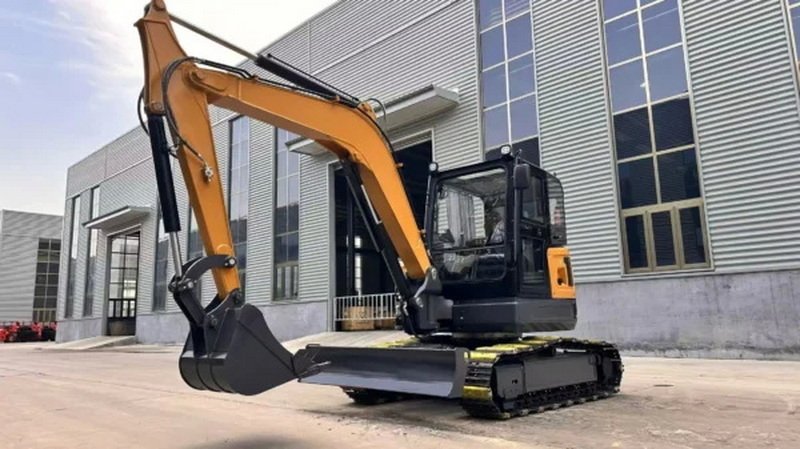
Tail swing describes how far the rear of the machine extends beyond the tracks as the house rotates. Selecting the right configuration is crucial for safe, efficient work in limited spaces.[1]
Conventional Tail Swing
Conventional tail swing machines usually have a rear overhang of about 10 to 24 inches beyond the track width. They offer:[1]
– Higher lift capacity due to larger counterweights
– Excellent stability when lifting or digging at maximum reach
– Often lower cost than more compact designs[1]
However, the extended tail requires more clearance when rotating, which can be a disadvantage near walls, traffic, or other equipment.[2][1]
Minimal Tail Swing
Minimal tail swing excavators have only a slight overhang, often up to around 6 inches beyond the tracks. This provides:[1]
– Improved maneuverability in tight spaces
– Lower risk of tail strikes on obstacles or structures
– A good balance between stability and compactness[2][1]
They work well in residential neighborhoods, small commercial lots, and roadside projects where space is limited but not extremely restricted.[2][1]
Zero Tail Swing (ZTS)
Zero tail swing machines are designed so that the rear of the house does not project beyond the tracks when rotating. Major advantages include:[1]
– Safe operation right next to walls, utilities, and traffic lanes
– Maximum flexibility on crowded or narrow job sites
– Reduced risk of damage to property, vehicles, or nearby workers[2][1]
ZTS models are often slightly wider than comparable conventional machines, so access through very narrow gates or doorways may still be an important selection factor.[2][1]
Market Trends and Technology in 2026
The compact excavator segment continues to grow as contractors shift to more flexible, efficient equipment for urban and small to mid‑sized projects. Several key market and technology trends stand out in 2026.[6][3]
Growing Global Demand
Market analysis indicates that compact excavators will maintain steady growth through 2035, driven by:
– Increasing urbanization and infill construction
– Ongoing investment in infrastructure and utilities
– Rising labor costs that make mechanization more attractive[3][6]
The Asia‑Pacific region leads demand, while North America and Europe remain strong markets for advanced, feature‑rich machines.[6][3]
Electrification and Low‑Emission Models
Electric compact excavators are gaining market share in regions with strict emission and noise regulations. Their benefits include:[7][3]
– Zero on‑site tailpipe emissions for indoor, tunnel, or urban work
– Lower noise levels for residential and nighttime operations
– Reduced maintenance related to diesel engines[7][3]
While initial purchase costs remain higher, total cost of ownership can be competitive when factoring in fuel savings and regulatory compliance.[3][7]
Telematics, Safety, and Smart Features
Advanced telematics and IoT systems provide real‑time data on machine location, fuel use, idle time, and fault codes, enabling better fleet management and uptime. Many modern compact excavators also offer:[8][7]
– Depth check systems for precise trenching
– Auto‑idle and auto‑shutdown features to reduce fuel consumption
– Enhanced visibility and camera systems for safer operation[8][7]
These innovations help contractors maintain higher productivity, control operating costs, and improve job site safety.[9][8]
Practical Use Cases and Recommended Setups
Compact excavators are used across a wide range of industries. Matching configuration and attachments to the application ensures maximum efficiency and return on investment.[2][1]
Landscaping and Site Preparation
For landscaping, irrigation, and light site prep, contractors typically prioritize low ground disturbance and access through narrow gates. Recommended setup:[10]
– Minimal or zero tail swing for close work near buildings
– Retractable undercarriage on smaller models for tight access
– Long arm for improved reach across lawns and beds[10][1]
Helpful attachments include trenching buckets, grading buckets, augers for planting, and plate compactors for finishing walkways and patios.[11][5]
Utilities and Underground Work
Utility contractors use compact excavators for installing water, sewer, gas, and telecom lines in crowded corridors. Effective configuration:[2][1]
– Zero or minimal tail swing for work along streets and property lines
– Swing boom for offset trenching next to existing structures
– Long or extendable arm for deeper utilities and reduced repositioning[2][1]
Popular attachments include narrow trenching buckets, hydraulic breakers, and augers for pole or pipe installation.[5]
Tight Urban and Residential Construction
In dense urban environments, compact excavators must work safely between structures and in limited access yards. Recommended features:[2]
– Zero tail swing and compact overall width
– Retractable undercarriage on ultra‑compact models
– Long or extendable arm for reaching over foundations or obstacles[2][1]
Attachments such as breakers, grapples, and tilt buckets enable interior demolition, small foundation removal, and efficient debris handling.[11][5]
Demolition and Cleanup
Compact excavators are widely used for small‑scale demolition and cleanup where precision and control are essential. Effective setup:[1]
– Standard arm for high breakout force
– Zero or minimal tail swing for working near existing structures
– Heavy‑duty hydraulics to support breakers and crushers[2][1]
Common attachments include hydraulic hammers, sorting grapples, and crusher buckets for breaking and handling concrete and masonry.[5][11]
Operation and Maintenance Best Practices
Good operating technique and proactive maintenance extend machine life, reduce downtime, and maximize resale value.[12][8]
Safe and Efficient Operation
Experienced operators follow several core practices to work safely and productively:[13][14][9]
– Perform a walk‑around inspection before each shift, checking for leaks, loose components, and track condition.
– Keep the machine level when digging or lifting to maintain stability.
– Avoid overloading the machine beyond rated lift capacities, especially at full reach or on slopes.
– Use smooth, controlled movements to reduce stress on pins, bushings, and hydraulics.
Operators also maintain safe distances from trenches, overhead lines, and other workers, and follow local regulations for excavation and utility locating.[15][9]
Maintenance Essentials
A structured maintenance routine significantly prolongs machine life and boosts uptime:[16][17][12]
– Follow the manufacturer’s service intervals for engine oil, filters, and hydraulic fluids.
– Inspect and adjust tracks regularly, including tension, wear, and damage.
– Grease all pivot points at recommended intervals to prevent premature wear.
– Keep cooling systems and air intakes clean, especially in dusty environments.
Digital maintenance tracking and telematics alerts help fleet managers schedule service proactively and avoid unplanned breakdowns.[16][8]
How to Choose the Right Compact Excavator
When selecting a compact excavator, align the machine’s specifications with your most common jobs and site conditions. Consider the factors below.[18][19][20]
Key Selection Criteria
– Operating weight and size: Ensure the machine fits typical access routes and can be transported on your available trailers.[20][18]
– Dig depth and reach: Match trench and foundation requirements with arm and boom configurations.[19][20]
– Tail swing type: Choose conventional, minimal, or zero tail swing based on typical job site congestion.[2][1]
– Hydraulic performance: Confirm flow and pressure are sufficient to power planned attachments.[11][5]
– Cab comfort and visibility: Prioritize controls, seating, and sightlines that support long operating days.[21][2]
Evaluating total cost of ownership, including fuel, maintenance, and resale value, is just as important as comparing purchase prices.[6][3]
Suggested Visual Enhancements
To further improve user experience and engagement, consider integrating the following visuals within the article:
– Annotated diagram of a compact excavator showing the house, undercarriage, workgroup, and backfill blade near the “Key Components” section.[1]
– Side‑by‑side images comparing conventional, minimal, and zero tail swing machines within the tail swing section.[2][1]
– Application photos of compact excavators working in landscaping, utilities, and urban construction in the “Practical Use Cases” section.[10][2]
– A simple chart or infographic illustrating market growth and the share of electric models in the “Market Trends” section.[7][3]
– Short video embeds demonstrating safe operating techniques and maintenance checks within the operation and maintenance section.[14][8]
Take the Next Step With Your Compact Excavator Purchase
If your projects demand powerful digging performance in tight spaces, this is the right time to upgrade or expand your compact excavator fleet. By choosing a machine with the right operating weight, tail swing configuration, arm and boom options, and attachment compatibility, you can significantly increase productivity, reduce manual labor, and lower total project costs on every job. Contact a trusted construction equipment manufacturer or authorized dealer today to discuss your applications, compare configuration options, and request a customized quotation that aligns with your power, transport, and budget requirements.[18][20][21][3]
Frequently Asked Questions (FAQ)
1. What size compact excavator do I need?
The right size depends on your typical dig depth, access constraints, and lifting requirements. Smaller machines under about 4,000 lb are ideal for tight residential and indoor work, while mid‑range models up to 10 metric tons handle deeper utilities, heavier lifting, and larger site prep tasks.[19][20][3]
2. How is a compact excavator different from a skid‑steer loader?
A compact excavator is optimized for precise digging and trenching with a boom and arm, while a skid‑steer loader excels at loading, grading, and material handling using front‑mounted attachments. Many contractors use both together, with the excavator digging and the skid‑steer handling backfilling, hauling, and fine grading.[22][23]
3. Are electric compact excavators worth the investment?
Electric compact excavators cost more upfront but offer zero tailpipe emissions, low noise, and reduced engine maintenance, making them attractive for urban, indoor, or regulated environments. When fuel savings, incentives, and compliance benefits are considered, total cost of ownership can be competitive with diesel models in suitable applications.[3][7]
4. What attachments can I use with a compact excavator?
Common attachments include buckets (general‑purpose, trenching, grading), hydraulic breakers, augers, thumbs or grapples, plate compactors, and tilt or rotating couplers. The exact range depends on the machine’s hydraulic flow, pressure, coupler type, and manufacturer approvals.[5][11]
5. How can I extend the life of my compact excavator?
Following the manufacturer’s maintenance schedule, lubricating pivot points regularly, keeping tracks correctly tensioned, and training operators in safe, smooth machine handling will greatly extend equipment life. Using telematics alerts and regular inspections to address issues early also helps prevent costly failures and downtime.[17][12][8][16]
Citations:
[1] https://www.bobcat.com/na/en/buying-resources/excavators/compact-mini-excavator-basics
[2] https://www.forconstructionpros.com/equipment/earthmoving-compact/mini-excavators/article/22866657/compact-excavators-for-tight-urban-construction-sites
[3] https://www.factmr.com/report/370/compact-excavator-market
[4] https://www.bobcat.com/na/en/buying-resources/excavators/4-considerations-selecting-compact-mini-excavators-for-tight-spaces
[5] https://www.equipmentworld.com/attachments/compact-equipment-attachments/article/15065312/24-mini-excavator-attachments-to-do-more-than-dig
[6] https://www.thebusinessresearchcompany.com/report/mini-excavators-global-market-report
[7] https://www.linkedin.com/pulse/compact-mini-excavator-market-innovation-v2kof
[8] https://www.forconstructionpros.com/equipment/earthmoving/excavators/article/22865340/doosan-bobcat-co-10-tips-for-boosting-compact-excavator-uptime
[9] https://mccannonline.com/excavation-safety-best-practices/
[10] https://blog.koenigequipment.com/the-best-compact-equipment-for-landscaping-contractors-in-2025
[11] https://hawkexcavator.com/mini-excavator-attachments/
[12] https://heavyvehicleinspection.com/blog/post/excavator-maintenance-tips-extend-equipment-lifespan
[13] https://compactequip.com/mini-excavators/ex-operations/
[14] https://www.stockyard.supply/blog/how-to-operate-a-mini-excavator-like-a-pro-tips-tricks
[15] https://www.bobcatofcapecod.com/blog/crucial-safety-measures-for-operating-an-excavator–93929
[16] https://fleetrabbit.com/blogs/post/heavy-equipment-maintenance-best-practices-2026
[17] https://www.gtmidatlantic.com/maintaining-your-compact-excavator/
[18] https://www.kmcequipment.com/blog/a-guide-to-renting-compact-vs-full-sized-excavators–93787
[19] https://mlheavyconstructionequipment.com/how-to-choose-the-right-excavator-size-for-your-construction-jobs/
[20] https://bobcatoftherockies.com/knowledge-center/how-to-choose-the-right-compact-excavator-size/)
[21] https://holtca.com/company/news/guide-to-mini-excavators/
[22] https://www.newmantractor.com/news/skid-steer-vs-mini-excavator
[23] https://dozr.com/blog/skid-steer-vs-mini-excavator
Hot Tags:Mini Excavator Work, Small Excavator Bucket, Compact Excavator Basics, Mini Excavator Guide, Compact Excavator Specifications, Mini Excavator Sizes, Excavator Operating Basics, Compact Excavator Applications, Mini Excavator Features,Compact Construction Equipment