
JCB 2017 Skid Steer Loader Spec Guide: Side‑Entry Safety, Performance and Buying Insights
Content Menu
● Why JCB’s Side‑Entry Skid Steers Still Matter
● Overview of JCB’s 2017 Skid Steer Range
● Engine, Emissions and Operating Cost Considerations
● Operator Safety, Visibility and Side‑Entry Design
● Control Customization with myCHOICE Software
● Practical Buying Advice from Industry Experts
● Key Specifications: Example Models for Reference
● How This Impacts Global Buyers of Wheeled and Track Skid Steers
● What 2017 Specs Don’t Tell You
● A Modern Selection Checklist for Skid Steer Buyers
● Practical Application Scenarios
● CTA for Global Buyers and Fleet Managers
● Frequently Asked Questions (FAQ)
>> Q1: What is the main advantage of JCB’s side‑entry skid steer design?
>> Q2: How do JCB small‑ and large‑platform skid steers differ?
>> Q3: Do JCB skid steers require exhaust aftertreatment systems?
>> Q4: What role does myCHOICE software play in daily operations?
>> Q5: Why is ride quality important when selecting a skid steer loader?
JCB’s 2017 skid steer lineup shows how far side‑entry and mono‑boom engineering have come — but today global buyers are looking beyond specs to overall productivity, safety and total cost of ownership in both wheeled and compact track skid steer loaders. [lectura-specs]
Why JCB’s Side‑Entry Skid Steers Still Matter
JCB entered the skid steer market in 1993 with the first mono‑boom, side‑entry skid steer, borrowing design principles from its telescopic handlers to rethink safety and visibility. The current “New Generation” line, launched around 2010, expanded this concept into both small‑ and large‑platform machines with vertical and radial lift to better match different jobsite profiles. [compactequip]
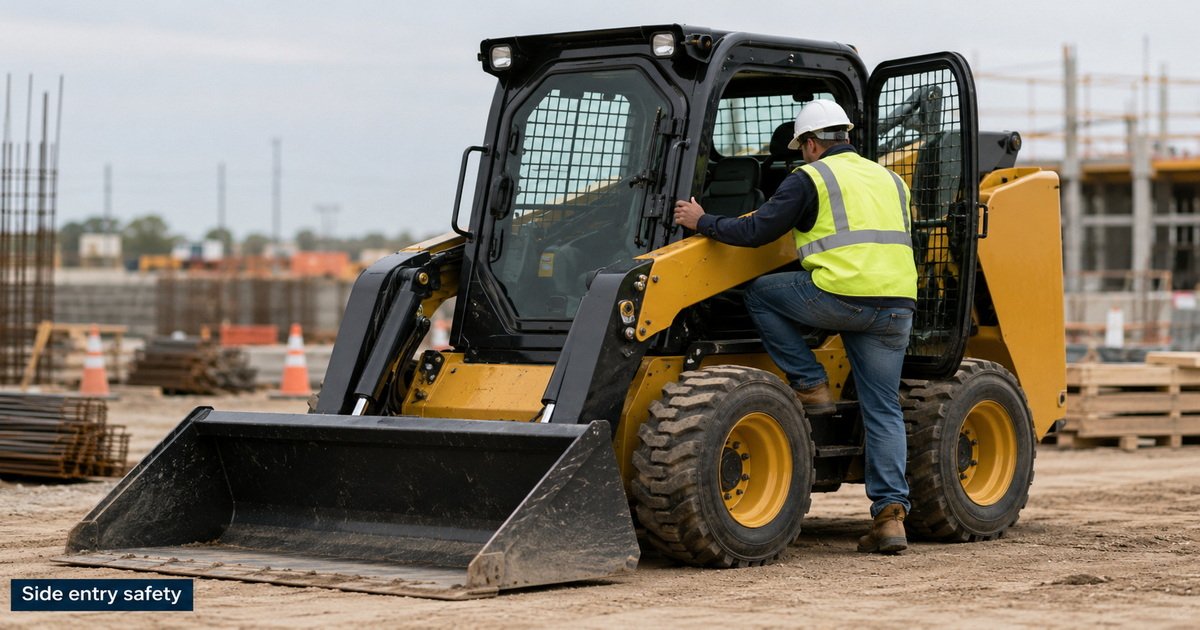
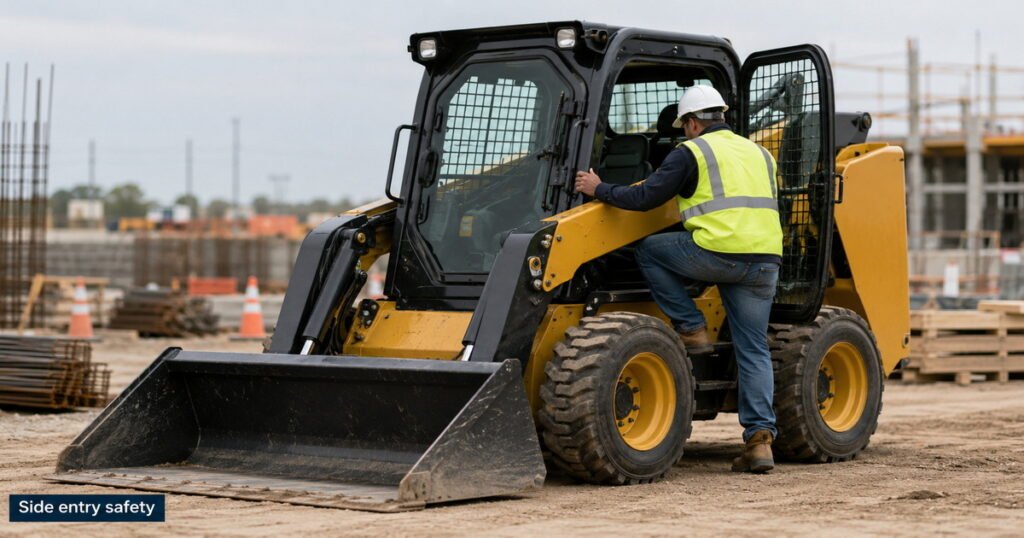
From an operator’s perspective, side‑door access is more than a design detail: it reduces the need to climb over attachments or under unsupported booms, cutting day‑to‑day risk, especially on busy sites with frequent entry and exit. For fleet managers, those incremental safety advantages translate into fewer near‑miss incidents and more consistent compliance with internal safety policies. [lectura-specs]
Overview of JCB’s 2017 Skid Steer Range
In its 2017 spec guide, JCB’s lineup is split into five small‑platform and five large‑platform models, plus the Teleskid. [compactequip]
– Small platform: 135, 155, 175, 190, 205. [lectura-specs]
– Large platform: 225, 260, 280, 300, 330. [compactequip]
– Special model: Teleskid with telescopic boom for extended reach and dig depth. [lectura-specs]
This range allows contractors to scale machines from tight urban work and residential landscaping up to heavier site prep, industrial yards and high‑cycle loading applications where rated operating capacity becomes critical. [veritread]
Engine, Emissions and Operating Cost Considerations
All 2017 JCB skid steers were built to meet Tier 4 Final emissions regulations, aligning with North American and global standards. Large‑platform machines use JCB’s own Ecomax engines, while small‑platform units are powered by JCB Diesel by Kohler powerplants. [compactequip]
A key differentiator highlighted in the original guide is that these power units do not require exhaust aftertreatment, which helps reduce fuel consumption and downtime for filter service. For owners, this means a simpler maintenance regime and lower long‑term operating costs compared with systems that rely on complex aftertreatment components. [lectura-specs]
Operator Safety, Visibility and Side‑Entry Design
The most recognizable characteristic of JCB skid steers is the single‑arm boom combined with side‑door entry. This configuration enables operators to enter and exit the cab without climbing over attachments or beneath a raised boom, minimizing exposure to pinch points and potential falling loads. [compactequip]
JCB reports that this boom design also yields up to 60 percent better visibility than conventional skid steers, enhancing situational awareness around pedestrians, trucks and site obstacles. The National Institute for Occupational Safety and Health (NIOSH) has acknowledged these benefits by revising skid steer safety alerts to treat side‑entry machines differently from traditional front‑entry layouts. [lectura-specs]
Control Customization with myCHOICE Software
JCB’s myCHOICE software gives operators the ability to fine‑tune travel and loader controls to match task requirements. For example, an operator can select a more responsive profile for repetitive loading and stockpiling, then switch to a smoother, slower profile for grading or detailed placement work. [compactequip]
From a fleet standpoint, these configurable settings help standardize machine behavior across different operators, reducing variance and improving cycle times in repeatable processes like loading trucks or feeding material to crushers. [lectura-specs]
Practical Buying Advice from Industry Experts
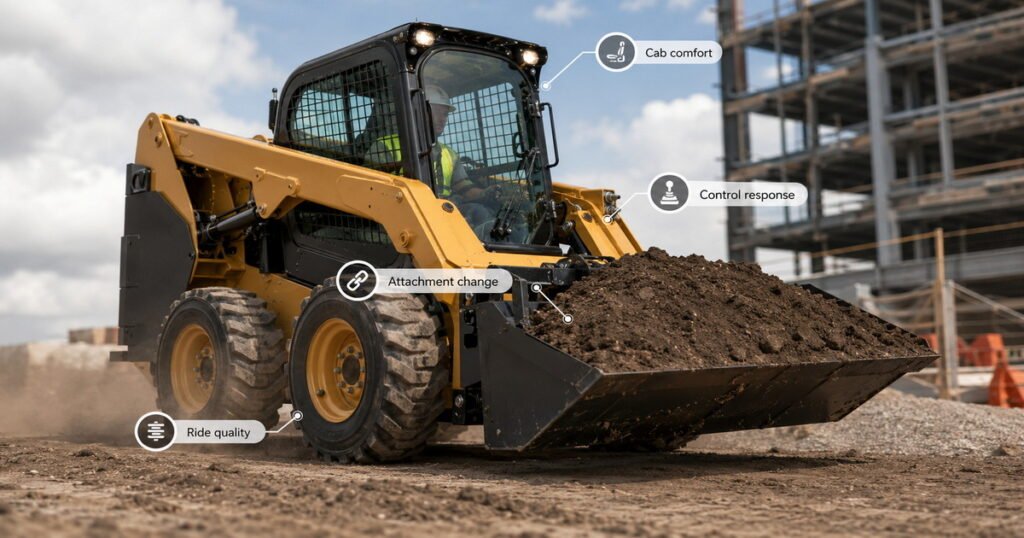
In the original article, George Chaney — JCB’s North American sales manager for skid steers and compact track loaders — offers practical guidance that remains relevant. When test‑driving a machine, he recommends paying close attention to ride quality, since a smoother ride keeps the operator comfortable and helps retain material in the bucket. [lectura-specs]
Chaney specifically points to JCB’s optional Smooth Ride System as an example of how suspension and hydraulic damping can improve productivity by reducing spillage during transport. He also encourages buyers to prioritize features such as a hydraulic quick‑hitch, which allows fast attachment changes without leaving the cab, saving minutes on every changeover and adding up over a full working day. [lectura-specs]
Key Specifications: Example Models for Reference
While the original guide focuses on the lineup overview, more detailed specs are available from independent databases and manufacturer resources. Below is a simplified snapshot for a few representative JCB skid steer models: [machinestore.jcb]
| Model | Platform type | Operating weight | Rated operating capacity | Engine power | Notes |
|---|---|---|---|---|---|
| JCB 260 | Large, wheeled | ~7,971 lb ritchiespecs | 2,600 lb ritchiespecs | ~84 hp turbo diesel ritchiespecs | Vertical lift, balances capacity and size. |
| JCB 270 | Large, wheeled | ~8,680 lb machinestore.jcb | 2,723 lb @ 50% ROC machinestore.jcb | 74 hp Ecomax diesel machinestore.jcb | Suited to demolition and breaker work. |
| JCB 300 | Large, wheeled | ~9,054 lb veritread | 3,186 lb jcb | 74 hp Ecomax diesel jcb | Higher capacity for heavy material handling. |
These figures help frame typical capacities and power levels, giving buyers baseline expectations when comparing with other brands or with compact track loader equivalents. [ritchiespecs]
How This Impacts Global Buyers of Wheeled and Track Skid Steers
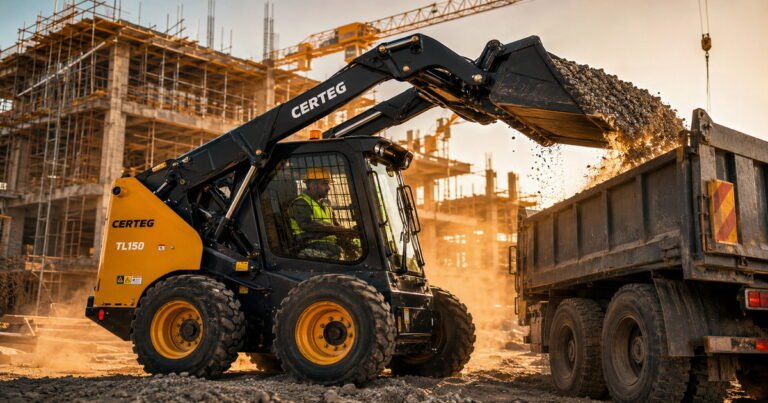
For global customers evaluating wheeled skid steers versus compact track loaders, the JCB range illustrates a few broader principles that apply equally to other brands such as Certeg’s own skid steer offerings:
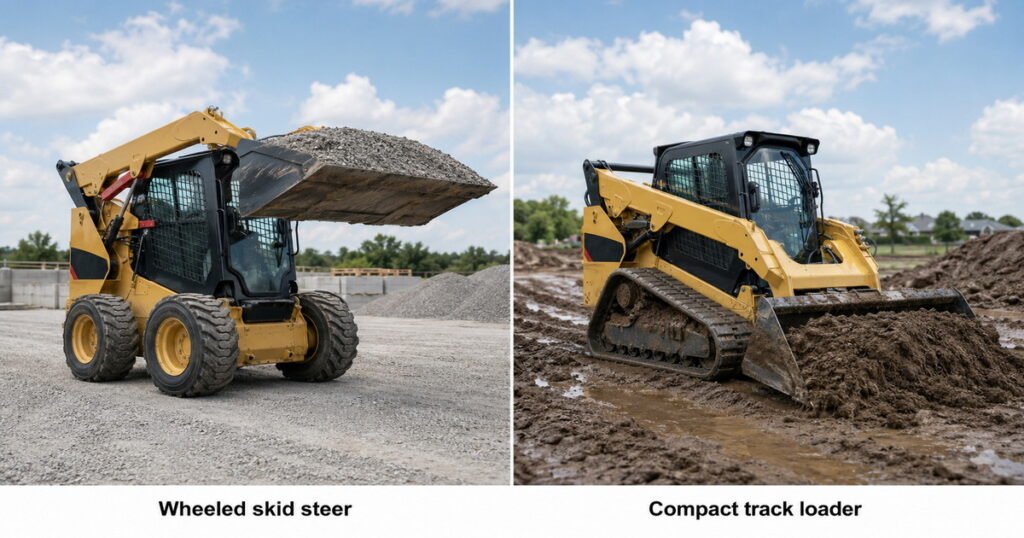
– Wheeled skid steers generally excel on firm surfaces like concrete yards, paved roads and compacted gravel, providing higher travel speeds and lower undercarriage costs. [constructionequipmentguide]
– Compact track loaders offer better flotation and traction on soft, muddy or uneven ground, which is critical in earthmoving, road base work and seasonally wet sites. [veritread]
– Side‑entry and improved visibility support safer operation regardless of undercarriage type, especially in congested environments. [compactequip]
When positioning Certeg machines, referencing these use‑case distinctions helps align each model with specific work conditions and power requirements, from residential construction to large industrial projects.
What 2017 Specs Don’t Tell You
The original 2017 spec guide summarizes the lineup but offers limited detail on:
– Real‑world productivity metrics, such as tons per hour moved or average cycle times for typical tasks. [lectura-specs]
– Ownership considerations like parts availability, service interval planning and lifecycle cost analysis. [lectura-specs]
– Comparative insights between wheeled and track models in similar power classes. [lectura-specs]
For modern buyers, especially fleet managers and global contractors, these factors are just as important as horsepower or rated operating capacity. Integrating current data from equipment monitoring systems and field feedback would further strengthen purchasing decisions.
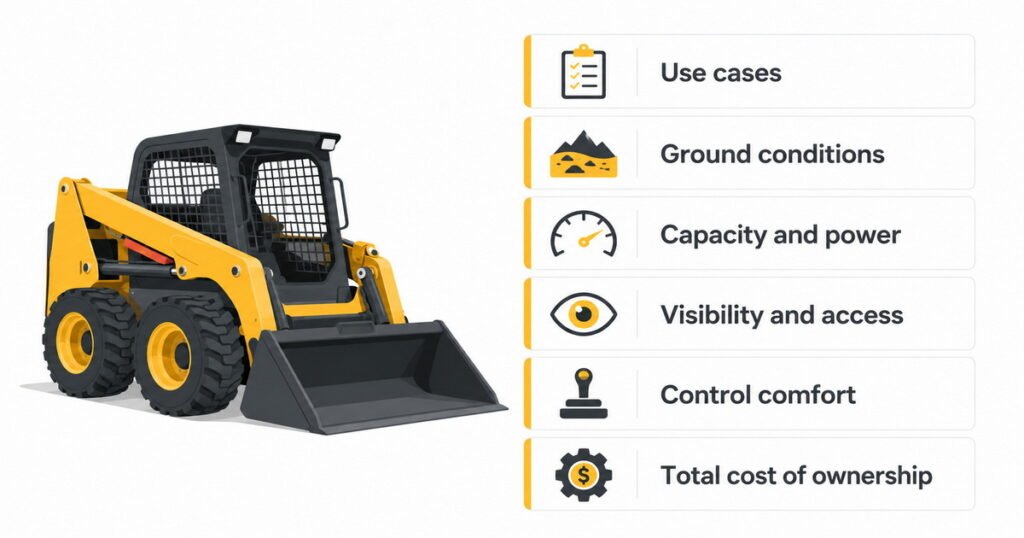
A Modern Selection Checklist for Skid Steer Buyers
To bridge these gaps, here is a practical, step‑by‑step checklist you can apply whether you are evaluating JCB machines or Certeg’s skid steer loaders:
1. Define primary use cases
Identify whether the machine will mainly handle loading trucks, grading, material handling, demolition or attachment‑driven work such as cold planing or trenching. [lectura-specs]
2. Match undercarriage to ground conditions
Choose wheeled skid steers for predominantly firm surfaces and compact track loaders for muddy, sandy or uneven terrain where ground pressure matters. [constructionequipmentguide]
3. Set minimum capacity and power requirements
Use past jobs to estimate typical bucket loads and required breakout force, then select rated operating capacity and engine power that cover peak demands with some margin. [ritchiespecs]
4. Evaluate visibility and access
Prioritize designs with unobstructed sight lines to the attachment and sides of the machine and safe, convenient cab access like side‑entry doors. [compactequip]
5. Check control customization and operator comfort
Look for configurable control modes (such as myCHOICE‑style systems), integrated ride control and ergonomic cab layouts to support long shifts. [compactequip]
6. Quantify total cost of ownership
Consider fuel efficiency, maintenance intervals, parts costs and downtime for emissions systems, not just acquisition price. [ritchiespecs]
This type of structured decision process gives buyers a repeatable way to compare JCB, Certeg and other brands beyond basic spec sheets.
Practical Application Scenarios
To make the 2017 information more actionable for today’s global users, here are three typical scenarios showing how spec and design features influence machine choice:
– Urban demolition with attachments
A large‑platform wheeled skid steer such as a JCB 270, with 74 hp and over 2,700 lb rated capacity, is well‑suited to breakers and rock saws when operating on firm ground. Side‑entry and good visibility help operators navigate tight urban sites safely. [machinestore.jcb]
– Soft‑ground earthmoving and trench backfilling
A comparable compact track loader variant with similar capacity but lower ground pressure can keep working in wet seasons, avoiding rutting and slippage. For contractors, this stability directly impacts schedule reliability. [veritread]
– Industrial yard material handling
Higher‑capacity models like the JCB 300, rated around 3,186 lb, are ideal for bulk material stockpiles, heavy pallets and frequent loading cycles, where capacity and quick attachment changes drive productivity. [jcb]
Each scenario underscores the importance of connecting specs — capacity, power, visibility, safety — to the real conditions and attachments on your own sites.
Test‑Driving Skid Steers
Building on George Chaney’s guidance, here are some expert‑level points to focus on during a test drive:
– Simulate real payloads
Load the bucket close to typical working weights and drive across uneven ground to feel how ride control and boom damping affect spillage and operator fatigue. [lectura-specs]
– Cycle through attachments
Use the hydraulic quick‑hitch to change between at least two attachments and time the process from within the cab, assessing visibility, ease of alignment and hydraulic connection access. [lectura-specs]
– Experiment with control profiles
If the machine offers configurable controls, test both precision and high‑response modes to see how they affect fine‑grading versus rapid loading cycles. [compactequip]
– Assess cab ergonomics and noise
Check seat adjustability, visibility to mirrors and gauges, and in‑cab noise level across different engine speeds to ensure long‑term operator comfort.
These expert checks help distinguish subtle differences between models that may not appear in spec tables.
CTA for Global Buyers and Fleet Managers
Ready to choose the right skid steer loader for your ground conditions and power requirements? Contact our Certeg team to compare wheeled and compact track models, request tailored specs for your region, or schedule a live demo on your jobsite.
Frequently Asked Questions (FAQ)
Q1: What is the main advantage of JCB’s side‑entry skid steer design?
A1: Side‑entry skid steers allow operators to enter and exit the cab without climbing over attachments or under raised booms, enhancing everyday safety and ergonomics. [compactequip]
Q2: How do JCB small‑ and large‑platform skid steers differ?
A2: Small‑platform models (135–205) are more compact and typically used in tighter spaces, while large‑platform units (225–330) offer higher operating capacities and are intended for heavy‑duty applications. [veritread]
Q3: Do JCB skid steers require exhaust aftertreatment systems?
A3: According to the 2017 spec guide, JCB’s Tier 4 Final skid steers do not require exhaust aftertreatment, which can help reduce fuel consumption and maintenance‑related downtime. [compactequip]
Q4: What role does myCHOICE software play in daily operations?
A4: myCHOICE allows operators to adjust travel and loader control responses, making it easier to tune the machine for either precision work or faster cycle times depending on the task. [compactequip]
Q5: Why is ride quality important when selecting a skid steer loader?
A5: Smooth ride systems reduce bucket spillage, protect the loader arms and keep operators more comfortable, which in turn improves productivity and reduces fatigue over long shifts. [lectura-specs]
References
1. Compact Equipment / Benjamin Media, Inc. “JCB Skid Steers Summarized — 2017 Spec Guide.”
https://compactequip.com/skid-steers/jcb-2017-spec-guide-skid-steers/ [lectura-specs]
2. VeriTread. “JCB Skid Steer Loaders Specs & Dimensions.”
https://www.veritread.com/specs/construction/skid-steer-loaders/jcb [veritread]
3. JCB. “Skid Steer Loader – JCB 300 Vertical Lift Skid Steer Loader.”
https://www.jcb.com/en-US/products/machines/skid-steer-loader/ [jcb]
4. JCB Store. “JCB 270 | Skid Steer Loader Buy Online.”
https://machinestore.jcb.com/en-US/machines/skid-steer-loaders/270w [machinestore.jcb]
5. RitchieSpecs. “JCB 260 Skid Steer Loader Specs & Dimensions.”
https://www.ritchiespecs.com/model/jcb-260-skid-steer-loader [ritchiespecs]
6. Construction Equipment Guide. “JCB 270 Skid Steer Loader Specifications.”
https://www.constructionequipmentguide.com/charts/skid-steer-loaders/jcb/270/30339777 [constructionequipmentguide]
Hot Tags: Skid Steer Loader, Manufacturers, Customized, Custom, Suppliers, Buy, Cheap, Quality, Advanced, Durable, in Stock, Made in China, Price, Quotation